
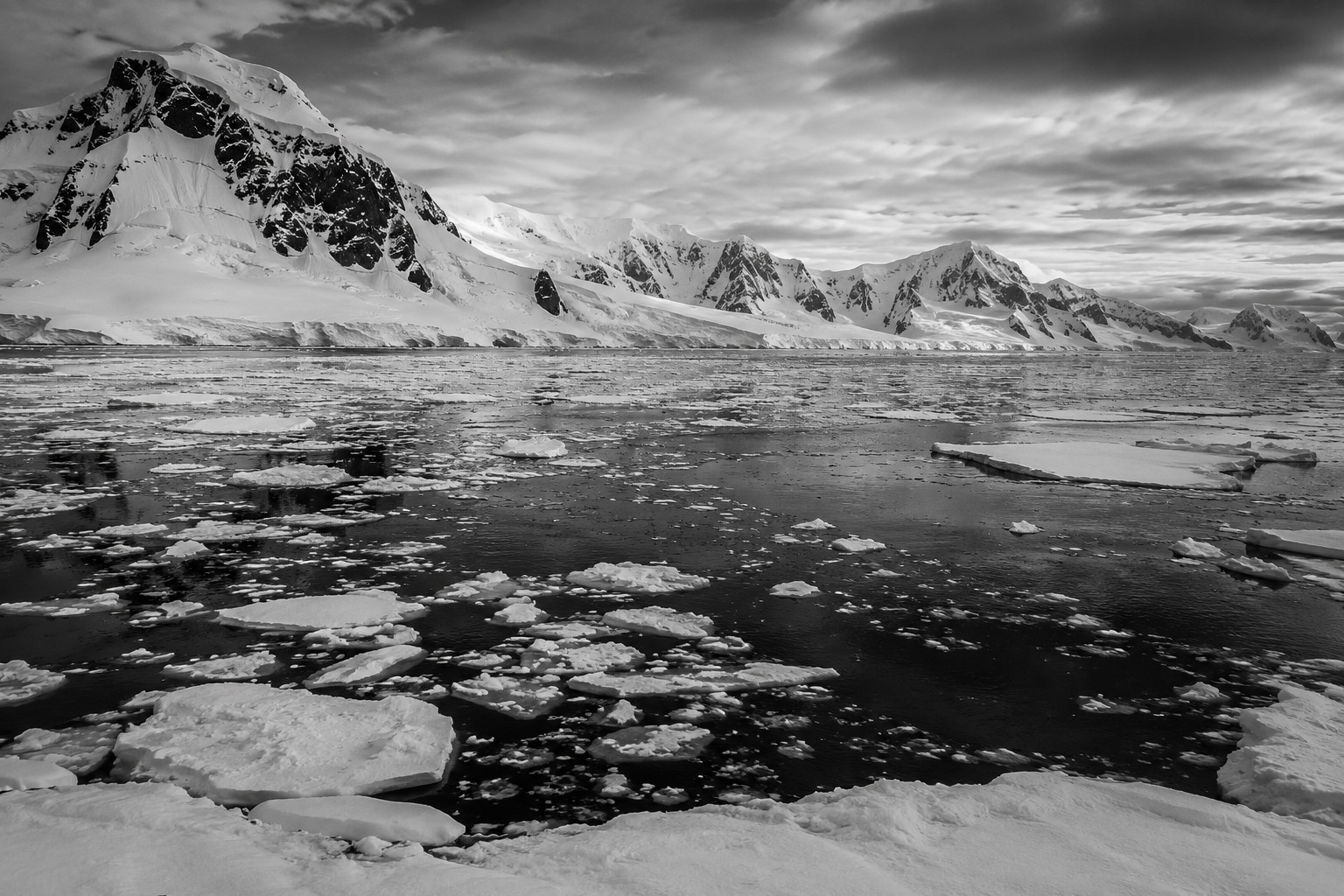
An area of sea ice roughly the size of France is missing from Antarctica’s Bellingshausen Sea at a time of year when the region should be rapidly freezing over. Scientists monitoring the continent say temperatures have surged to as much as 20°C above the seasonal average, leaving one of Antarctica’s most important marine ecosystems exposed and reinforcing concerns that the southern polar region may be entering a period of long-term environmental change.
A dramatic absence of winter ice
June marks the beginning of Antarctica’s winter, when sea ice normally expands rapidly across the Southern Ocean. This year, however, satellite observations show that a vast section of the Bellingshausen Sea along Antarctica’s west coast remains largely ice-free.
Researchers describe the missing ice as one of the most striking anomalies currently observed anywhere on Earth. The area without ice is comparable in size to France, highlighting the extraordinary scale of the phenomenon.

Scientists stress that short-term weather patterns have contributed to the unusually warm conditions, but many also point to the influence of long-term climate change, which is increasing the likelihood of extreme temperature events even in Antarctica.
Temperatures far above normal
Meteorological observations indicate that parts of West Antarctica have experienced temperatures reaching up to 20°C above the seasonal average.
Although temperatures remain below freezing across much of the continent, even relatively small increases can dramatically slow sea-ice formation during the Antarctic winter. Ocean temperatures, wind patterns and atmospheric circulation are all interacting to delay the seasonal expansion of the ice cover.
Climate researchers caution that several years of exceptionally low Antarctic sea-ice extent now suggest that the region may no longer be behaving according to historical patterns.
Why sea ice matters
Sea ice plays a crucial role in regulating the Earth’s climate. Its bright surface reflects solar radiation back into space, helping to cool the planet. When ice cover shrinks, darker ocean water absorbs far more heat, accelerating regional warming in a self-reinforcing cycle.
The ice also provides essential habitat for Antarctic wildlife, including krill, penguins, seals and numerous seabird species. Krill, which depend on sea ice during key stages of their life cycle, form the foundation of much of the Southern Ocean’s food web.
A prolonged decline in sea ice could therefore have consequences far beyond Antarctica, affecting marine ecosystems across the southern hemisphere.
Global consequences extend beyond the poles
Changes in Antarctica influence weather systems, ocean circulation and global sea levels. Scientists are particularly concerned that warmer oceans surrounding West Antarctica may accelerate the melting of land-based glaciers, which directly contributes to rising sea levels.
Unlike floating sea ice, which does not significantly raise ocean levels when it melts, glaciers resting on land add new water to the oceans as they retreat.
The West Antarctic Ice Sheet contains enough frozen water to raise global sea levels by several metres if it were to melt completely over coming centuries.
A warning that cannot be ignored
Researchers caution against attributing any single event solely to climate change. Nevertheless, the repeated occurrence of exceptionally low Antarctic sea-ice coverage over recent years has become increasingly difficult to dismiss as natural variability alone.
The disappearance of an area of winter sea ice comparable to the size of France serves as another reminder that climate change is affecting even the most remote regions of the planet. As scientists continue to monitor Antarctica through the southern winter, the continent is providing yet another indication that Earth’s climate system is undergoing profound and potentially irreversible change.
Newshub Editorial in Antarctica – 14 June 2026

If you have an account with ChatGPT you get deeper explanations,
background and context related to what you are reading.
Open an account:
Open an account
Recent Comments