
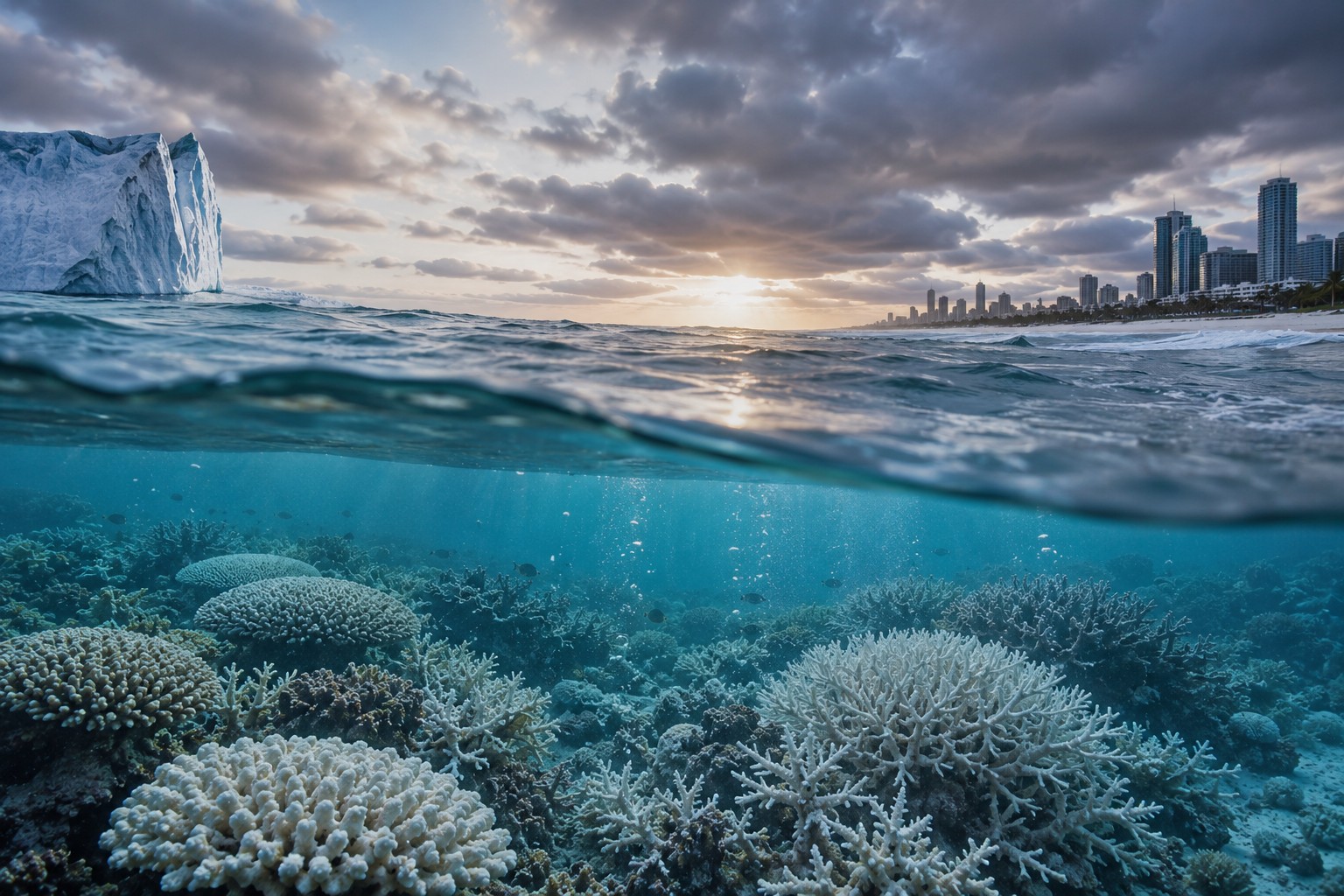
The world’s oceans are facing unprecedented pressure from climate change, pollution, industrial fishing, and habitat destruction, according to a major United Nations assessment that warns the rate of global sea level rise has doubled over the past decade. Scientists say urgent international action is needed to prevent further deterioration of marine ecosystems and protect coastal communities from escalating risks.
The findings come from the latest World Ocean Assessment, which describes the condition of the oceans as increasingly fragile due to a combination of human-driven environmental pressures.
Researchers reported that rising global temperatures are accelerating the melting of glaciers and polar ice sheets, contributing to a sharp increase in sea levels. The report notes that the pace of sea level rise has roughly doubled compared with rates recorded just a decade ago, raising concerns for low-lying coastal regions and island nations.

Climate change remains the dominant threat
Ocean warming continues to disrupt marine ecosystems, alter weather patterns, and intensify extreme climate events. Higher sea temperatures are contributing to coral bleaching, declining fish populations, and the migration of marine species away from traditional habitats.
Scientists warn that oceans absorb around 90% of the excess heat generated by greenhouse gas emissions, making them one of the clearest indicators of the planet’s changing climate.
The report emphasises that without significant reductions in global emissions, many of these trends are expected to accelerate during the coming decades.
Pollution and overfishing add further pressure
Beyond climate change, the UN assessment highlights the growing impact of plastic pollution, chemical contamination, and industrial fishing practices.
Millions of tonnes of plastic continue to enter oceans annually, harming marine life and entering food chains. At the same time, excessive fishing pressure has depleted numerous fish stocks, threatening both biodiversity and the livelihoods of communities that depend on marine resources.
Experts argue that stronger international cooperation is needed to improve fisheries management, reduce pollution, and expand marine protected areas.
Coastal communities face growing risks
Rising sea levels increase the likelihood of coastal flooding, erosion, saltwater intrusion, and damage to infrastructure. Major cities, ports, agricultural areas, and small island states are among those considered most vulnerable.
The UN warns that the economic and social consequences of inaction could become increasingly severe as populations continue to grow along coastlines worldwide.
Adaptation measures such as improved coastal defences, ecosystem restoration, and resilient infrastructure are expected to play a critical role alongside efforts to reduce greenhouse gas emissions.
A global challenge requiring global action
The World Ocean Assessment concludes that the health of the oceans is inseparable from the health of the global economy and climate system. Scientists stress that protecting marine ecosystems is no longer solely an environmental issue but a strategic necessity for food security, economic stability, and human wellbeing.
As governments prepare for future climate and biodiversity negotiations, the report serves as a stark reminder that the world’s oceans remain on the front line of the environmental challenges facing the twenty-first century.
Newshub Editorial in Global – 9 June 2026

If you have an account with ChatGPT you get deeper explanations,
background and context related to what you are reading.
Open an account:
Open an accountThe world's oceans are facing unprecedented pressure from climate change, pollution, industrial fishing, and habitat destruction, according to a major United Nations assessment that warns the rate of global sea level rise has doubled over the past decade. Scientists say urgent international action is needed to prevent further deterioration of marine ecosystems and protect coastal communities from escalating risks.
Recent Comments