
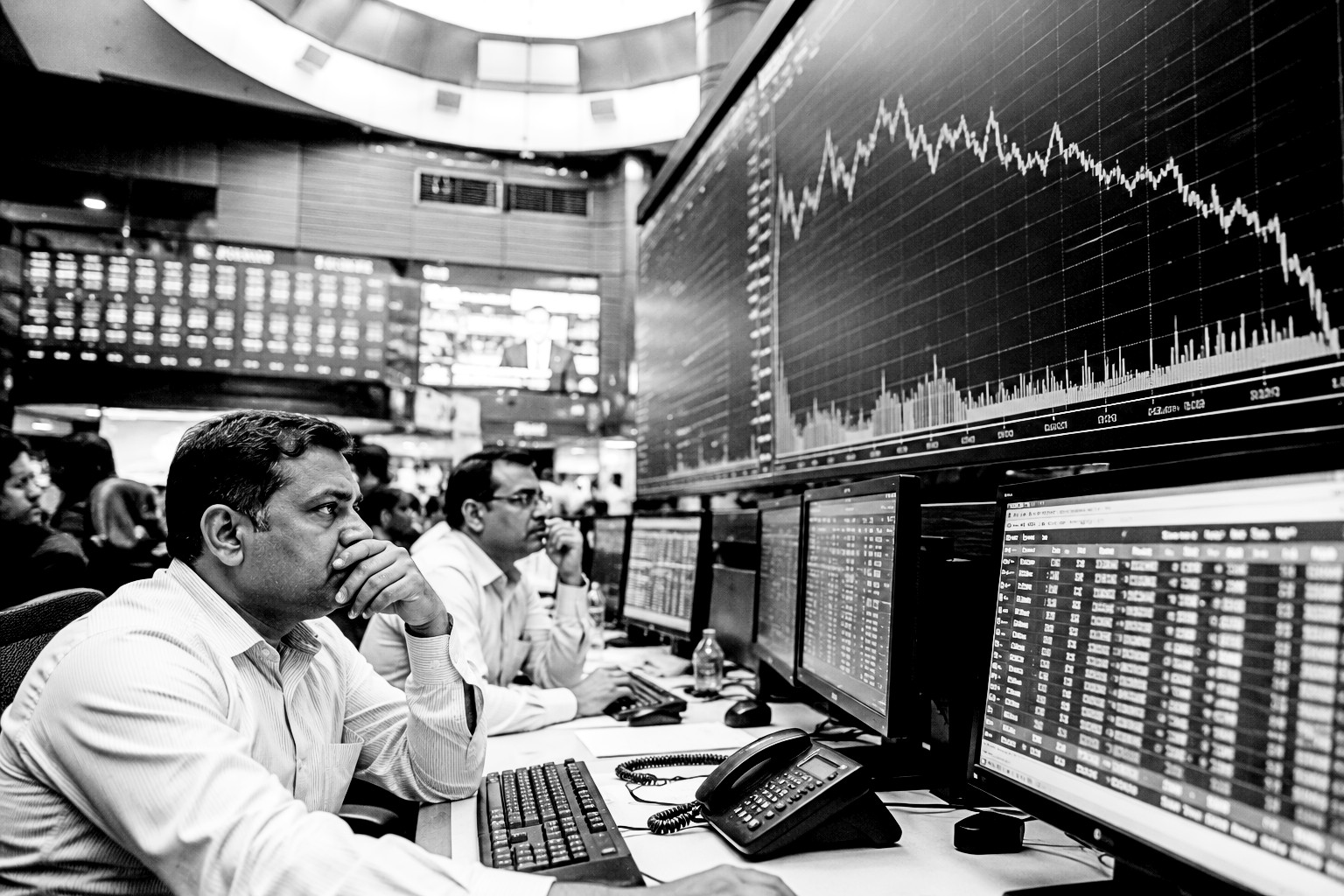
Indian equity markets opened lower on Thursday as investors reacted to weakness across global markets and continued foreign fund outflows. The decline reflected growing caution among traders amid international economic uncertainty, rising geopolitical tensions and concerns over capital flows from emerging markets.
Benchmark indices open in the red
The 30-share BSE Sensex fell 229.69 points in early trading to 74,139.32, while the 50-share Nifty 50 declined 66.30 points to 23,339.

The weakness followed mixed performances across Asian markets and softer sentiment in global equities, where investors have become increasingly cautious about economic growth prospects and geopolitical developments.
Foreign investors continue to pull funds
One of the primary factors weighing on Indian equities has been persistent selling by foreign institutional investors. Capital outflows have increased pressure on several sectors, particularly financial services, information technology and large-cap stocks that are heavily represented in international portfolios.
Market analysts note that foreign investors have been reassessing their exposure to emerging markets as global interest-rate expectations, currency movements and geopolitical risks continue to evolve.
Despite the outflows, domestic institutional investors have provided some support to the market, helping to limit the extent of declines during recent trading sessions.
Global concerns influence local sentiment
International market sentiment remains fragile as investors monitor developments in energy markets, inflation trends and central bank policies. Rising oil prices are of particular concern for India, one of the world’s largest energy importers, as higher energy costs can contribute to inflationary pressures and affect corporate profitability.
At the same time, uncertainty surrounding global economic growth has prompted investors to adopt a more defensive approach, leading to increased volatility across major equity markets.
Sector performance remains mixed
Financial and technology shares were among the early decliners, while some defensive sectors demonstrated greater resilience. Analysts noted that profit-taking also contributed to the market’s weakness after strong gains recorded earlier this year.
Broader market sentiment remains supported by India’s relatively strong economic fundamentals, including robust domestic consumption, ongoing infrastructure investment and favourable long-term growth projections.
Investors look ahead
Market participants are now focusing on upcoming economic data releases and policy signals from the Reserve Bank of India. Any indications regarding inflation, interest rates or liquidity conditions could influence trading direction in the coming weeks.
While short-term volatility may persist, many analysts remain constructive on India’s medium- and long-term outlook, citing the country’s expanding economy, growing middle class and increasing role in global supply chains.
A cautious start to the trading day
Thursday’s decline highlights the continued influence of global developments on Indian markets. Although domestic fundamentals remain broadly supportive, foreign fund movements and international risk sentiment are likely to remain key drivers of market performance in the near term.
Investors will therefore continue balancing confidence in India’s growth story against the uncertainties currently affecting global financial markets.
Newshub Editorial in Asia – 4 June 2026

If you have an account with ChatGPT you get deeper explanations,
background and context related to what you are reading.
Open an account:
Open an accountIndian equity markets opened lower on Thursday as investors reacted to weakness across global markets and continued foreign fund outflows. The decline reflected growing caution among traders amid international economic uncertainty, rising geopolitical tensions and concerns over capital flows from emerging markets.
Recent Comments