
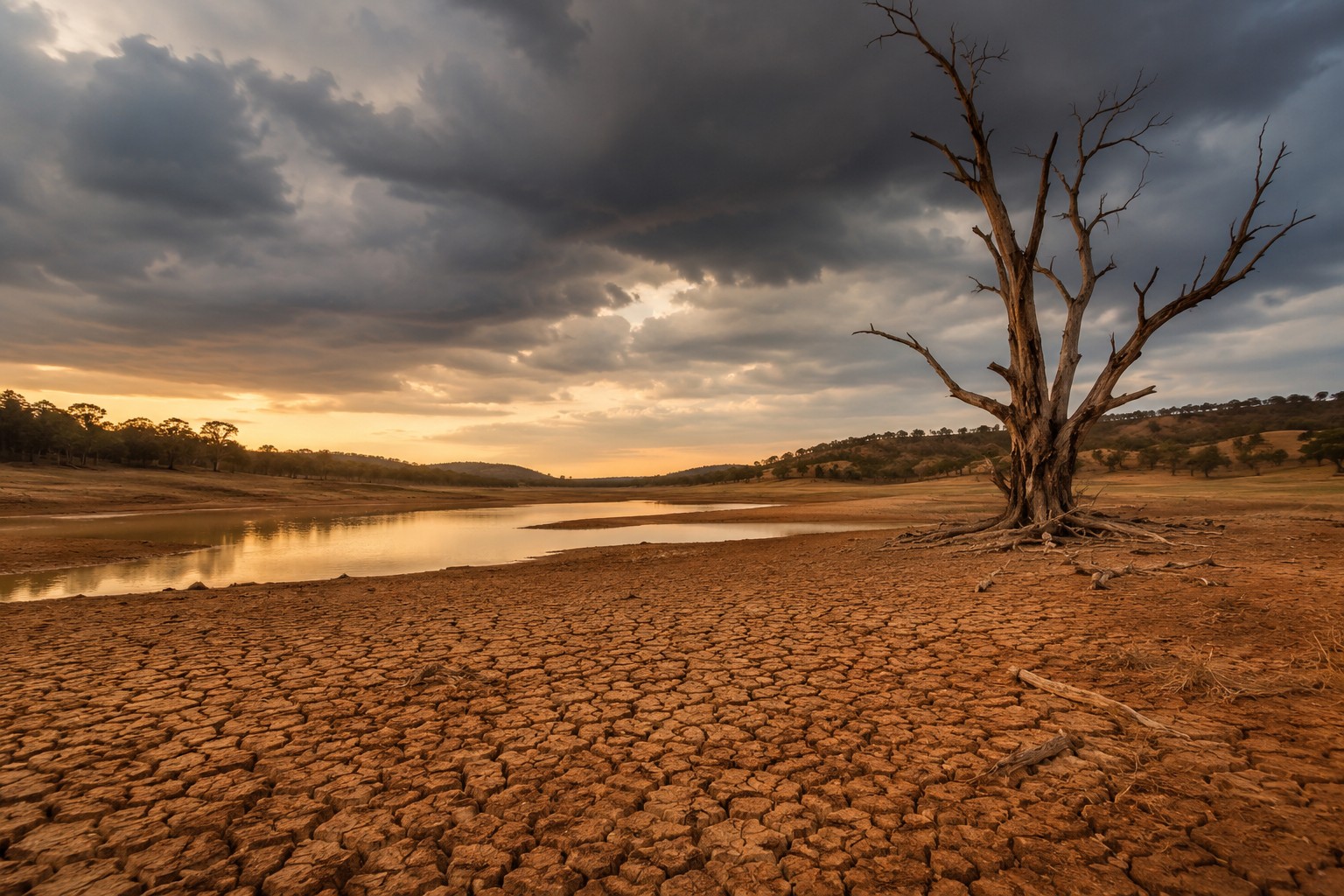
Australia’s weather agencies are forecasting the likely return of the El Niño climate pattern in the coming months, a development expected to bring hotter and drier conditions to large parts of eastern Australia during the second half of the year. The transition would mark the first El Niño event since the episode that developed in spring 2023 and could increase the risk of heatwaves, drought and bushfires across the country.
Climate agencies signal growing confidence
Australia’s Bureau of Meteorology (BoM), alongside several international forecasting centres, has indicated that conditions in the tropical Pacific Ocean are increasingly favouring the emergence of El Niño during the Southern Hemisphere winter.

El Niño occurs when sea surface temperatures in the central and eastern Pacific Ocean become warmer than average. The phenomenon alters global weather patterns and is particularly significant for Australia, where it often leads to reduced rainfall across eastern and southern regions.
While meteorologists caution that climate systems can evolve rapidly, confidence has increased that the Pacific is moving away from neutral conditions and towards an El Niño phase.
What it means for Australia
Historically, El Niño events have been associated with below-average rainfall across much of eastern Australia. Reduced precipitation can affect agriculture, water resources and ecosystems, particularly in regions already vulnerable to drought.
Higher temperatures are also common during El Niño years. Combined with drier vegetation, this can significantly increase bushfire risks during spring and summer.
Farmers, emergency services and water authorities are already monitoring forecasts closely as they prepare for the possibility of more challenging weather conditions later in the year.
Global impacts extend beyond Australia
The effects of El Niño are felt far beyond Australia. The climate pattern influences weather systems around the world, affecting rainfall, temperatures, storm activity and agricultural production across Asia, Africa, the Americas and Europe.
Previous strong El Niño events have contributed to global temperature records, disrupted food production and intensified extreme weather events. Scientists note that ongoing global warming may amplify some of these impacts, making future El Niño episodes potentially more damaging.
Agriculture and water management in focus
Australia’s agricultural sector is particularly sensitive to changing rainfall patterns. Lower winter and spring rainfall can affect crop yields, livestock operations and irrigation supplies.
Water managers are also assessing reservoir levels and long-term forecasts to ensure adequate supplies should dry conditions persist into the warmer months.
Many regions have benefited from favourable rainfall over recent years, providing some resilience against a potential shift towards drier weather.
Preparing for the months ahead
Authorities stress that El Niño does not guarantee drought or extreme heat in every location. Weather outcomes can vary considerably depending on local conditions and interactions with other climate drivers.
Nevertheless, the prospect of a developing El Niño serves as an early warning for governments, businesses and communities to prepare for increased climate risks.
As winter progresses, forecasters will continue monitoring Pacific Ocean temperatures and atmospheric conditions for confirmation that the climate system has entered a new El Niño phase—one that could shape Australia’s weather for much of the year ahead.
Newshub Editorial in Oceania – 3 June 2026

If you have an account with ChatGPT you get deeper explanations,
background and context related to what you are reading.
Open an account:
Open an account
Recent Comments