
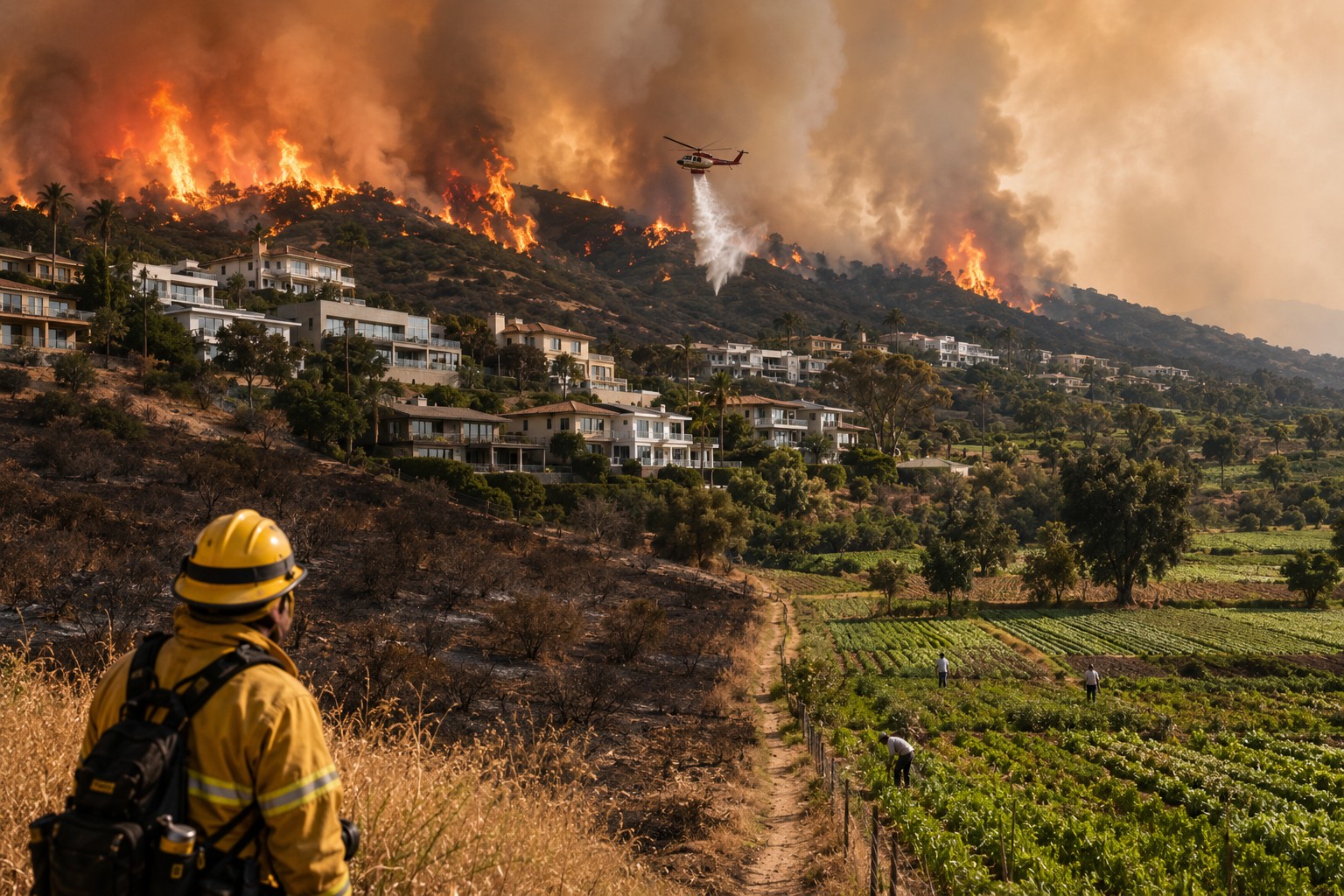
Wildfires captured global attention in 2025 as destructive blazes swept through parts of North America, Europe and Asia, causing billions of dollars in damage and threatening communities in some of the world’s wealthiest regions. Yet a new study suggests that, despite the headlines, the total area burned worldwide has actually declined, highlighting a complex and evolving picture of fire risk in a warming world.
Researchers found that while so-called “megafires” have become more common in developed regions such as California, Canada, South Korea and parts of Europe, the overall number of hectares burned globally has fallen compared with previous decades. The trend is largely attributed to changing land-use practices, particularly in Africa, where agricultural expansion and more intensive land management have reduced the spread of large-scale fires.
A tale of two fire worlds

The contrast reflects a significant shift in the geography of wildfire risk. Historically, vast areas of grasslands and savannahs in Africa accounted for a substantial proportion of the world’s burned land each year. As farming activities have expanded and landscapes have become more fragmented, fires have found it more difficult to spread across large distances.
At the same time, climate change is contributing to hotter, drier conditions in many temperate regions. Combined with prolonged droughts, stronger winds and growing populations living near forests, these conditions have increased the likelihood of highly destructive fires in wealthier countries.
The result is that fewer hectares may be burning globally, but the fires that do occur are often causing greater economic and social damage.
Rising costs and greater exposure
The devastating wildfires seen in California, western Canada, South Korea and southern Europe during 2025 demonstrated how vulnerable developed economies have become. Fires increasingly threaten homes, infrastructure, energy networks and transport systems located in forested or semi-rural areas.
Experts note that economic losses are rising not only because of changing fire behaviour but also because more valuable assets are located in high-risk zones. A single fire near a major urban area can cause damage far exceeding that of larger fires occurring in sparsely populated regions.
Insurance costs have also become a growing concern, with some insurers reassessing coverage in wildfire-prone areas due to increasing claims and uncertainty over future risks.
Climate change remains a key factor
Scientists caution that the decline in total burned area should not be interpreted as evidence that wildfire risks are decreasing. Rising global temperatures continue to create conditions that favour more intense and unpredictable fires in many regions.
Longer fire seasons, more frequent heatwaves and extended drought periods are expected to increase the likelihood of extreme wildfire events in coming decades. Researchers argue that policymakers must focus not only on reducing emissions but also on improving forest management, urban planning and community resilience.
Preparing for a new era of fire risk
The study highlights the need for a more nuanced understanding of wildfire trends. While changes in agriculture have reduced the amount of land burned globally, climate change is simultaneously increasing the destructive potential of fires where people, homes and businesses are concentrated.
As governments confront the growing challenge of extreme weather, wildfire preparedness is becoming an increasingly important component of climate adaptation strategies. The lessons from 2025 suggest that the world’s most damaging fires may no longer be the largest by area, but the ones that burn closest to where people live and work.
Newshub Editorial in Europe – 1 June 2026

If you have an account with ChatGPT you get deeper explanations,
background and context related to what you are reading.
Open an account:
Open an account
Recent Comments