
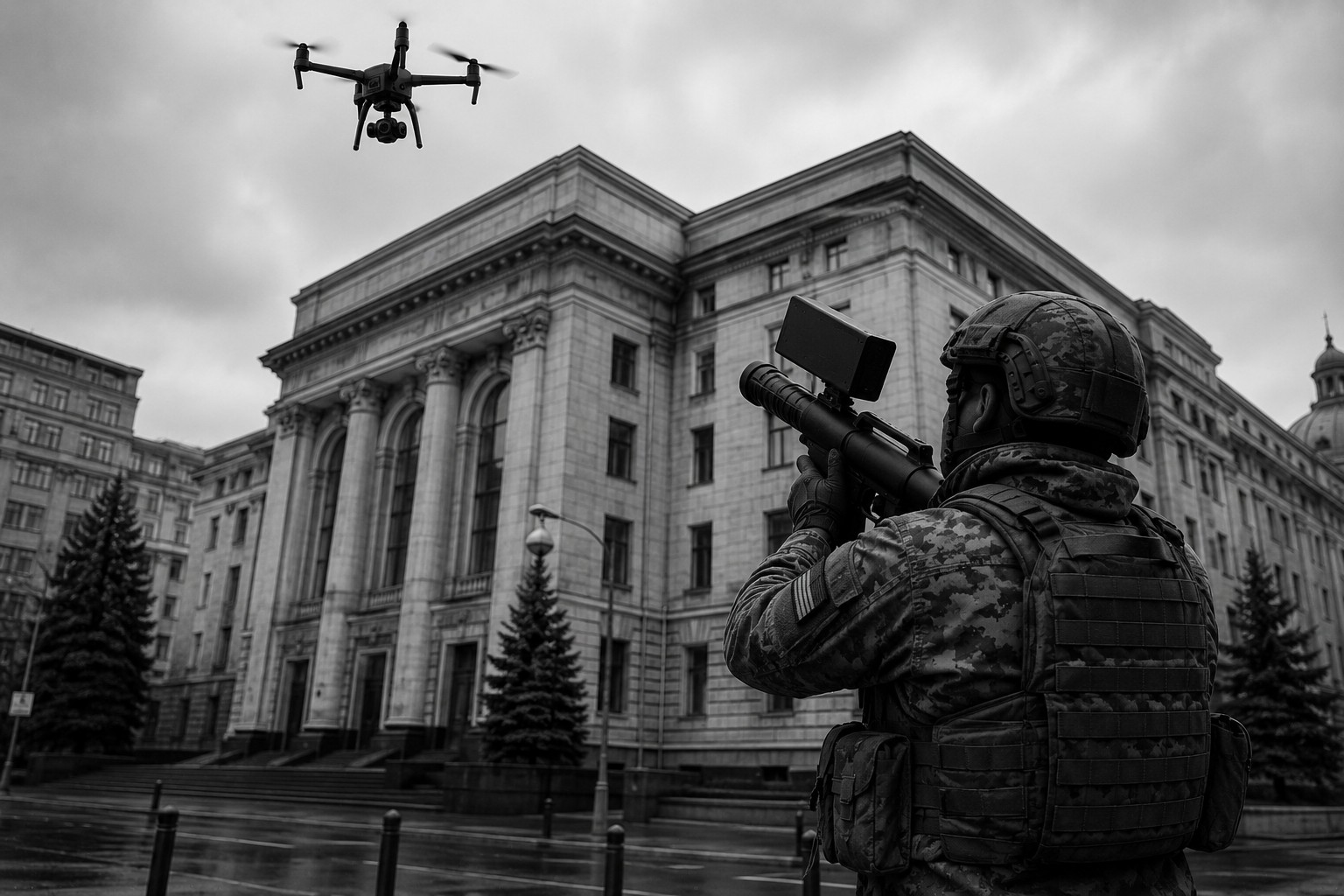
Russia is preparing to allow its central bank and commercial financial institutions to defend themselves directly against drone attacks, under a proposed law that would permit armed protection of critical banking infrastructure. The move reflects how deeply the war has entered Russia’s domestic economy and security system.
Banks become security targets
The proposal would allow the Bank of Russia and selected commercial institutions to organise armed protection for key sites. That marks a significant shift for the financial sector, turning banks from protected civilian institutions into active participants in physical infrastructure defence.
Drone threat spreads
Russia has faced repeated drone attacks on energy, industrial and transport targets. Extending defensive powers to banks suggests that authorities now view financial infrastructure as vulnerable to the same type of disruption. Data centres, payment systems, cash logistics and regional offices may all be considered sensitive assets.

A wider militarisation
The measure also shows the continuing militarisation of civilian institutions. Instead of relying only on the military, police or national guard, the state is pushing more responsibility onto sectors that are essential for economic continuity.
Diplomatic anger grows
The development comes as tensions also rise at the United Nations over Russian threats involving foreign embassies. Western officials have condemned such rhetoric, warning that diplomatic missions must remain protected under international law.
The message is stark: Russia’s war economy is no longer limited to factories, energy sites and the front line. Banks are now being drawn into the country’s security architecture, showing how drone warfare is reshaping the definition of critical infrastructure.
Newshub Editorial in Europe – 27 May 2026

If you have an account with ChatGPT you get deeper explanations,
background and context related to what you are reading.
Open an account:
Open an account
Recent Comments