
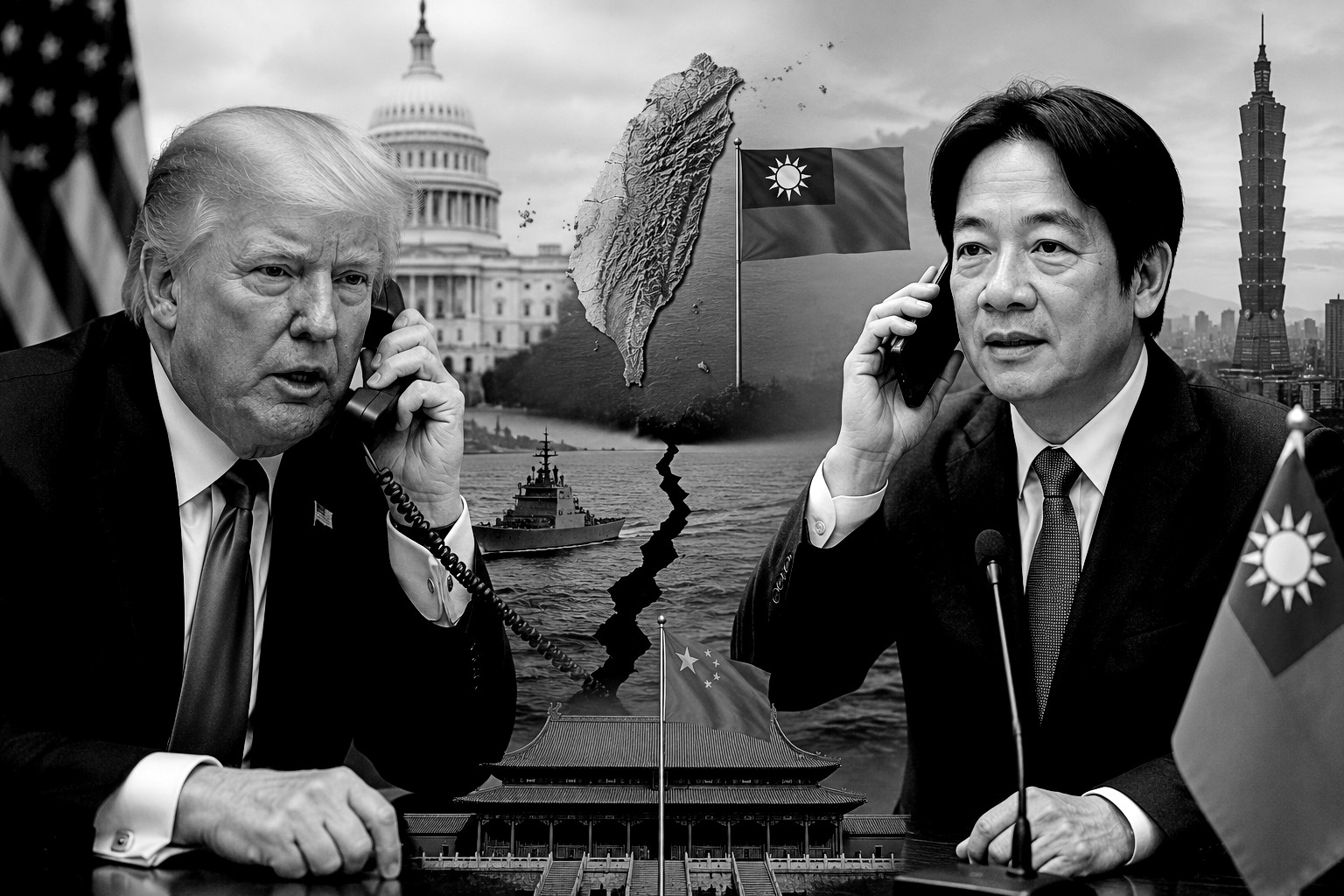
US President Donald Trump has said he intends to speak with Taiwan’s President Lai Ching-te, a move that would break with decades of diplomatic practice. Sitting US and Taiwanese presidents have not spoken directly since Washington shifted formal recognition from Taipei to Beijing in 1979.
Beijing will see the move as provocative
China claims Taiwan as part of its territory and strongly opposes actions that appear to treat Taipei as a sovereign diplomatic counterpart. A direct presidential call would therefore risk angering Beijing and complicating US-China relations shortly after Trump’s meeting with Xi Jinping.
Taipei welcomes the opening
Taiwan has signalled that Lai would be willing to speak with Trump. Lai has said Taiwan wants to maintain the status quo, while arguing that China’s military pressure is undermining peace and stability in the Taiwan Strait.

Arms sales add another layer
The possible call comes as Washington weighs further arms support for Taiwan. Trump has described a proposed arms package as a potential negotiating factor with China, raising concern in Taipei about whether US security backing could become part of broader bargaining.
A symbolic test for US policy
The issue is not only whether a call happens, but what it signals. For Taiwan, direct contact would strengthen political recognition. For China, it would challenge a red line. For Washington, it would test how far Trump is prepared to depart from long-standing ambiguity.
Newshub Editorial in Asia – 21 May 2026

If you have an account with ChatGPT you get deeper explanations,
background and context related to what you are reading.
Open an account:
Open an account
Recent Comments