
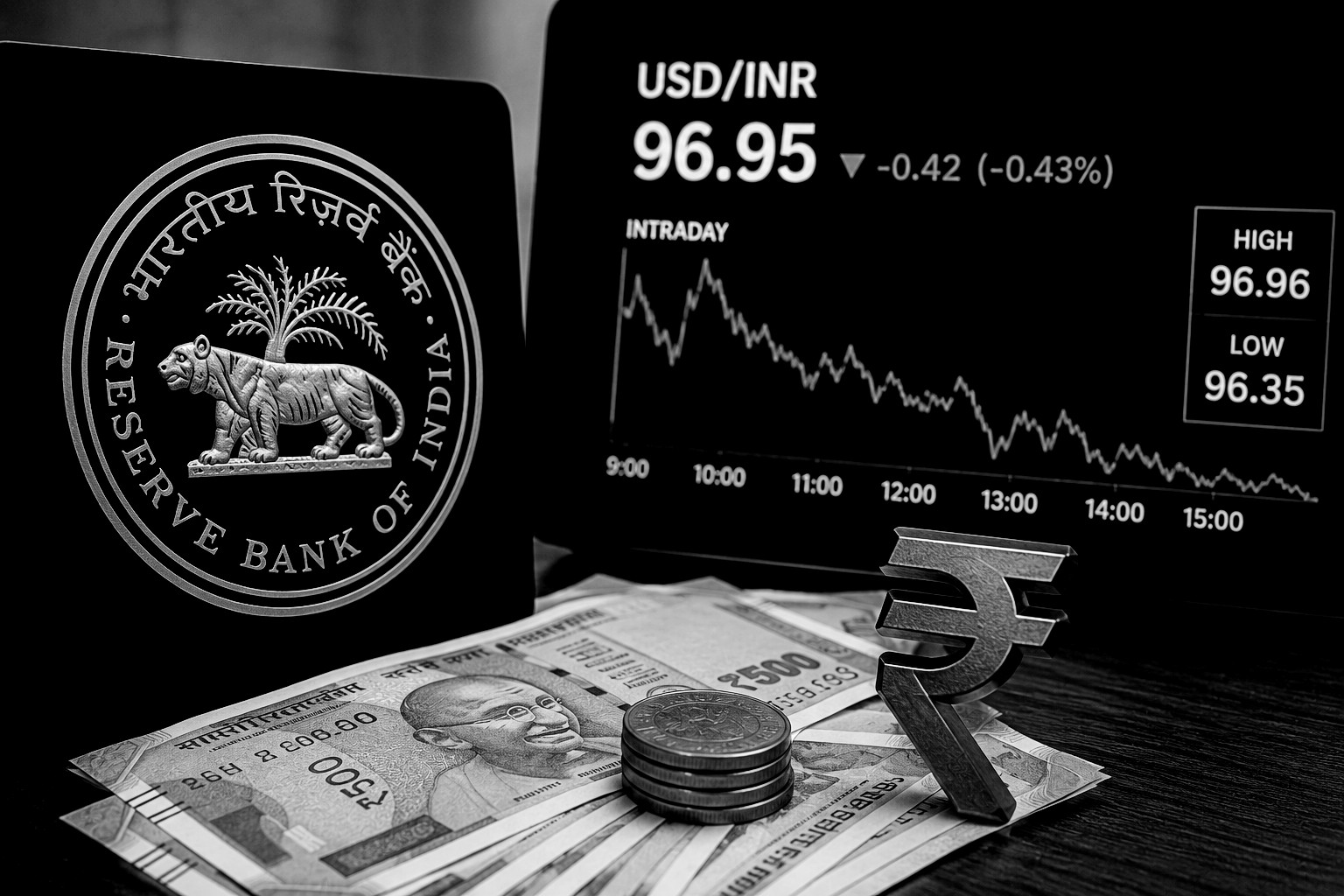
India’s central bank is considering emergency policy options, including a possible interest rate hike, after the rupee fell to a record low near 97 against the US dollar. The currency touched 96.96 on 20 May before intervention helped it rebound in early trading.
Currency pressure intensifies
The rupee has been hit by high oil prices, rising US Treasury yields and capital outflows. India’s dependence on imported energy makes the currency especially vulnerable when crude prices rise, as higher import costs widen external pressure.
RBI intervention continues
The Reserve Bank of India has been selling dollars through state-run banks to slow the decline. Reports suggest daily intervention has been substantial, but the pressure has continued as importers seek dollars and exporters delay conversions.


Rate hike would signal urgency
A rate hike would mark a defensive shift from currency management to broader monetary tightening. It could support the rupee by improving yield appeal, but it would also risk slowing growth at a time when inflation and energy costs are already rising.
Markets await the next move
The RBI has not confirmed a rate decision. For now, investors are watching whether intervention, liquidity tools and possible rate action can stabilise confidence before the rupee’s weakness feeds further into inflation and market sentiment.
Newshub Editorial in Asia – 21 May 2026

If you have an account with ChatGPT you get deeper explanations,
background and context related to what you are reading.
Open an account:
Open an accountIndia’s central bank is considering emergency policy options, including a possible interest rate hike, after the rupee fell to a record low near 97 against the US dollar. The currency touched 96.96 on 20 May before intervention helped it rebound in early trading.
Recent Comments