
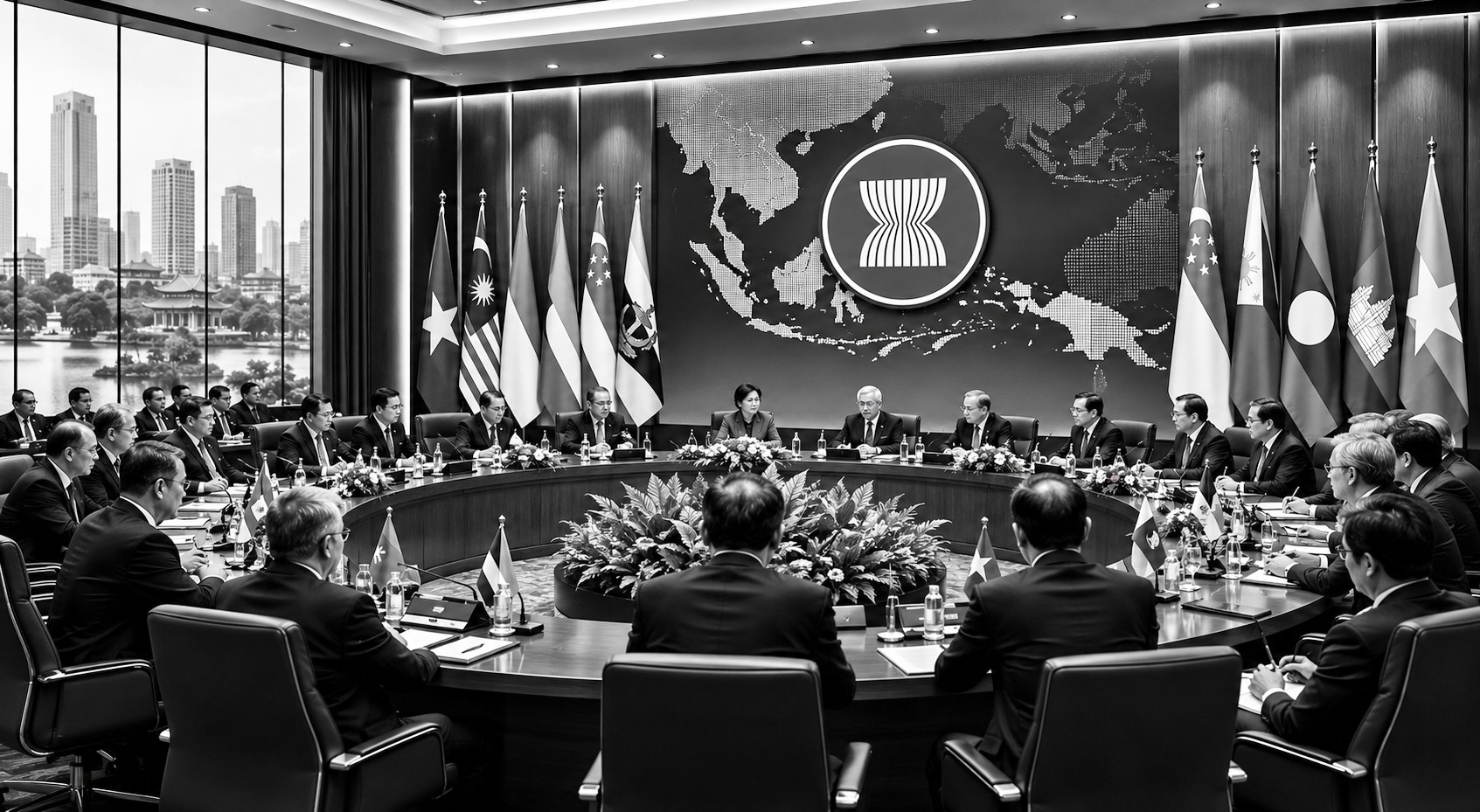
The ASEAN Future Forum 2026 is set to focus on peace, prosperity and people-centred development as regional leaders, diplomats, scholars and business representatives prepare to gather for strategic discussions on Southeast Asia’s future. Initiated by Vietnam, the forum aims to create an open, inclusive and forward-looking platform for addressing the geopolitical, economic and social challenges facing both ASEAN and the wider Asia-Pacific region.
Vietnam expanding diplomatic influence
According to Vietnam’s Foreign Ministry, the forum was established to encourage long-term regional dialogue at a time of increasing geopolitical fragmentation, economic uncertainty and technological transformation. Officials describe the initiative as part of Vietnam’s broader effort to strengthen multilateral cooperation and reinforce ASEAN’s central role within regional diplomacy.
The event is expected to bring together policymakers, academics, international organisations and private-sector leaders to examine issues including economic integration, sustainable development, security cooperation and digital transformation.


Vietnam has increasingly positioned itself as an active diplomatic and manufacturing hub within Southeast Asia, benefiting from global supply-chain diversification and growing foreign investment inflows.
Peace and stability remain central themes
Regional stability is expected to dominate discussions during the forum as ASEAN continues navigating rising tensions linked to major global powers, maritime disputes and economic competition.
Southeast Asian governments remain focused on preserving neutrality and regional balance while avoiding deeper fragmentation between competing geopolitical blocs. ASEAN leaders have repeatedly emphasised the importance of dialogue, non-confrontation and economic cooperation in maintaining long-term regional stability.
The forum is also expected to address humanitarian issues, food security and climate resilience, all of which increasingly affect the region’s long-term economic outlook.
Economic integration and development under scrutiny
Economic growth remains a major priority for ASEAN economies, many of which continue experiencing strong industrial expansion, rising digital adoption and growing middle-class consumption. However, policymakers also face challenges linked to inequality, infrastructure gaps and technological disruption.
The ASEAN Future Forum is expected to explore how regional economies can strengthen resilience while remaining competitive in sectors such as manufacturing, logistics, artificial intelligence and renewable energy.
Business representatives attending the forum are likely to focus on investment opportunities tied to infrastructure, digital trade and industrial supply chains as Southeast Asia continues attracting global manufacturing diversification away from China.
Analysts increasingly view ASEAN as one of the most strategically important economic regions globally due to its population size, geographic position and expanding consumer markets.
People-centred development gains importance
A key theme of the forum will be the concept of people-centred development, reflecting growing concern regarding how economic transformation affects labour markets, education systems and social stability.
Regional policymakers are expected to discuss how technological change, automation and climate adaptation can be managed without increasing inequality or excluding vulnerable populations. Education, healthcare access, workforce training and digital inclusion are likely to feature prominently within policy discussions.
The emphasis on inclusive development reflects ASEAN’s broader effort to combine economic modernisation with social cohesion across highly diverse political and economic systems.
ASEAN seeking stronger global role
The forum also signals ASEAN’s ambition to play a larger role within global governance discussions. As geopolitical competition intensifies between major powers, Southeast Asia is increasingly attempting to strengthen its collective diplomatic voice.
Vietnam’s leadership of the initiative demonstrates how middle-sized regional economies are seeking greater influence through multilateral engagement, economic integration and strategic neutrality.
For ASEAN, the challenge will be maintaining unity and long-term cooperation while navigating a rapidly changing global environment marked by economic fragmentation, technological disruption and rising geopolitical uncertainty.
Newshub Editorial in Asia – 17 May 2026

If you have an account with ChatGPT you get deeper explanations,
background and context related to what you are reading.
Open an account:
Open an accountThe ASEAN Future Forum 2026 is set to focus on peace, prosperity and people-centred development as regional leaders, diplomats, scholars and business representatives prepare to gather for strategic discussions on Southeast Asia’s future. Initiated by Vietnam, the forum aims to create an open, inclusive and forward-looking platform for addressing the geopolitical, economic and social challenges facing both ASEAN and the wider Asia-Pacific region.
Recent Comments