
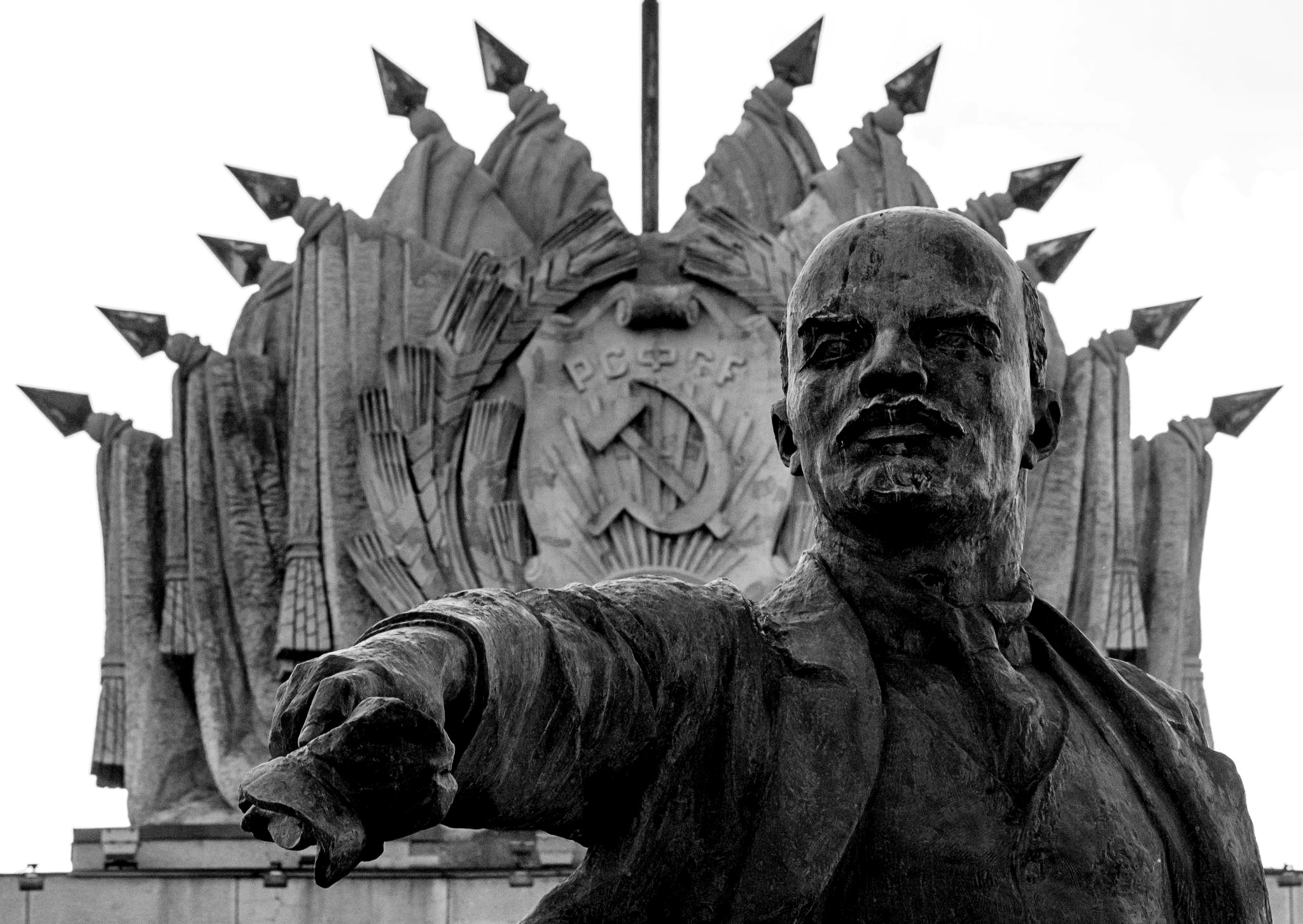
Vladimir Lenin, the revolutionary leader who spearheaded the Bolshevik Revolution of 1917 and became the founding architect of the Soviet state, was born in Simbirsk, Russia, in 1870—marking the beginning of a political legacy that would reshape the modern world.
Early life shaped by empire and upheaval
Born as Vladimir Ilyich Ulyanov on 22 April 1870, Lenin grew up in Simbirsk, a provincial town along the Volga River. His upbringing combined discipline and education, with his father serving as a state school inspector and his mother providing a culturally enriched home environment.
A decisive turning point came in 1887, when his older brother, Alexander Ulyanov, was executed for involvement in a plot against Tsar Alexander III. The event profoundly influenced Lenin’s worldview, accelerating his rejection of imperial authority and guiding him towards revolutionary socialism.

The road to revolution
By the early 20th century, Lenin had established himself as a leading Marxist thinker and organiser. As head of the Bolshevik faction, he advocated a tightly controlled revolutionary party capable of seizing power.
In 1917, against the backdrop of World War I and the collapse of the Russian monarchy, Lenin returned from exile and led the Bolsheviks in the October Revolution. The seizure of power in Petrograd dismantled the provisional government and marked the beginning of a new political order.
Constructing the Soviet system
Following the revolution, Lenin became the head of the new Soviet government. One of his first major decisions was to withdraw Russia from World War I through the Treaty of Brest-Litovsk, a move that secured internal stability at the cost of territorial concessions.
The subsequent civil war between Bolshevik and anti-Bolshevik forces defined the early years of the regime. Under Lenin’s leadership, the Red Army prevailed, enabling the formation of the Soviet Union in 1922. Economic policies evolved from strict central control under War Communism to the more flexible New Economic Policy, designed to revive production and stabilise society.
Enduring influence and contested legacy
The political doctrine associated with Lenin laid the groundwork for communist movements worldwide. The Soviet Union, built on his foundations, would become a dominant force in global affairs throughout the 20th century, particularly during the Cold War.
Lenin’s legacy remains complex. While he is credited with reshaping state structures and challenging entrenched systems of power, critics highlight the authoritarian mechanisms that emerged under his leadership. His governance model influenced decades of political development across multiple continents.
Lenin died in 1924, but his impact continues to resonate in both historical analysis and contemporary political discourse, reflecting the enduring significance of his role in shaping modern geopolitics.
Newshub Editorial in Europe – April 23, 2026

If you have an account with ChatGPT you get deeper explanations,
background and context related to what you are reading.
Open an account:
Open an account
Recent Comments