
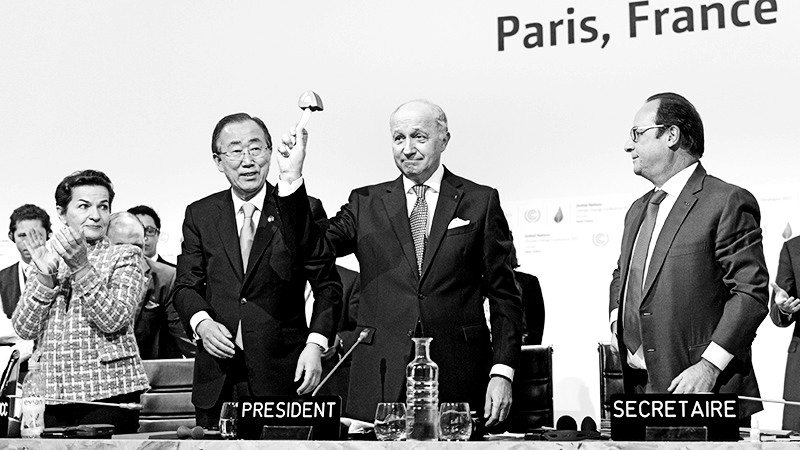
More than 170 countries have signed the Paris Agreement, marking one of the most comprehensive international efforts to combat climate change and limit global warming. The agreement, adopted in 2015 under the framework of the United Nations, represents a landmark in multilateral cooperation, bringing together developed and developing economies under a shared environmental agenda.
A unified global response to climate risks
The Paris Agreement set a clear objective: to keep the rise in global average temperature well below 2°C above pre-industrial levels, while pursuing efforts to limit the increase to 1.5°C. This dual target reflects mounting scientific evidence that even small increases in temperature can lead to severe economic, environmental, and social disruptions. By securing commitments from more than 170 countries, the agreement established a near-universal framework for coordinated climate action.
National commitments drive implementation
Unlike previous climate accords, the Paris Agreement relies on a decentralised structure. Each participating country submits its own Nationally Determined Contributions (NDCs), outlining specific targets for reducing greenhouse gas emissions and adapting to climate impacts. These commitments are subject to periodic review and strengthening, creating a dynamic system designed to evolve in line with scientific developments and economic realities.

Financial support and equity considerations
A central pillar of the agreement is the recognition that developing nations require financial and technical assistance to meet their climate goals. Wealthier countries have pledged to mobilise funding to support mitigation and adaptation efforts in vulnerable regions. This financial mechanism aims to balance responsibility with capacity, ensuring that lower-income countries can participate effectively in the global transition to a low-carbon economy.
Challenges in execution remain significant
Despite its broad adoption, the effectiveness of the Paris Agreement depends heavily on implementation. Many countries face structural challenges, including reliance on fossil fuels, limited infrastructure, and competing economic priorities. In addition, current global emissions trajectories suggest that existing commitments may not be sufficient to meet the 1.5°C target, prompting calls for more ambitious policies and accelerated action.
A framework shaping future policy and investment
Beyond environmental policy, the Paris Agreement has become a key reference point for global capital flows and corporate strategy. Governments, financial institutions, and multinational corporations increasingly align their long-term planning with climate targets, influencing sectors ranging from energy and transport to manufacturing and agriculture. The agreement has also catalysed innovation in renewable energy, green finance, and sustainable technologies.
Outlook: from agreement to accountability
As the global climate agenda evolves, the focus is shifting from signing commitments to delivering measurable outcomes. Regular climate summits and reporting mechanisms are intended to increase transparency and accountability, but the pace of progress remains uneven. The Paris Agreement’s long-term success will depend on sustained political will, technological advancement, and the ability of nations to translate pledges into tangible emissions reductions.
Newshub Editorial in Europe – April 22, 2026

If you have an account with ChatGPT you get deeper explanations,
background and context related to what you are reading.
Open an account:
Open an account
Recent Comments