
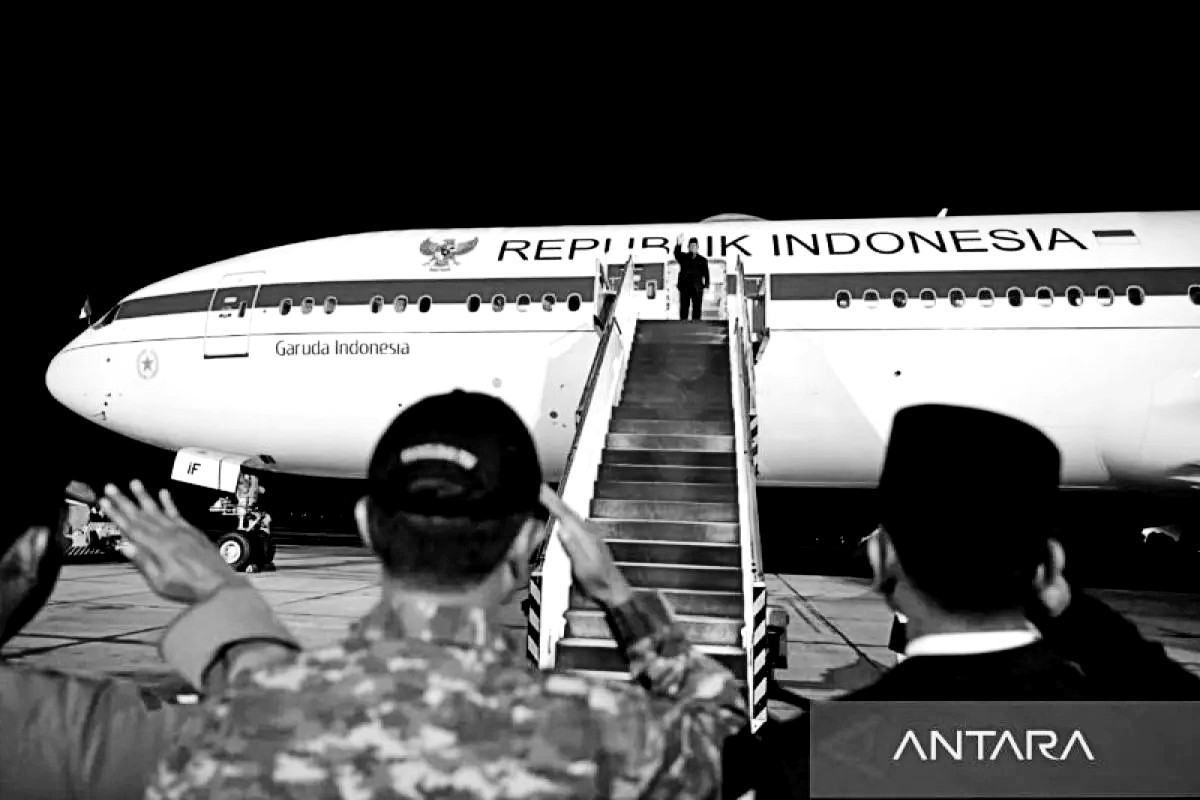
Indonesia’s president Prabowo Subianto has departed for Moscow for high-level talks with Vladimir Putin, signalling Jakarta’s continued effort to balance strategic relationships across major global powers.
Focus on defence, energy and trade cooperation
The visit is expected to centre on defence cooperation, energy partnerships, and bilateral trade expansion. Indonesia has historically maintained a diversified approach to military procurement, and discussions with Vladimir Putin are likely to revisit defence collaboration, including technology transfer and equipment supply.
Energy remains another key pillar. As a resource-rich economy, Indonesia is seeking to optimise its energy mix while ensuring long-term security of supply. Engagement with Russia, a major global energy producer, aligns with Jakarta’s broader strategy of securing stable partnerships across multiple regions.

Trade flows between the two countries, while relatively modest, have scope for expansion, particularly in commodities, agriculture, and industrial goods.
Strategic balancing in a multipolar world
The trip reflects Indonesia’s long-standing foreign policy principle of non-alignment, allowing it to engage with both Western and Eastern powers without formal alliances. Under Prabowo Subianto, this approach has been reinforced as global geopolitical competition intensifies.
Indonesia’s outreach to Moscow comes at a time when many countries are reassessing their international partnerships. By maintaining open channels with Russia, Jakarta aims to preserve strategic flexibility while advancing its national interests.
This balancing act is particularly relevant for Southeast Asia, where economic growth depends heavily on stable international trade and diversified diplomatic engagement.
Geopolitical sensitivities and global reactions
The visit is likely to be closely watched by Western governments, given ongoing geopolitical tensions involving Russia. However, Indonesia has consistently framed its foreign policy decisions as pragmatic and independent, focused on economic development rather than geopolitical alignment.
Analysts note that Jakarta’s engagement with Moscow does not necessarily signal a shift in alliances, but rather reflects a broader trend among emerging economies to pursue multi-vector diplomacy.
At the same time, Indonesia continues to engage actively with Western partners, including the United States and the European Union, reinforcing its position as a key regional and global player.
Implications for markets and regional positioning
For investors, the visit underscores Indonesia’s role as a strategically important emerging market with growing geopolitical relevance. Strengthened ties with Russia could open new avenues for trade and investment, particularly in energy and infrastructure.
At the regional level, Indonesia’s diplomatic activity reinforces its leadership position within Southeast Asia, where economic resilience and geopolitical stability remain closely linked.
As Moscow hosts the talks, attention will focus on concrete outcomes and whether the visit translates into formal agreements. The trajectory of Indonesia–Russia relations will be an important factor in shaping both countries’ economic and strategic outlooks in the coming years.
Newshub Editorial in Asia – April 13, 2026

If you have an account with ChatGPT you get deeper explanations,
background and context related to what you are reading.
Open an account:
Open an account
Recent Comments