
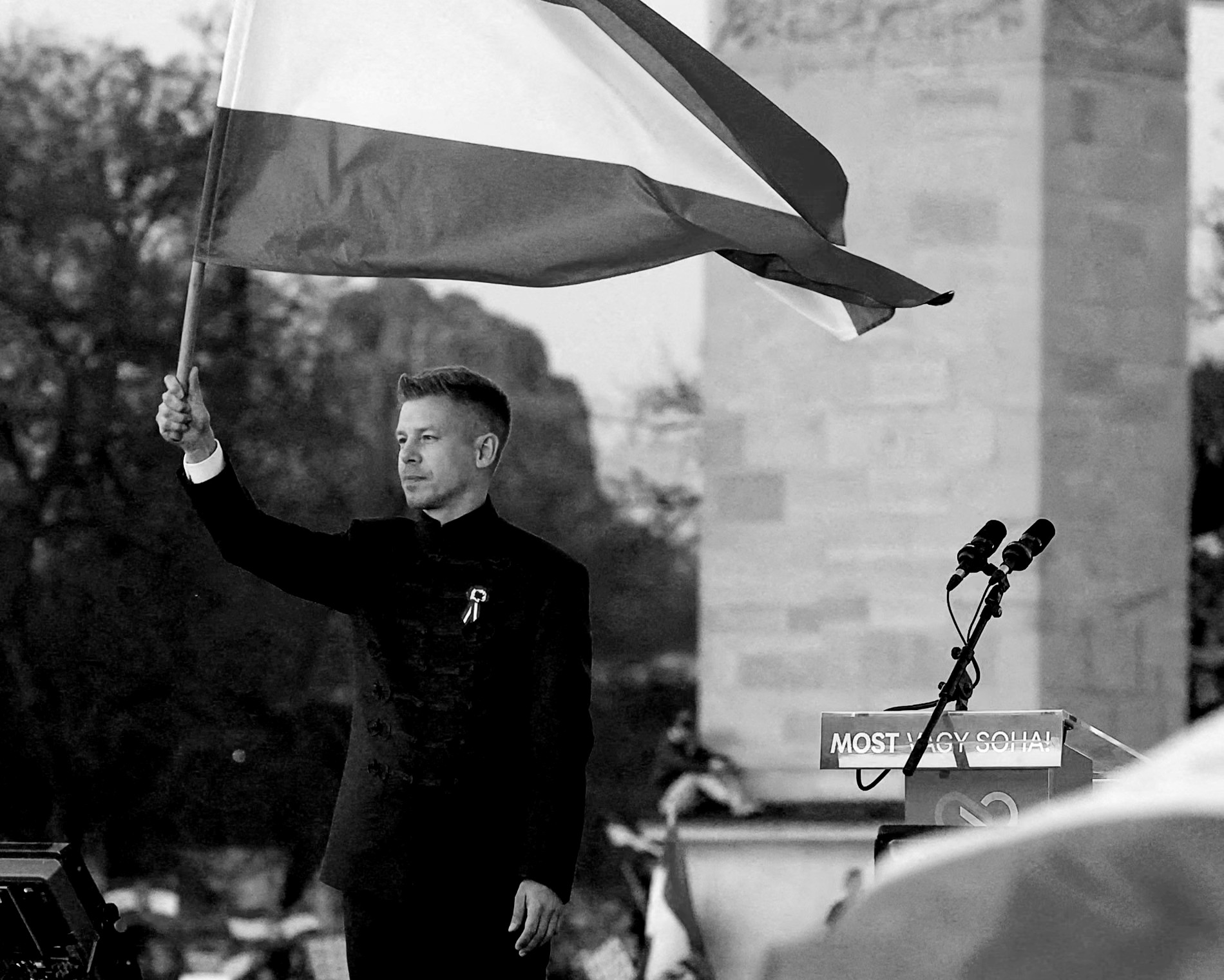
Péter Magyar has emerged as a central figure in Hungary’s political landscape, leading opinion polls ahead of upcoming elections and challenging the long-standing dominance of Prime Minister Viktor Orbán.
From insider to opposition leader
Magyar’s rise is notable not only for its سرعت but for his political origins. A former insider with close ties to Hungary’s ruling establishment, he was once considered part of Orbán’s broader political network. His departure from that circle—and subsequent criticism of the government—has positioned him as a credible challenger with insider knowledge of the system he now opposes.
This transition has resonated with voters seeking change but wary of traditional opposition parties, many of which have struggled to build momentum in recent years.

The rapid ascent of the Tisza movement
At the centre of Magyar’s rise is the Tisza party, a relatively new political force that has quickly gained traction. Positioned as a reformist and anti-corruption movement, Tisza has tapped into public frustration over governance, transparency, and economic management.
The party’s messaging has focused on institutional reform, rule of law, and restoring trust in public administration. Its rapid growth reflects a broader shift in Hungary’s political dynamics, where previously fragmented opposition groups are now being consolidated under a more unified banner.
Challenging a deeply entrenched النظام
Hungary’s political system has been dominated for over a decade by Orbán and his party, which have built a strong electoral base and institutional influence. This has made it difficult for opposition movements to gain meaningful ground.
Magyar’s emergence represents one of the most significant challenges to this dominance in years. His background allows him to appeal to both disillusioned government supporters and traditional opposition voters, potentially reshaping the electoral map.
However, analysts caution that translating polling momentum into electoral success remains a complex task, particularly within a system that favours incumbents.
Public sentiment and economic backdrop
The political shift comes amid economic pressures, including inflation, cost-of-living concerns, and broader European economic uncertainty. These factors have contributed to growing dissatisfaction among voters and increased openness to alternative leadership.
Magyar’s campaign has sought to capitalise on these conditions, framing his movement as both a political and economic reset for Hungary.
European and global implications
Developments in Hungary are being closely watched across Europe. Hungary has played a distinctive role within the European Union, often taking positions that diverge from broader EU policy, particularly on issues related to governance, migration, and foreign policy.
A shift in leadership could therefore have implications beyond national borders, influencing Hungary’s relationship with EU institutions and its role in regional politics.
A test of momentum versus machinery
As elections approach, the central question will be whether Magyar’s momentum can overcome the structural advantages held by the incumbent النظام. Campaign organisation, voter turnout, and media dynamics will all play critical roles in determining the outcome.
For now, Péter Magyar represents a rare moment of রাজনৈতিক fluidity in Hungary—a test of whether a rapidly rising opposition figure can convert public support into tangible political change.
Newshub Editorial in Europe – April 12, 2026

If you have an account with ChatGPT you get deeper explanations,
background and context related to what you are reading.
Open an account:
Open an account
Recent Comments