
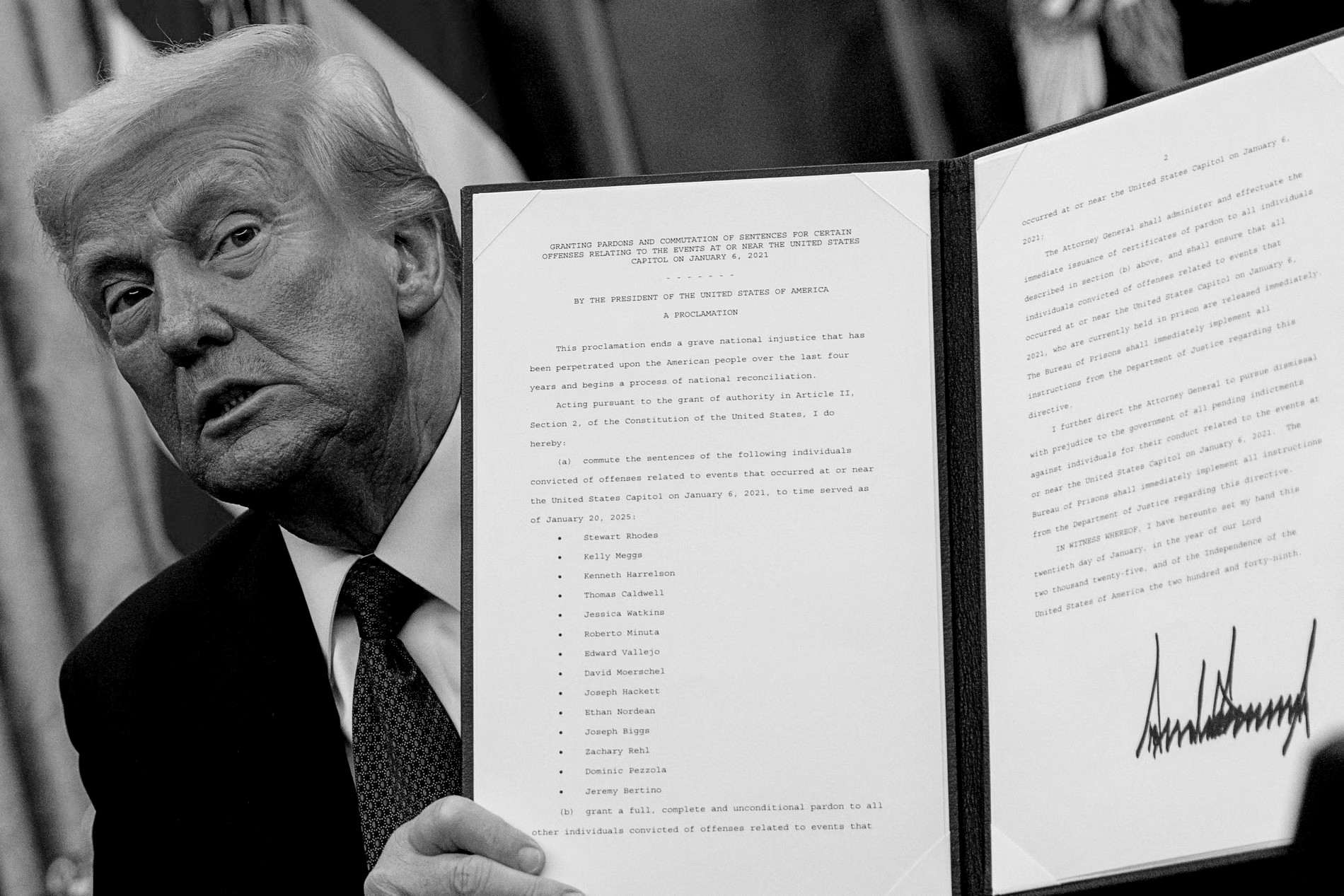
United States President Donald Trump is reportedly preparing to issue a new wave of mass pardons at the end of his current term, a move that is already triggering political and legal debate across Washington.
Pardon powers back in focus
According to reports, Trump has indicated that he intends to use his presidential clemency powers extensively in the final phase of his administration. The US Constitution grants the president broad authority to issue pardons and commutations for federal offences, a power that has historically been exercised at the end of presidential terms.
Trump has already made significant use of this authority during his second term, including controversial decisions affecting individuals connected to the United States Capitol riot. Reports indicate that approximately 1,500 defendants linked to the события have been granted clemency in various forms.

Legal authority versus political controversy
While the president’s legal authority to issue pardons is largely unquestioned, the scale and scope of the reported plans are likely to intensify scrutiny. Critics argue that mass pardons risk undermining the judicial system, particularly if they are perceived as politically motivated.
Supporters, however, frame the move as a legitimate exercise of executive power, emphasising that clemency can serve as a corrective mechanism within the justice system.
The debate reflects a broader tension in US governance between constitutional authority and institutional norms.
Potential scope and targets
Details regarding who may be included in the final round of pardons remain unclear. Historically, end-of-term clemency actions have ranged from non-violent offenders to high-profile political figures.
Analysts suggest that Trump’s approach could extend beyond traditional categories, potentially including individuals involved in politically sensitive cases. This has raised concerns among legal experts about precedent and the long-term implications for accountability.
Impact on US political landscape
The reported plans come at a time of heightened political polarisation in the United States. Any large-scale use of pardon powers is likely to become a focal point in domestic political discourse, influencing both public opinion and institutional relations.
For emerging markets and global observers, developments in US governance remain highly relevant. Political stability, rule of law, and institutional integrity in the United States continue to influence global investor sentiment and geopolitical dynamics.
Historical context and precedent
Presidential pardons at the end of a term are not unprecedented. Previous administrations have used the final days in office to grant clemency, sometimes controversially. However, the scale suggested in current reports would place Trump’s actions among the most expansive in modern US history.
The comparison with past presidents highlights how the use of executive power evolves alongside political context and individual leadership style.
Global implications of domestic decisions
While the issue is fundamentally domestic, its implications extend beyond US borders. Decisions perceived as weakening judicial accountability could affect international perceptions of governance standards.
For countries navigating their own institutional development, particularly in emerging markets, the US often serves as a benchmark. As such, shifts in how executive power is exercised can resonate globally.
As the end of the presidential term approaches, attention will increasingly focus on how and to what extent these reported plans materialise—and what they signal about the future direction of US political norms.
Newshub Editorial in North America – April 12, 2026

If you have an account with ChatGPT you get deeper explanations,
background and context related to what you are reading.
Open an account:
Open an account
Recent Comments