
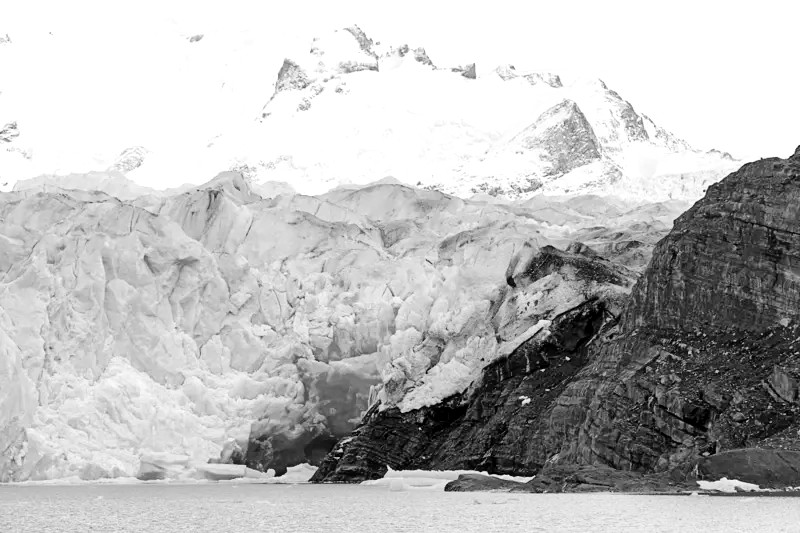
Argentina’s glaciers are under increasing threat from climate change, raising alarm across key industries and communities that depend on meltwater, including the country’s globally significant wine sector.
Glaciers under pressure in the Andes
Stretching along the spine of South America, the Andes mountains are home to critical glacier systems that feed rivers and المياه supplies across Argentina. These glaciers act as natural reservoirs, releasing water gradually and sustaining agriculture, industry, and urban populations.
However, rising global temperatures are accelerating glacial retreat. Scientists warn that many of Argentina’s glaciers are shrinking at an unprecedented rate, threatening long-term water availability in regions that rely heavily on seasonal meltwater.

Nowhere is this more evident than in Mendoza, the heart of Argentina’s wine industry, where vineyards depend on precise water management to maintain production quality.
Wine industry at the frontline
“Without water, there would be no wine,” says Virginia de Valle, whose family operates a 16-hectare vineyard in Mendoza. Her words capture the growing anxiety among producers who are witnessing changes in water supply patterns.
The region’s vineyards are almost entirely dependent on irrigation systems fed by Andean snowmelt and glaciers. As these منابع diminish, growers face increasing uncertainty over water access, particularly during critical growing seasons.
Water scarcity not only threatens yields but also impacts grape quality, which is essential for maintaining Argentina’s competitive position in global wine markets.
Economic and social implications
The risks extend beyond agriculture. Glacial melt supports hydroelectric power, drinking water systems, and broader economic activity across western Argentina. Reduced water flows could therefore have cascading effects on energy supply, urban development, and employment.
For emerging markets like Argentina, where agriculture and natural resources remain central to economic stability, environmental shifts translate directly into macroeconomic risk.
Communities in affected regions are already adapting, implementing more efficient irrigation techniques and exploring alternative water sources. However, such measures may only partially offset long-term declines.
Climate change and policy challenges
Argentina has introduced legal protections for glaciers, recognising their strategic importance. Yet enforcement and monitoring remain ongoing challenges, particularly as economic pressures compete with environmental priorities.
The situation reflects a broader global dilemma: balancing development needs with the urgency of climate action. As glacier loss accelerates, policymakers face increasing pressure to implement sustainable water management strategies while supporting affected industries.
Global relevance of local أزمة
The الأزمة in Argentina’s glaciers is part of a wider pattern observed across mountain regions worldwide. From the Himalayas to the Alps, glacier retreat is reshaping water systems and challenging traditional economic models.
For global markets, this has implications for food security, commodity prices, and supply chains. Argentina’s wine industry, a key export sector, could face disruptions that ripple through international markets.
A shrinking buffer for the future
Glaciers have long provided a natural buffer against climate variability, storing water during colder periods and releasing it during dry seasons. As this buffer diminishes, regions like Mendoza become more vulnerable to drought and extreme weather.
The warning from producers like Virginia de Valle is clear: the issue is no longer abstract. It is immediate, tangible, and deeply connected to livelihoods.
As Argentina confronts this challenge, the fate of its glaciers will serve as a critical indicator of how climate change is reshaping both local economies and global systems.
Newshub Editorial in South America – April 12, 2026

If you have an account with ChatGPT you get deeper explanations,
background and context related to what you are reading.
Open an account:
Open an account
Recent Comments