
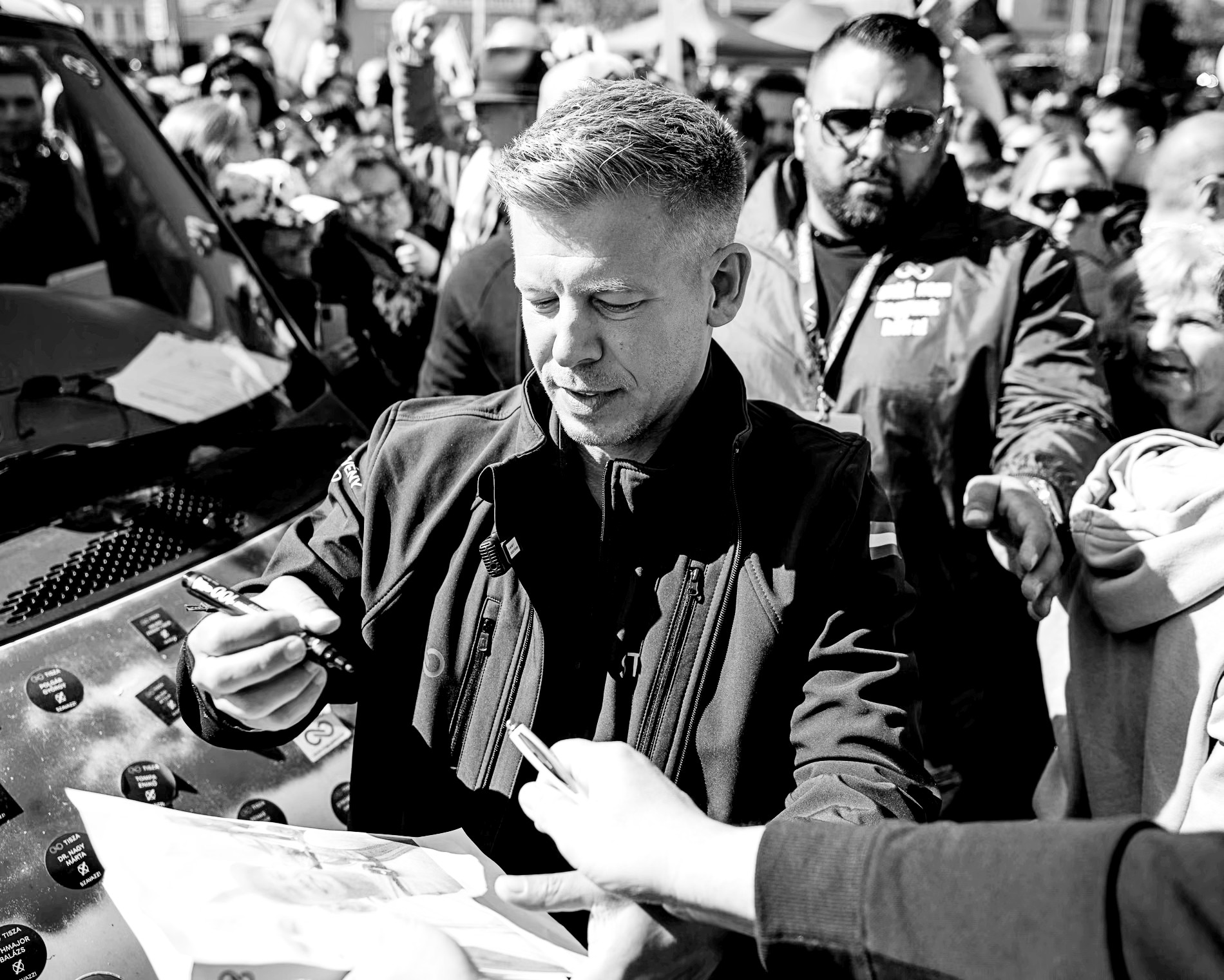
Hungary’s election campaign has entered its final and most volatile phase, with Prime Minister Viktor Orbán and opposition challenger Péter Magyar trading accusations of foreign interference just days before Sunday’s vote.
Escalating rhetoric in final stretch
The closing days of the campaign have been marked by increasingly sharp exchanges, as both camps seek to shape the narrative ahead of a closely watched election. Orbán’s government has accused external actors of attempting to influence the outcome, while Magyar’s camp has countered with claims that the ruling establishment is leveraging international connections to its advantage.
The mutual accusations reflect a broader trend in European politics, where allegations of foreign involvement have become a recurring theme in high-stakes elections.

Polls point to tightening race
Recent polling suggests that the opposition may hold a narrow lead, intensifying pressure on the incumbent government. While Orbán has dominated Hungarian politics for more than a decade, the emergence of Magyar as a credible challenger has shifted the dynamics of the race.
Voter sentiment appears to be shaped by a combination of economic concerns, governance issues and Hungary’s position within the European Union. The possibility of a competitive outcome has elevated both domestic and international attention on the election.
Foreign interference claims take centre stage
Accusations of foreign involvement have become a central campaign issue. Orbán’s allies have pointed to alleged influence from Western institutions and NGOs, while the opposition has raised concerns about ties between the government and external political actors.
Such claims are difficult to verify in real time, but they serve a clear political function: reinforcing existing narratives and mobilising voter bases. The emphasis on external threats also reflects the broader geopolitical tensions affecting the region.
A test of Hungary’s political direction
The election is widely viewed as a referendum on Hungary’s future trajectory. Under Orbán, the country has pursued a more nationalist and independent policy stance, often clashing with EU institutions on issues ranging from rule of law to migration.
Magyar’s campaign, by contrast, has positioned itself as a reform-oriented alternative, promising changes in governance and a recalibration of Hungary’s relationship with its European partners.
High stakes beyond Hungary
The outcome of the vote carries implications beyond national borders. Hungary’s political direction has been closely watched by other European governments, investors and institutions, particularly given its role within the EU and its influence on regional policy debates.
A shift in leadership could signal a broader change in Central European politics, while a continuation of Orbán’s rule would reinforce the current trajectory.
Final hours before decision
As the campaign enters its final hours, the tone remains tense and uncertain. The combination of a tight race and escalating accusations underscores the high stakes involved.
With voters set to head to the polls on Sunday, Hungary stands at a pivotal moment — one that will determine not only its domestic political landscape but also its position within an increasingly complex European and global environment.
Newshub Editorial in Europe – April 11, 2026

If you have an account with ChatGPT you get deeper explanations,
background and context related to what you are reading.
Open an account:
Open an account
Recent Comments