
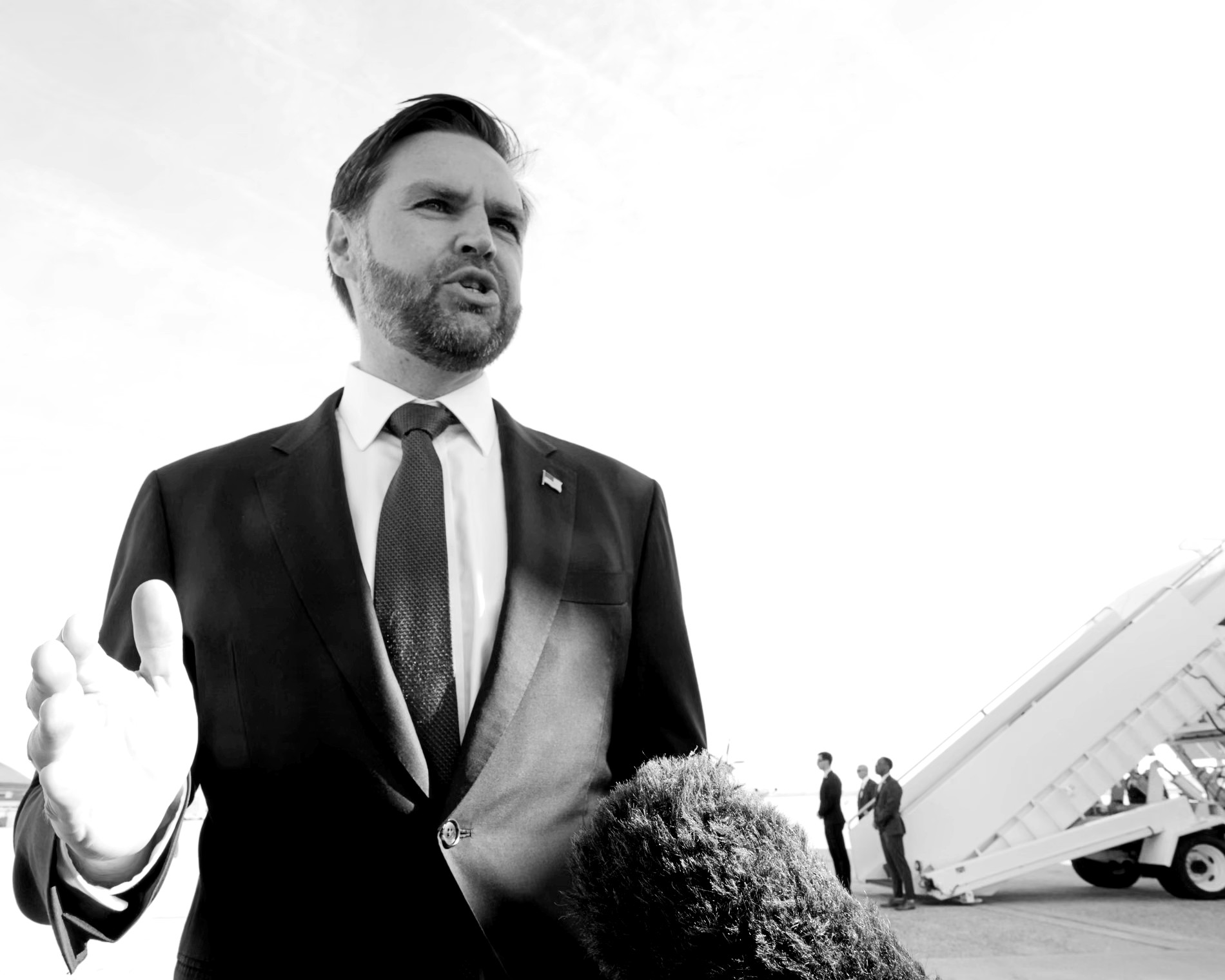
US Vice President JD Vance has arrived in Islamabad for critical peace talks with Iran, warning Tehran not to “play” the United States as uncertainty surrounds both the format and seriousness of the negotiations.
A fragile moment for diplomacy
The talks come at a pivotal stage in the ongoing Iran conflict, following a fragile ceasefire brokered with the help of Pakistan. The negotiations are aimed at preventing a renewed escalation and addressing key issues including sanctions, nuclear activity and regional security.
Vance, who is leading the US delegation, struck a firm tone ahead of the discussions, signalling that Washington expects genuine engagement. His warning reflects concerns within the US administration that Iran could use the talks tactically rather than substantively.

At the same time, officials have acknowledged that the negotiations face significant obstacles, with limited groundwork completed prior to the meeting.
Iran signals caution with lower-level delegation
While Iranian representatives have arrived in Islamabad, Tehran has opted to send a relatively lower-level negotiating team compared to the US delegation. This has raised questions about Iran’s commitment to reaching a breakthrough.
Iranian officials have also attached conditions to full participation, including demands related to sanctions relief and regional ceasefire arrangements. These preconditions have added to uncertainty over whether meaningful negotiations will take place.
The imbalance in representation underscores the current asymmetry in expectations: the US is signalling urgency and high-level engagement, while Iran appears to be adopting a more cautious, measured approach.
Pakistan at the centre of mediation
Pakistan is playing a central role as host and mediator, having already facilitated the ceasefire that made the talks possible. The negotiations represent one of the most significant diplomatic engagements between the US and Iran in decades, with global implications for energy markets and regional stability.
The choice of Islamabad reflects both strategic neutrality and Pakistan’s increasing diplomatic relevance in managing complex geopolitical crises.
War, leverage and negotiation strategy
The talks are taking place against the backdrop of ongoing tensions, including conflict spillovers in the wider Middle East and disruptions to global oil flows. Both sides are entering negotiations with leverage: the US with military and economic pressure, and Iran with its regional influence and control over strategic chokepoints.
Vance’s warning not to “play” the US highlights a broader concern that diplomacy could be used as a delaying tactic, particularly given past breakdowns in negotiations.
A defining test for both sides
The outcome of the Islamabad talks remains highly uncertain. Analysts suggest that the initial meetings may be more about establishing a framework than delivering immediate results.
However, the stakes are clear. A successful negotiation could stabilise the region and ease pressure on global markets, while failure risks a return to open conflict with far-reaching economic and political consequences.
As delegations meet in Islamabad, the talks represent not just a diplomatic engagement, but a critical test of whether dialogue can still function in an increasingly fragmented geopolitical landscape.
Newshub Editorial in Asia – April 11, 2026

If you have an account with ChatGPT you get deeper explanations,
background and context related to what you are reading.
Open an account:
Open an account
Recent Comments