
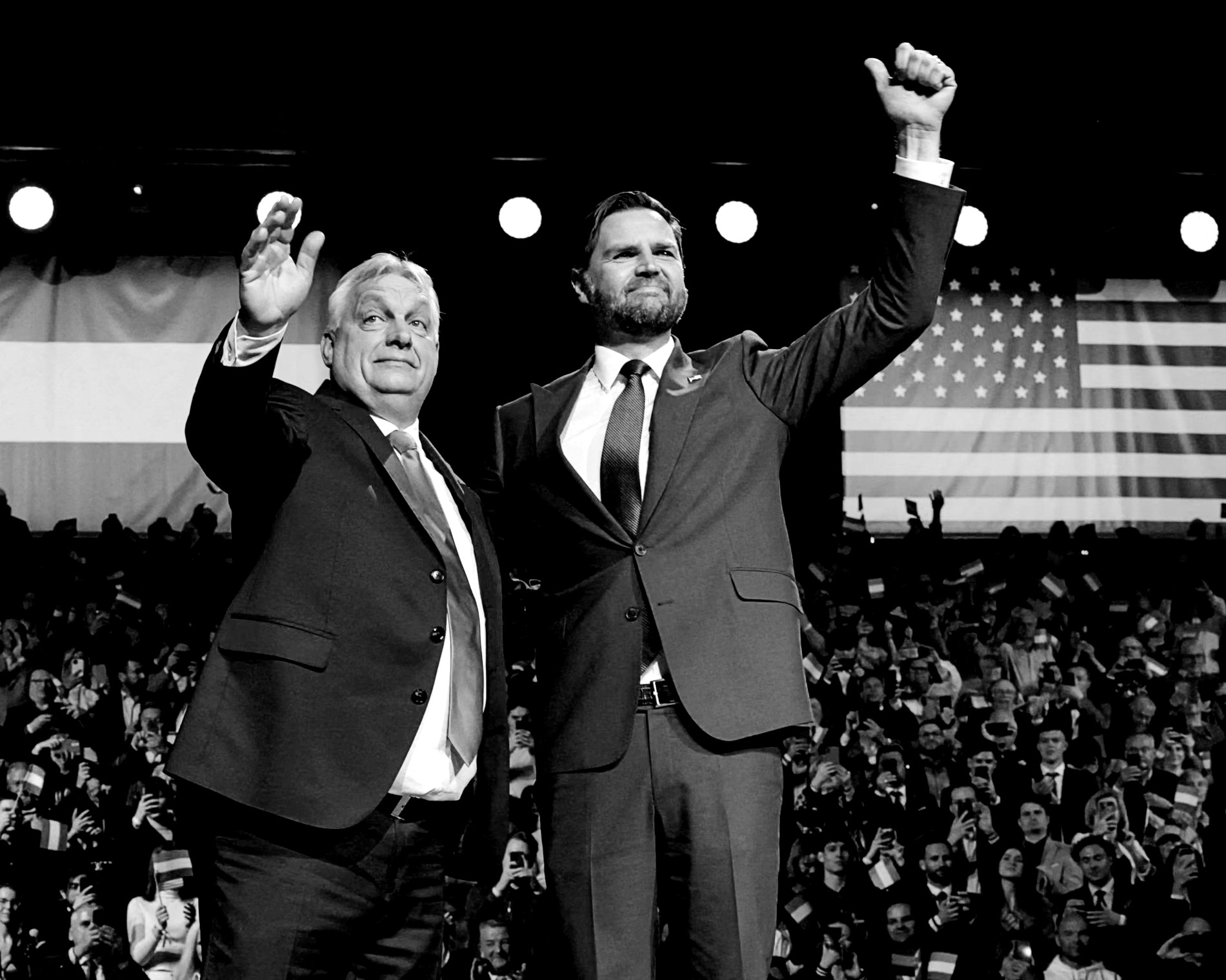
US Vice-President JD Vance has insisted that Washington is not interfering in Hungary’s upcoming election, despite openly expressing support for Prime Minister Viktor Orbán during a visit to Budapest.
‘Support, not interference’
Speaking during his visit, Vance stated that the United States had merely sought to demonstrate its political alignment with Orbán’s government, rather than influence the electoral process. “We had to show support,” he said, framing the move as a reflection of shared policy priorities rather than direct intervention.
The remarks come at a sensitive moment, as Hungary prepares for elections in which opposition parties are currently leading in several opinion polls. The timing of the visit and the public endorsement of Orbán have raised questions among analysts about the boundaries between diplomatic engagement and political signalling.

Opposition momentum complicates narrative
Hungary’s opposition has gained traction in recent months, capitalising on economic pressures and voter fatigue after years of Orbán’s leadership. Polling trends suggest a tighter race than in previous election cycles, increasing the stakes for both domestic actors and international observers.
Critics argue that high-profile visits and statements of support from foreign leaders risk being perceived as attempts to shape voter sentiment, even if no formal intervention takes place. This perception alone can carry political consequences in a closely contested election.
Strategic alignment at the core
The United States’ public backing of Orbán reflects a broader alignment on key geopolitical and ideological issues. These include positions on national sovereignty, migration policy and aspects of economic strategy.
Vance’s visit underscores an effort to reinforce these ties at a time when political dynamics in Central Europe are becoming more fluid. Hungary has long occupied a unique position within European politics, balancing relationships between Western institutions and a more independent national agenda.
Diplomatic signals and electoral sensitivity
While Vance rejected claims of interference, the distinction between support and influence remains contested. International norms typically discourage overt political endorsements during active election periods, particularly from senior foreign officials.
The situation highlights the evolving nature of political diplomacy, where symbolic gestures can carry significant weight. In Hungary’s case, the visibility of U.S. support for Orbán may resonate differently across voter groups, depending on their views of both domestic governance and international alliances.
A closely watched election ahead
As Hungary moves closer to election day, scrutiny of both domestic campaigning and international involvement is expected to intensify. The role of external actors—whether perceived or real—will likely remain a central theme in political discourse.
Vance’s remarks may have been intended to clarify Washington’s position, but they have also added a new layer of complexity to an already competitive electoral landscape.
Newshub Editorial in Europe – April 9, 2026

If you have an account with ChatGPT you get deeper explanations,
background and context related to what you are reading.
Open an account:
Open an accountUS vice-president says on visit to Budapest ‘we had to show’ support for Viktor Orbán, as opposition leads polls
Recent Comments