
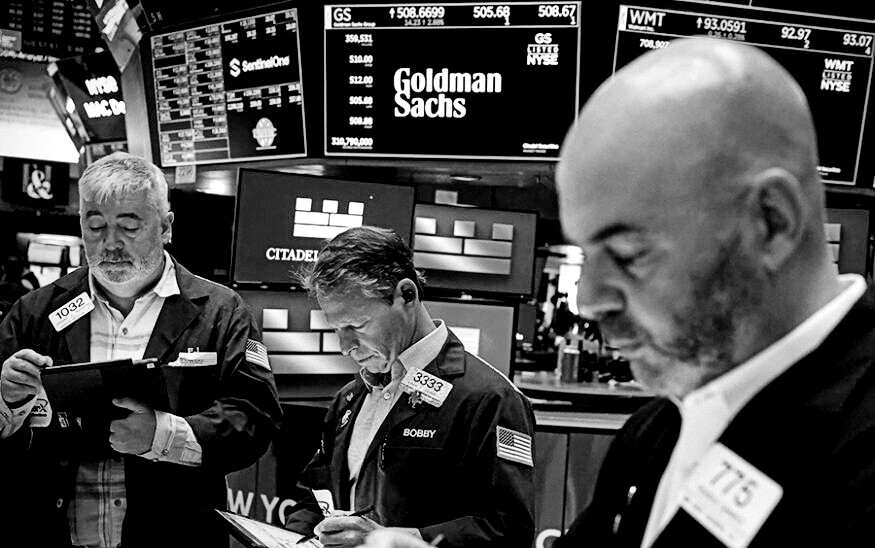
US equities opened sharply higher on Wednesday as investors reacted to a sudden geopolitical de-escalation in the Middle East, with a ceasefire between the United States and Iran triggering a broad “risk-on” move across global markets.
Futures signal strong upside at the open
Ahead of the opening bell, US index futures pointed to a powerful rebound. Dow futures surged around 2.6–2.7%, S&P 500 futures climbed roughly 2.7%, and Nasdaq futures jumped more than 3.5%, indicating a strong risk appetite returning to markets.
The move reflects a classic relief rally, with investors quickly repositioning after weeks of heightened geopolitical risk tied to the Iran conflict and the closure of the Strait of Hormuz.

Oil collapse drives sentiment shift
The dominant catalyst was the sharp drop in oil prices following confirmation that Iran would reopen the Strait of Hormuz under a two-week ceasefire agreement. Crude prices fell roughly 14–16%, marking one of the steepest declines since the pandemic era.
Lower energy prices immediately eased inflation concerns and improved the outlook for both consumers and corporations. This triggered buying across rate-sensitive sectors and growth equities, particularly in technology and consumer discretionary.
Sector rotation: travel up, energy down
The opening rotation was pronounced. Travel and leisure stocks surged, with airlines and cruise operators rallying strongly on the expectation of lower fuel costs. Banking and industrial stocks also advanced as bond yields eased.
In contrast, energy stocks came under pressure in pre-market trading, tracking the sharp decline in crude. Major oil companies saw notable pullbacks, highlighting how quickly capital rotated away from war-driven winners.
Global momentum reinforces US opening
Wall Street’s strong start did not occur in isolation. Asian and European markets had already posted significant gains earlier in the day, with several indices recording their strongest rallies in months.
This synchronised global move reinforced confidence that the ceasefire could stabilise trade flows, particularly energy shipments, which had been severely disrupted during the conflict.
Volatility eases but risks remain
Market volatility declined notably, with the VIX dropping as investors unwound hedges accumulated during the crisis. At the same time, bond markets rallied, pushing yields lower and supporting equity valuations.
However, the rally remains fragile. The ceasefire is temporary, and analysts caution that its durability will depend on continued diplomatic progress and the full reopening of shipping routes through Hormuz.
Outlook: relief rally, not resolution
While Wednesday’s opening reflects a decisive shift in sentiment, markets are pricing in relief rather than resolution. The structural risks—geopolitical instability, inflation pressures, and central bank uncertainty—remain unresolved.
For now, Wall Street is trading on the assumption that the worst-case scenario has been avoided. Whether that assumption holds will determine if this rally evolves into a sustained trend or fades as quickly as it began.
Newshub Editorial in North America – April 8, 2026

If you have an account with ChatGPT you get deeper explanations,
background and context related to what you are reading.
Open an account:
Open an account
Recent Comments