
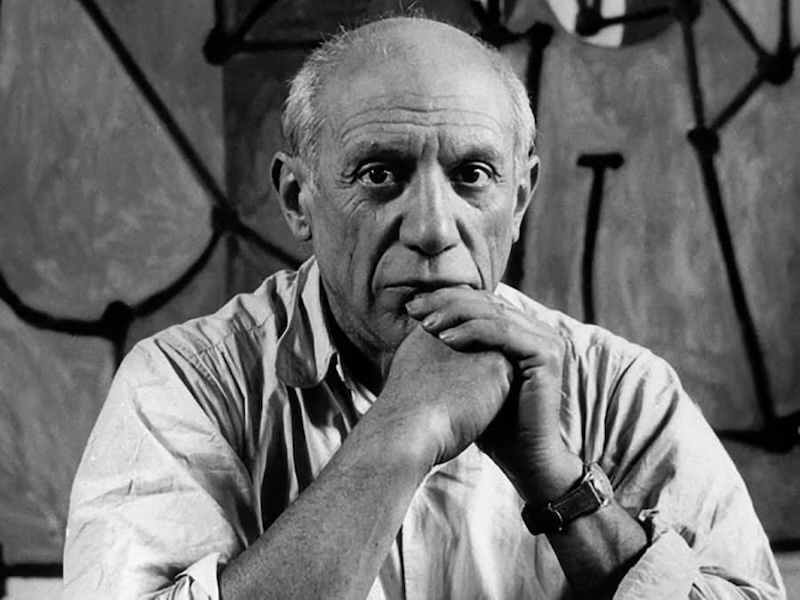
Pablo Picasso, one of the most influential and transformative artists of the 20th century, died in France at the age of 91, marking the end of a career that reshaped the foundations of modern art and visual expression.
A revolutionary force in art history
Born in Spain in 1881, Picasso became a central figure in the evolution of modern art, co-founding the Cubist movement and redefining how form, perspective, and reality could be represented on canvas. His work broke decisively from traditional techniques, introducing fragmented perspectives and abstract structures that challenged conventional artistic norms.
Over a career spanning more than seven decades, Picasso produced an extraordinary volume of work, including paintings, sculptures, ceramics, and drawings—each reflecting a restless drive for innovation.

From Blue Period to Cubism
Picasso’s artistic journey moved through distinct phases, each marked by stylistic and emotional shifts. His early Blue Period captured themes of poverty and isolation, followed by the warmer tones of the Rose Period.
The most radical transformation came with the development of Cubism alongside Georges Braque, a movement that dismantled traditional perspective and reconstructed subjects through geometric abstraction. Works such as Les Demoiselles d’Avignon became landmarks in art history.
Art shaped by politics and conflict
Picasso’s work was deeply influenced by the political turmoil of his time. His iconic painting Guernica stands as one of the most powerful artistic responses to war, capturing the devastation of the Spanish Civil War and becoming a global symbol of anti-war expression.
Throughout his life, Picasso maintained a strong political voice, using art not only as a form of expression but as a medium of commentary and resistance.
A global cultural figure
By the mid-20th century, Picasso had become one of the most recognised artists in the world. His influence extended far beyond galleries and museums, shaping architecture, design, and the broader cultural landscape.
Despite periods of controversy surrounding both his work and personal life, his artistic significance remained undisputed.
Legacy that reshaped visual language
Picasso’s impact lies not only in his individual works but in the way he altered the trajectory of art itself. He expanded the boundaries of what art could be, influencing generations of artists across disciplines.
His ability to continually reinvent his style ensured that his relevance endured throughout his lifetime.
End of an era, enduring influence
With Picasso’s death in France, the art world marks the passing of a figure whose contributions defined an era. Yet his work continues to shape contemporary artistic practice and global visual culture.
More than an artist, Picasso was a force—one whose legacy remains embedded in the language of modern art.
Newshub Editorial in Europe – April 8, 2026

If you have an account with ChatGPT you get deeper explanations,
background and context related to what you are reading.
Open an account:
Open an account
Recent Comments