
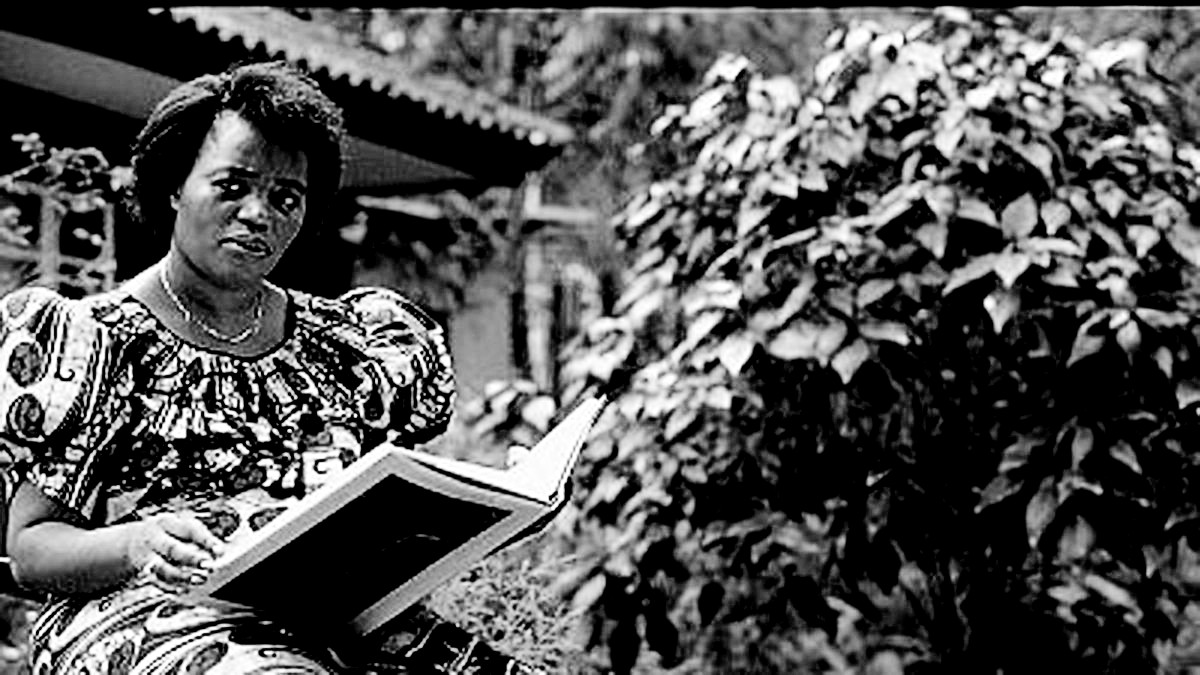
Agathe Uwilingiyimana’s killing removed one of Rwanda’s last moderating forces, accelerating a collapse that would lead to one of the late 20th century’s most devastating genocides.
A reformist leader in a divided nation
Agathe Uwilingiyimana served as Rwanda’s Prime Minister from July 1993 to April 1994, at a moment when the country stood on the brink of systemic breakdown. A moderate Hutu, she was appointed under the Arusha Accords, a power-sharing framework designed to end the civil war between the government and the Rwandan Patriotic Front. Her leadership represented a rare attempt to bridge deep ethnic divisions, advocating institutional reform, merit-based governance and peaceful coexistence in an increasingly polarised political environment.
Mounting tensions and political fragility
Uwilingiyimana’s position was inherently precarious. While she sought to implement the Arusha framework, extremist factions within the political and military establishment actively resisted compromise. These groups viewed power-sharing as a direct threat to their control and began organising against moderate leaders. Public rhetoric intensified, propaganda networks expanded, and preparations for coordinated violence became increasingly evident. In this environment, moderates like Uwilingiyimana were not merely political opponents—they were strategic obstacles.

The events of April 1994
On 6 April 1994, the plane carrying President Juvénal Habyarimana was shot down as it approached Kigali. The event triggered an immediate and highly organised response from extremist elements. Within hours, roadblocks were established and lists of targets—primarily Tutsis and moderate Hutus—were activated.
In the early hours of 7 April, Uwilingiyimana attempted to address the nation via radio, urging calm and adherence to constitutional order. The broadcast was prevented. Shortly thereafter, she was targeted by Hutu soldiers. United Nations peacekeepers assigned to her protection were disarmed and later killed, removing one of the last barriers to her assassination. Uwilingiyimana was subsequently killed, marking a decisive escalation in the unfolding crisis.
Catalyst for genocide and institutional collapse
Her assassination was not incidental—it was strategic. By eliminating moderate leadership, extremist actors removed internal resistance to mass violence. The killing of Uwilingiyimana became one of the first critical steps in the rapid escalation into the Rwandan Genocide.
Over the following 100 days, approximately 800,000 people were killed. The speed and scale of the violence reflected both prior planning and the sudden absence of political counterweights. State institutions were quickly repurposed to facilitate the killings, while international intervention remained limited and ineffective.
The United Nations Assistance Mission for Rwanda (UNAMIR), constrained by a narrow mandate, was unable to prevent the escalation. Following the killing of Belgian peacekeepers, several countries withdrew their personnel, further weakening the mission at a critical moment. The international response has since been widely criticised as one of the most significant failures in modern peacekeeping.
Legacy and historical significance
Agathe Uwilingiyimana is now remembered as a symbol of moderate leadership in the face of rising extremism. Her assassination illustrates how fragile peace processes can be when reformist actors are left exposed within hostile political systems.
Her death was more than the loss of a political figure—it represented the collapse of a viable path toward reconciliation. For policymakers and analysts, the lesson remains clear: the protection of moderate leadership is not optional in conflict prevention; it is foundational. In Rwanda’s case, its absence proved catastrophic.
Newshub Editorial in Africa – April 7, 2026
Recent Comments