
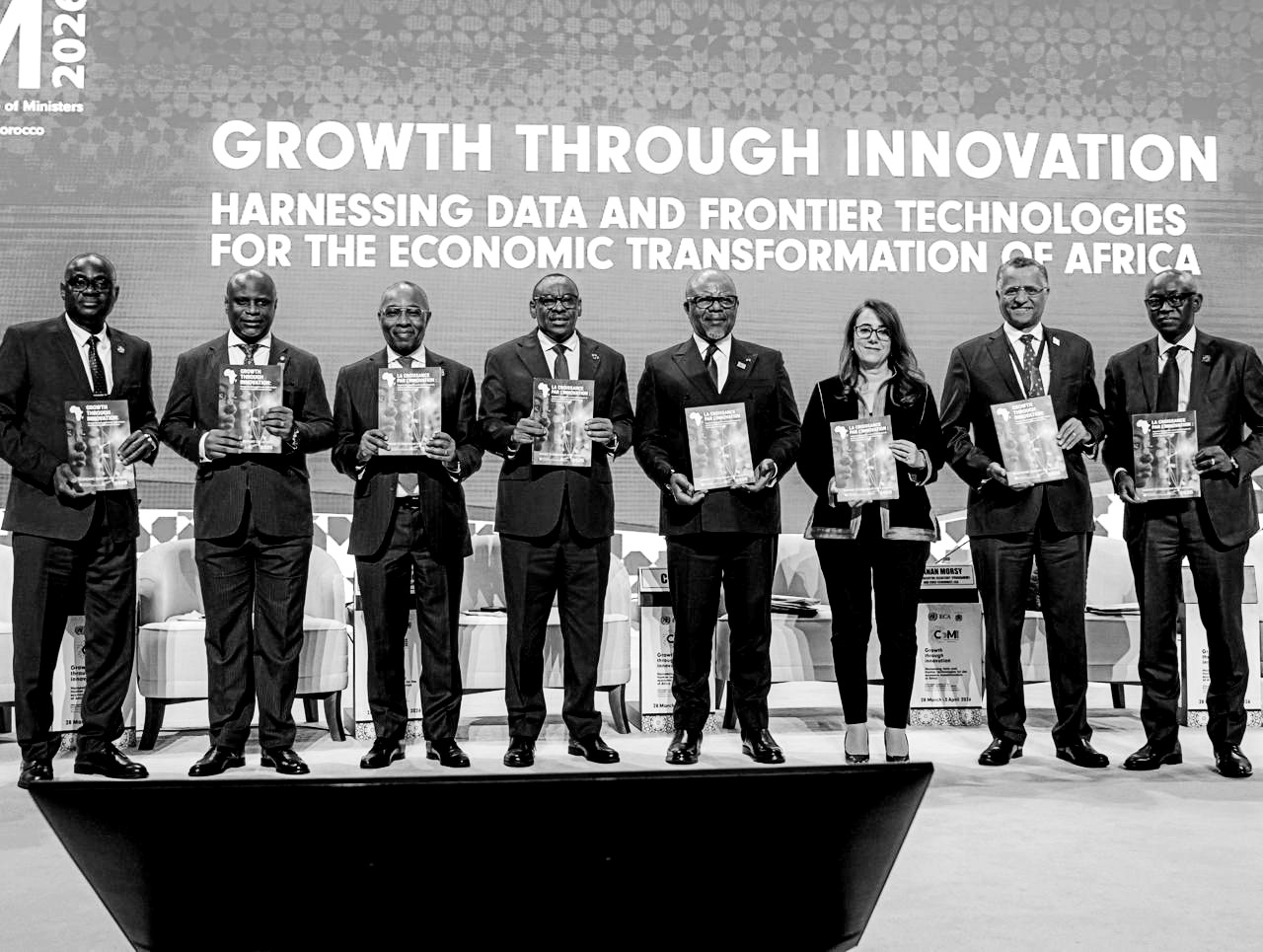
Frontier technologies are increasingly seen as a critical lever for Africa to overcome persistently low productivity levels, with policymakers and investors pointing to digital infrastructure, artificial intelligence and automation as tools to unlock higher-value economic growth.
Growth without transformation
Across much of the continent, economic expansion over the past decade has not translated into structural transformation. While GDP growth has been relatively strong in several markets, productivity gains have lagged, and many economies remain reliant on low-value sectors such as raw commodity exports and informal services.
This disconnect has limited job creation in higher-value industries and constrained income growth. As a result, Africa faces a familiar development challenge: growth without sufficient diversification or industrial upgrading.

The question increasingly being asked is not whether growth is occurring, but whether it is of the right kind to support long-term economic resilience.
Technology as a productivity catalyst
Frontier technologies — including artificial intelligence, cloud computing, digital payments and advanced data systems — are now being positioned as a potential solution. By improving efficiency, reducing transaction costs and enabling scale, these technologies offer a pathway to accelerate productivity across multiple sectors.
In agriculture, for example, digital platforms can optimise supply chains and improve market access. In finance, mobile banking and fintech solutions are expanding access to credit and reducing friction in transactions. In manufacturing and logistics, automation and data analytics can enhance operational efficiency and competitiveness.
The cumulative effect is the potential to shift economic activity from low-productivity segments into higher-value, more scalable sectors.
Infrastructure and execution challenges
However, the adoption of frontier technologies is not without constraints. Digital infrastructure remains uneven across the continent, with gaps in connectivity, data capacity and reliable electricity supply limiting deployment at scale.
Investment requirements are substantial, particularly in data centres, broadband networks and energy systems. Without these foundations, the productivity gains promised by advanced technologies may remain uneven or delayed.
There is also a skills dimension. The effective use of frontier technologies requires a workforce equipped with digital and technical capabilities, placing additional pressure on education systems and training programmes.
Policy and investment alignment
Governments across Africa are increasingly recognising the need to align policy frameworks with technological adoption. This includes regulatory clarity for digital services, incentives for infrastructure investment and support for innovation ecosystems.
Private capital is also playing a growing role, with both domestic and international investors targeting sectors linked to digital transformation. The rise of fintech, in particular, illustrates how technology can scale rapidly when supported by strong demand and enabling regulation.
The challenge lies in ensuring that these investments translate into broad-based productivity gains rather than isolated pockets of growth.
A structural opportunity with long-term implications
The integration of frontier technologies into African economies represents more than incremental change — it offers the potential for structural transformation. By enabling new business models, improving efficiency and expanding access to markets, technology can help shift the continent towards higher-value economic activity.
At the same time, the outcome is not guaranteed. Execution, infrastructure and policy coherence will determine whether the opportunity is fully realised.
What is clear is that the stakes are high. With a young and rapidly growing population, Africa’s economic trajectory will increasingly depend on its ability to harness technology not just for growth, but for productivity.
Newshub Editorial in Africa – April 6, 2026

If you have an account with ChatGPT you get deeper explanations,
background and context related to what you are reading.
Open an account:
Open an account
Recent Comments