
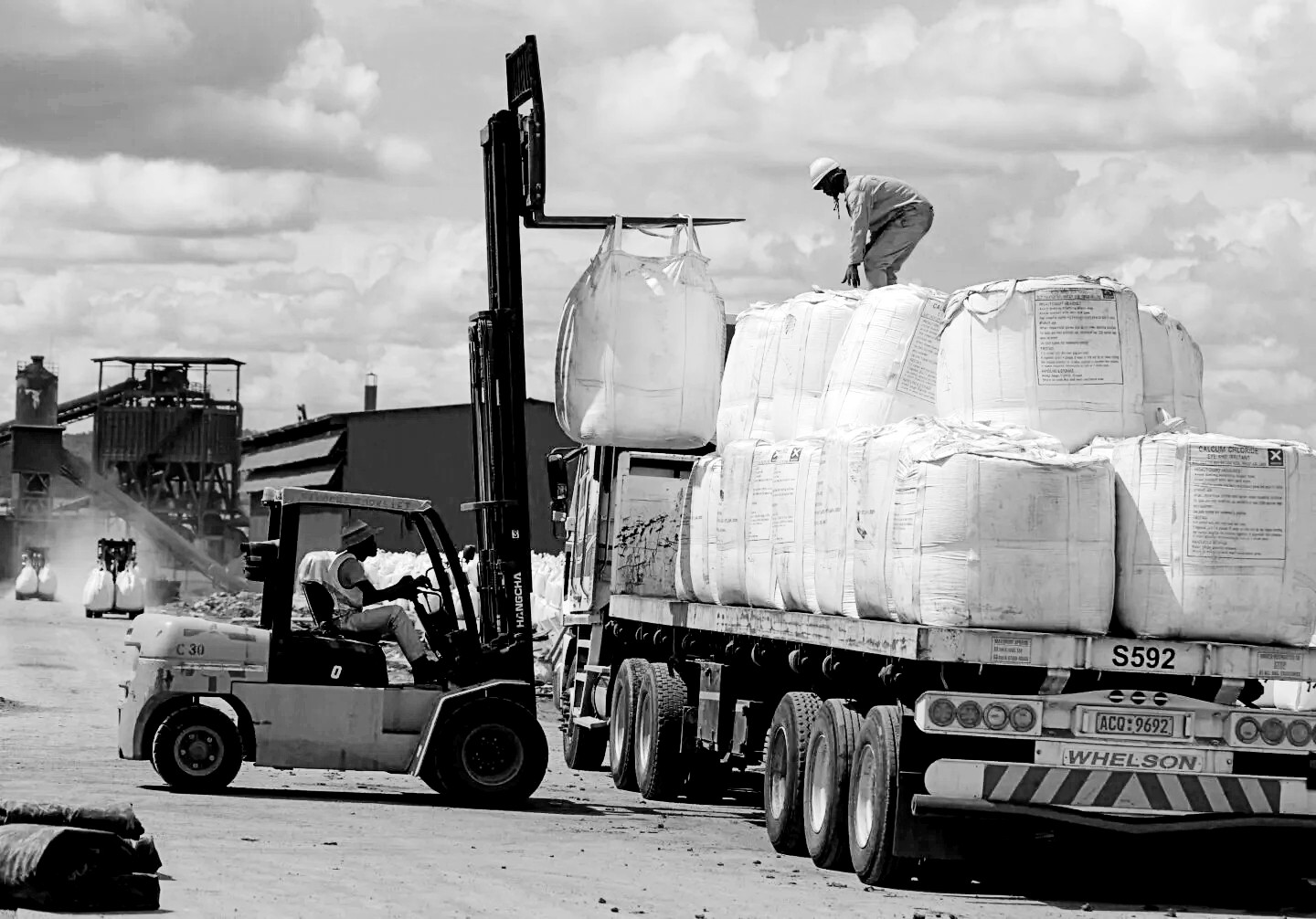
African governments are increasingly turning to export restrictions on critical minerals to capture more value from their resources, but experts warn that without parallel investment in domestic processing and industrial capacity, such policies risk backfiring.
A push to retain value at home
Across the continent, countries rich in lithium, cobalt, copper and rare earths are seeking to move up the value chain. Export bans or restrictions on raw materials have been introduced or proposed as a way to force investment into local processing and refining.
The logic is clear: instead of exporting unprocessed resources at low margins, African economies aim to develop downstream industries that generate higher revenues, create jobs and support industrialisation.

This approach reflects growing recognition that resource wealth alone has not translated into sustained economic transformation.
Policy without capacity risks disruption
However, analysts caution that export bans, when implemented in isolation, can create unintended consequences. Without sufficient domestic processing capacity, restrictions may simply reduce export volumes, lower government revenues and deter investment.
In several cases, infrastructure gaps — including unreliable power supply, limited transport networks and insufficient industrial facilities — have made it difficult to scale local processing operations. As a result, companies may delay or cancel projects rather than commit capital under uncertain policy conditions.
There is also a risk that global buyers will shift supply chains to alternative sources, reducing long-term demand for African exports.
The role of integrated industrial policy
Experts emphasise that export controls must be part of a broader, coordinated industrial strategy. This includes investment in energy infrastructure, regulatory clarity, access to financing and partnerships with global industry players.
Developing refining and processing capacity requires not only capital but also technical expertise and stable policy frameworks. Without these elements, efforts to localise value chains are unlikely to succeed at scale.
Some countries are beginning to adopt more integrated approaches, combining targeted restrictions with incentives for domestic investment and joint ventures with international firms.
Global demand creates a strategic opportunity
The urgency of the debate is underscored by rising global demand for critical minerals, driven by the energy transition and the expansion of digital technologies. Africa holds a significant share of the world’s reserves, positioning the continent as a key supplier in future supply chains.
This creates a strategic window of opportunity. If managed effectively, mineral wealth could support industrial development and economic diversification. If mismanaged, it risks reinforcing existing patterns of dependency on raw material exports.
Balancing control and competitiveness
For policymakers, the challenge lies in balancing national control over resources with the need to remain competitive in global markets. Overly restrictive policies may undermine investor confidence, while insufficient intervention risks leaving value untapped.
A calibrated approach — combining export management with investment in infrastructure, skills and industrial ecosystems — is increasingly seen as the most viable path forward.
From extraction to transformation
Africa’s critical minerals sector stands at a turning point. Export bans alone are unlikely to deliver the desired shift towards higher-value production. Instead, success will depend on the ability to build integrated value chains that extend beyond extraction.
As global demand accelerates, the decisions taken now will shape whether the continent remains a supplier of raw materials or evolves into a competitive industrial player in the global economy.
Newshub Editorial in Africa – April 6, 2026

If you have an account with ChatGPT you get deeper explanations,
background and context related to what you are reading.
Open an account:
Open an account
Recent Comments