

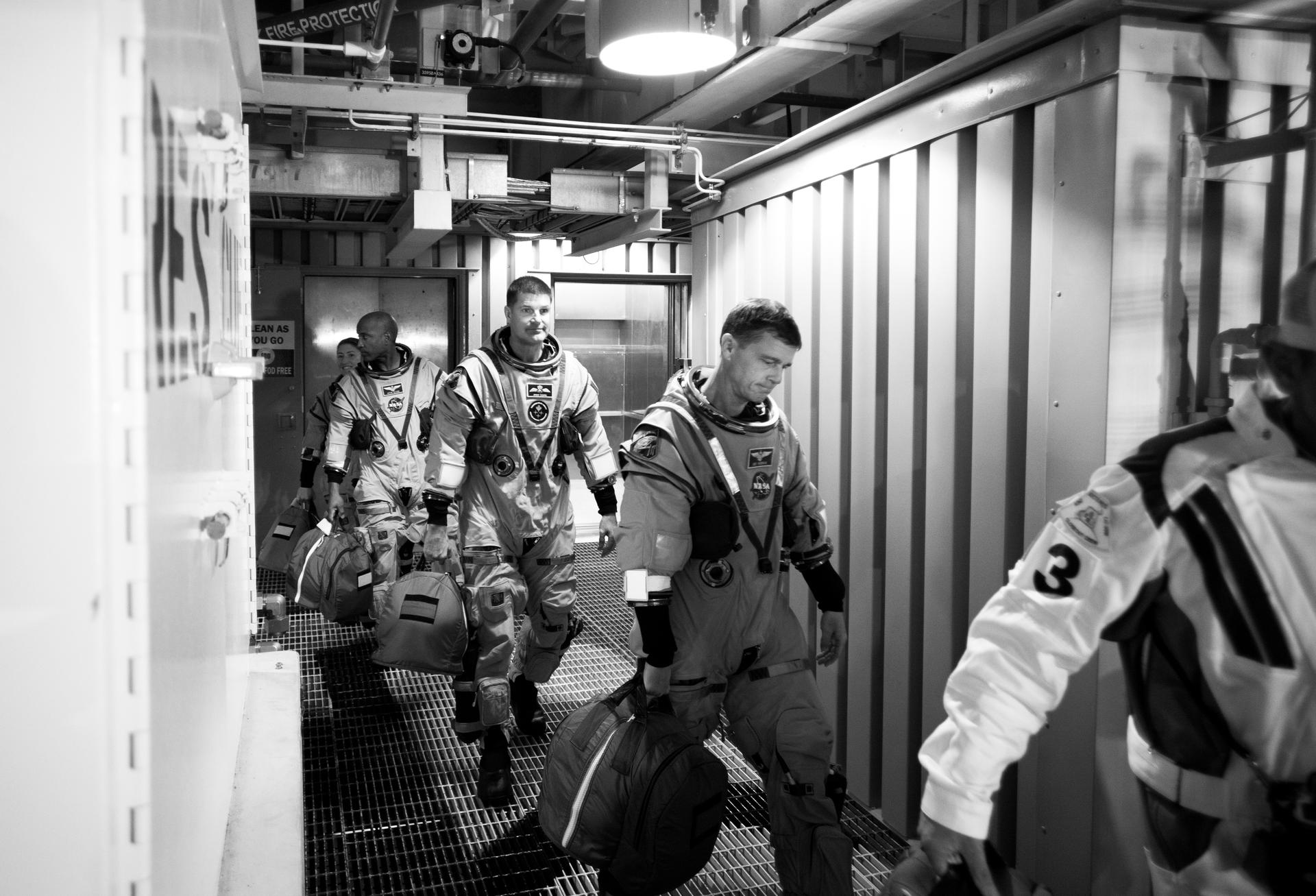
Nasa’s Artemis II mission represents the first crewed journey beyond low Earth orbit in more than 50 years, marking a decisive step toward returning humans to the Moon and establishing a long-term presence beyond Earth. As part of the broader Artemis programme, the mission is designed to validate systems, test human performance in deep space, and pave the way for future lunar landings and Mars exploration.
A critical test before returning to the Moon
Artemis II will send four astronauts aboard the Orion spacecraft, launched by the Space Launch System (SLS), on a journey around the Moon and back to Earth. Unlike Artemis I, which was an uncrewed test flight, this mission will involve full human participation, making it a high-stakes operational milestone.
The mission’s core objective is system validation. Engineers and mission planners will assess life-support capabilities, navigation precision, propulsion systems, and communication performance in deep space conditions. Particular focus will be placed on the spacecraft’s ability to sustain astronauts during extended travel and to safely re-enter Earth’s atmosphere at high velocity.

Importantly, Artemis II will not attempt a lunar landing. Instead, it is structured as a proving mission to ensure that all critical components are functioning as expected before committing astronauts to surface operations in Artemis III.
An international crew reflecting a new era
The Artemis II crew consists of NASA astronauts Reid Wiseman, Victor Glover, and Christina Koch, alongside Canadian astronaut Jeremy Hansen. This composition reflects a strategic shift toward international collaboration in space exploration.
Canada’s involvement is tied to its technological contributions to the Orion spacecraft and broader Artemis infrastructure. The inclusion of an international astronaut signals a move toward shared ownership of deep space missions, rather than purely national efforts.
The mission also carries symbolic significance. With Christina Koch and Victor Glover on board, Artemis II continues the evolution of human spaceflight toward greater diversity and representation, aligning with modern institutional priorities.
Strategic positioning in the Artemis programme
Artemis II sits at the centre of a long-term roadmap aimed at establishing a sustained human presence on the Moon. The programme’s focus is on the lunar south pole, where water ice deposits could support life-support systems, fuel production, and extended missions.
Future phases include the development of the Lunar Gateway, a space station orbiting the Moon, and surface habitats designed for long-duration stays. These elements form the backbone of a new space infrastructure intended to enable regular missions rather than one-off expeditions.
The Moon is increasingly viewed not just as a destination, but as a staging ground for deeper space exploration, particularly missions to Mars. Artemis II is therefore a foundational step in a broader interplanetary strategy.
Economic and technological implications
Beyond its scientific objectives, Artemis II underscores the growing commercial dimension of space exploration. The programme supports a wide network of private-sector contractors, driving innovation across aerospace, materials science, and communications.
Technologies tested during the mission may later support lunar resource utilisation, including extracting water and producing fuel directly on the Moon. Such capabilities are essential for reducing mission costs and enabling scalable operations in deep space.
This shift toward a hybrid public-private model reflects a broader transformation of the space economy, where governments act as anchors while industry drives execution and innovation.
A defining moment for modern space exploration
Artemis II represents a transition from experimental missions to a structured, long-term presence in space. Its success will determine the pace and credibility of future Artemis missions, including the planned return of humans to the lunar surface.
As preparations continue, the mission stands as a milestone not only for NASA but for global space ambitions. It signals that human exploration beyond Earth orbit is no longer a distant objective, but an active and accelerating reality.
Newshub Editorial in North America – April 1, 2026

If you have an account with ChatGPT you get deeper explanations,
background and context related to what you are reading.
Open an account:
Open an account
Recent Comments