
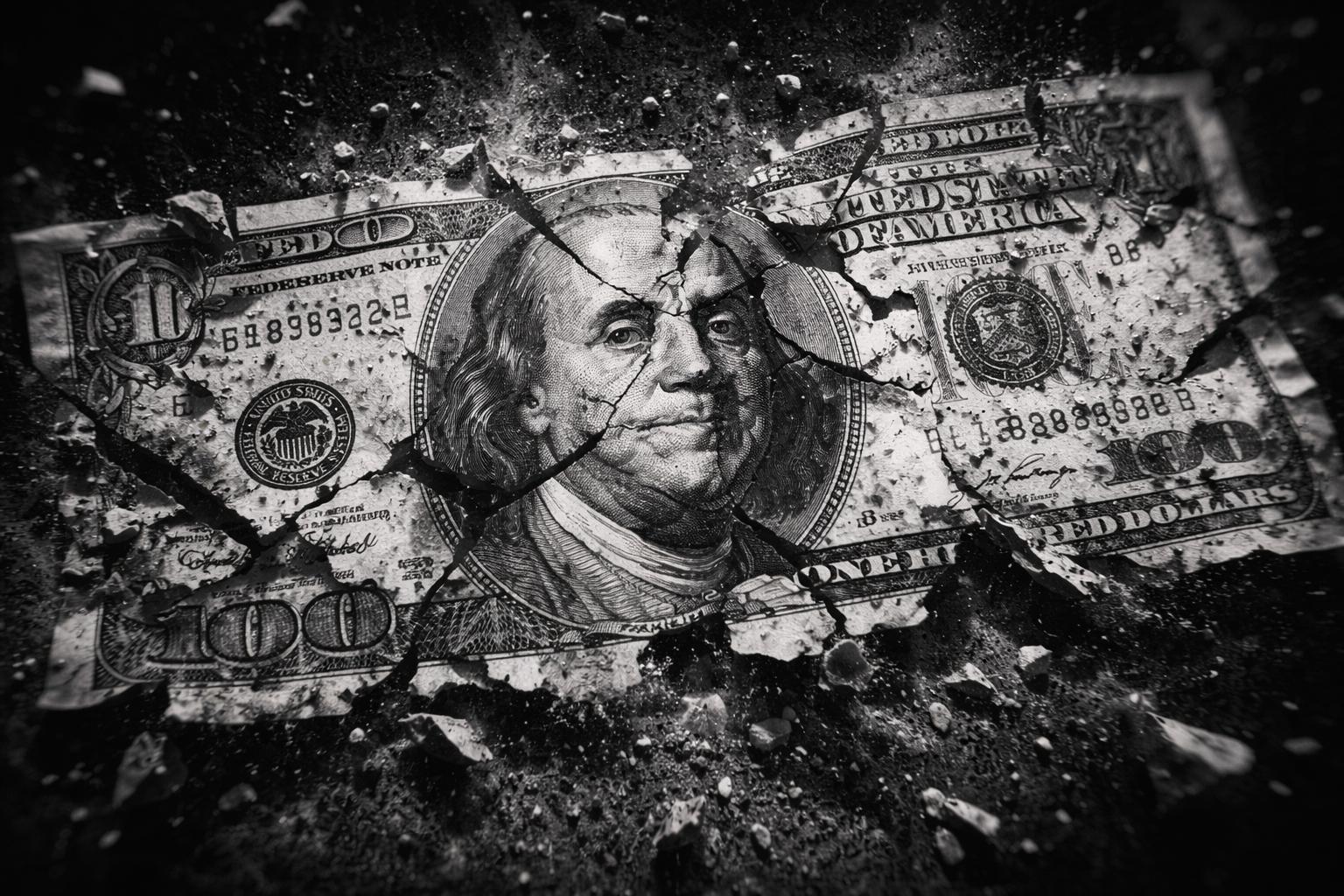
The United States is entering a complex financial inflection point, where rising sovereign debt, elevated energy prices and structural shifts in global trade dynamics are beginning to converge—raising questions about the durability of dollar dominance in the decades ahead.
Debt dynamics move into sharper focus
US federal debt has now exceeded $30 trillion, with servicing costs rising materially as interest rates remain above the ultra-low levels that defined the post-2008 era. What was once a manageable burden under near-zero rates is becoming increasingly sensitive to monetary tightening.
A critical shift is underway: a growing share of new borrowing is effectively financing existing obligations rather than productive expansion. While this does not yet constitute a systemic crisis, it introduces fragility into fiscal planning and increases reliance on continued market confidence.

Despite these pressures, US Treasury markets remain stable, supported by deep liquidity and the absence of credible large-scale alternatives. However, stability should not be mistaken for immunity.
Oil markets expose structural vulnerability
Energy markets represent a more immediate transmission channel for geopolitical and financial change. For decades, global oil trade has been predominantly priced and settled in US dollars, reinforcing demand for the currency and anchoring its reserve status.
Recent developments suggest a gradual shift:
• Bilateral energy agreements settled in non-dollar currencies
• Increased coordination among BRICS economies
• Expansion of alternative payment and settlement infrastructures
Individually, these developments remain limited in scale. Collectively, they point toward a slow diversification of global trade mechanisms, particularly in energy—a sector historically central to dollar hegemony.
A multipolar financial system takes shape
China’s strategy reflects long-term positioning rather than abrupt disruption. Through trade agreements, infrastructure financing and regional financial integration, it is incrementally building pathways that reduce dependence on dollar-based systems.
The broader BRICS framework is aligned with this trajectory, focusing on redundancy rather than replacement. The objective is not to displace the dollar overnight, but to ensure optionality in a more fragmented global system.
This evolution reflects a shift from a unipolar to a multipolar financial architecture—one in which the dollar remains dominant, but less singular.
Policy constraints narrow strategic options
Faced with rising debt and external pressures, US policymakers have limited pathways. A hard default remains implausible given institutional credibility and monetary sovereignty. Large-scale fiscal austerity, meanwhile, faces structural political resistance.
This leaves monetary adjustment as the most viable mechanism. Over time, inflation—combined with gradual currency depreciation—can reduce the real burden of debt. Such an approach redistributes costs across global holders of dollar-denominated assets while preserving nominal stability.
This process is typically incremental rather than explicit, unfolding through policy calibration rather than formal declaration.
From dominance to gradual recalibration
Historical precedent suggests that reserve currencies do not collapse abruptly. Instead, they experience prolonged periods of relative decline as alternatives mature and confidence diffuses.
The most plausible trajectory for the US dollar is therefore not disorderly collapse, but controlled erosion:
• Gradual diversification of global reserves
• Incremental shifts in trade settlement practices
• Persistent, but diminishing, centrality in financial markets
This transition may span decades, with volatility concentrated around geopolitical or macroeconomic shocks—such as sustained energy price disruptions.
Conclusion
The United States remains a central pillar of the global financial system, but the conditions underpinning its dominance are evolving. The intersection of fiscal expansion, energy market realignment and geopolitical diversification is reshaping the landscape in which the dollar operates.
The defining question is no longer whether the system will adjust, but at what pace—and how effectively the US adapts to a world where its monetary advantage is increasingly shared.
Newshub Editorial in North America – April 2, 2026

If you have an account with ChatGPT you get deeper explanations,
background and context related to what you are reading.
Open an account:
Open an account
Recent Comments