

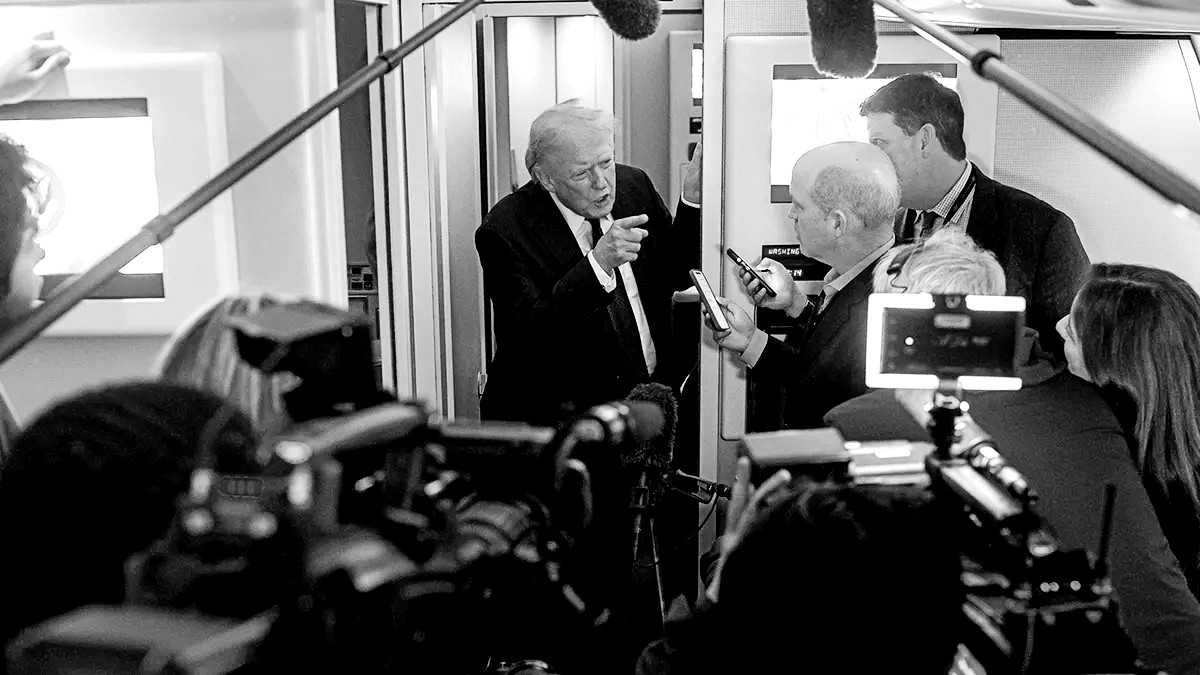
President Donald Trump has drawn sharp criticism after showcasing plans for a new White House ballroom while the United States faces escalating geopolitical, economic, and domestic challenges.
Controversial remarks aboard Air Force One
Speaking to reporters on Air Force One on Sunday evening, Trump presented oversized renderings of a proposed ballroom at the White House — a long-standing personal ambition. The display came as the administration navigates a complex convergence of crises, including the ongoing Iran conflict, financial market volatility, and domestic political disruption.
Critics were quick to react, describing the moment as disconnected from the gravity of current events. The president’s focus on architectural plans, they argue, contrasted starkly with the broader national and international situation.

Backdrop of mounting pressure
The remarks come at a time of heightened strain across multiple fronts. The war involving Iran has now entered its second month, contributing to rising global instability. Energy markets have reacted sharply, with petrol prices in the United States increasing by approximately $1 per gallon over the past month.
At the same time, U.S. equity markets have entered correction territory, reflecting investor concerns over geopolitical risk and economic outlook. Adding to the pressure, a partial federal government shutdown has extended into its seventh week, raising questions about governance and policy continuity.
Criticism centres on leadership priorities
Opponents argue that the ballroom presentation highlights a perceived misalignment of priorities at a critical juncture. The phrase “out of touch with reality” has been widely used by critics to characterise the president’s remarks, with some expressing concern over the tone and timing of the announcement.
Supporters, however, have defended Trump’s approach, suggesting that long-term projects and national prestige initiatives can coexist with crisis management. They argue that maintaining a forward-looking agenda is part of broader leadership responsibilities.
Symbolism and political messaging
The proposed ballroom has, for years, been part of Trump’s vision for the White House, often framed as a project to enhance its capacity for state events and official functions. In the current context, however, its symbolic weight has shifted.
Analysts suggest that the timing of the presentation may influence public perception, particularly as voters assess leadership during periods of uncertainty. Visual gestures — such as the use of large renderings — can amplify political messaging, intentionally or otherwise.
Markets and governance in focus
Financial markets remain sensitive to ongoing developments, with volatility expected to persist as geopolitical and domestic issues evolve. Meanwhile, the prolonged government shutdown continues to affect federal operations, adding another layer of complexity to the administration’s policy environment.
The intersection of these factors places increased scrutiny on executive decision-making and communication.
A moment reflecting broader tensions
The episode underscores the broader tension between political narrative and real-time crisis management. As the United States navigates a challenging period marked by conflict, economic uncertainty, and institutional strain, leadership choices — both substantive and symbolic — are likely to face intensified examination.
Whether the ballroom proposal remains a peripheral issue or becomes a more significant point of contention may depend on how current crises unfold in the weeks ahead.
Newshub Editorial in North America – March 30, 2026

If you have an account with ChatGPT you get deeper explanations,
background and context related to what you are reading.
Open an account:
Open an account
Recent Comments