

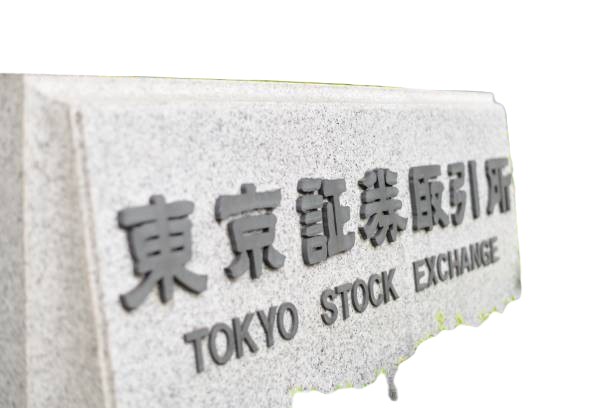
Tokyo’s stock market opened deep in negative territory on Monday, with a pronounced sell-off highlighting mounting investor anxiety as the Iran conflict continues to ripple through global financial markets.
Sharp declines in Tokyo trading
Japan’s benchmark Nikkei 225 recorded a steep fall of 4.6% by the lunch break on Monday, marking one of the most significant single-day declines in recent months. The broader Topix index also dropped heavily, down 4.2%, reflecting widespread selling across sectors.
The magnitude of the drop underscores the heightened sensitivity of Japanese equities to global geopolitical shocks. Since the beginning of March — coinciding with the escalation of the Iran conflict — the Nikkei 225 has now fallen by more than 12% overall, signalling a sustained period of market stress rather than a short-term correction.

Regional markets follow Tokyo lower
The downturn in Tokyo is part of a broader regional sell-off across Asia. In South Korea, the Kospi index declined by 4.1%, mirroring investor caution and capital outflows across major equity markets.
Hong Kong’s Hang Seng index also moved lower, falling 2.0%, while mainland Chinese markets showed more limited declines. The Shenzhen index slipped 0.9%, and the Shanghai Composite fell 0.6%, suggesting a slightly more contained reaction in domestic Chinese markets compared to the sharper moves seen elsewhere in the region.
Geopolitics and energy drive volatility
The ongoing Iran conflict continues to act as a central driver of market volatility. Rising energy prices, supply chain risks, and broader geopolitical uncertainty have led investors to reassess risk exposure, particularly in export-heavy and energy-dependent economies such as Japan.
For Tokyo markets, the situation is further compounded by currency dynamics and global macro uncertainty. The interplay between oil prices, inflation expectations, and central bank policy outlooks is creating a complex environment for equity valuations.
Heavy pressure across key sectors
Losses in Tokyo have been broad-based, with technology, automotive, and industrial stocks all experiencing significant declines. Export-oriented companies, already sensitive to currency movements, have been particularly exposed as global demand expectations come under pressure.
Financial stocks have also faced downward pressure, reflecting concerns over tightening financial conditions and potential economic slowdown scenarios.
Investor sentiment turns defensive
The scale of Monday’s decline signals a clear shift toward risk aversion among investors. Capital is increasingly rotating into safer assets, while equity markets face persistent selling pressure.
Trading patterns indicate that institutional investors are reducing exposure amid uncertainty, while volatility metrics suggest that further swings cannot be ruled out in the near term.
A fragile outlook for Asian equities
Tokyo’s sharp drop highlights the vulnerability of global markets to geopolitical shocks. With the Nikkei already down more than 12% since early March, the current trajectory points to sustained instability rather than a temporary disruption.
Unless there is a clear de-escalation in geopolitical tensions or stabilisation in energy markets, Asian equities — led by Tokyo — may continue to face downward pressure in the sessions ahead.
Newshub Editorial in Asia – March 30, 2026

If you have an account with ChatGPT you get deeper explanations,
background and context related to what you are reading.
Open an account:
Open an account
Recent Comments