
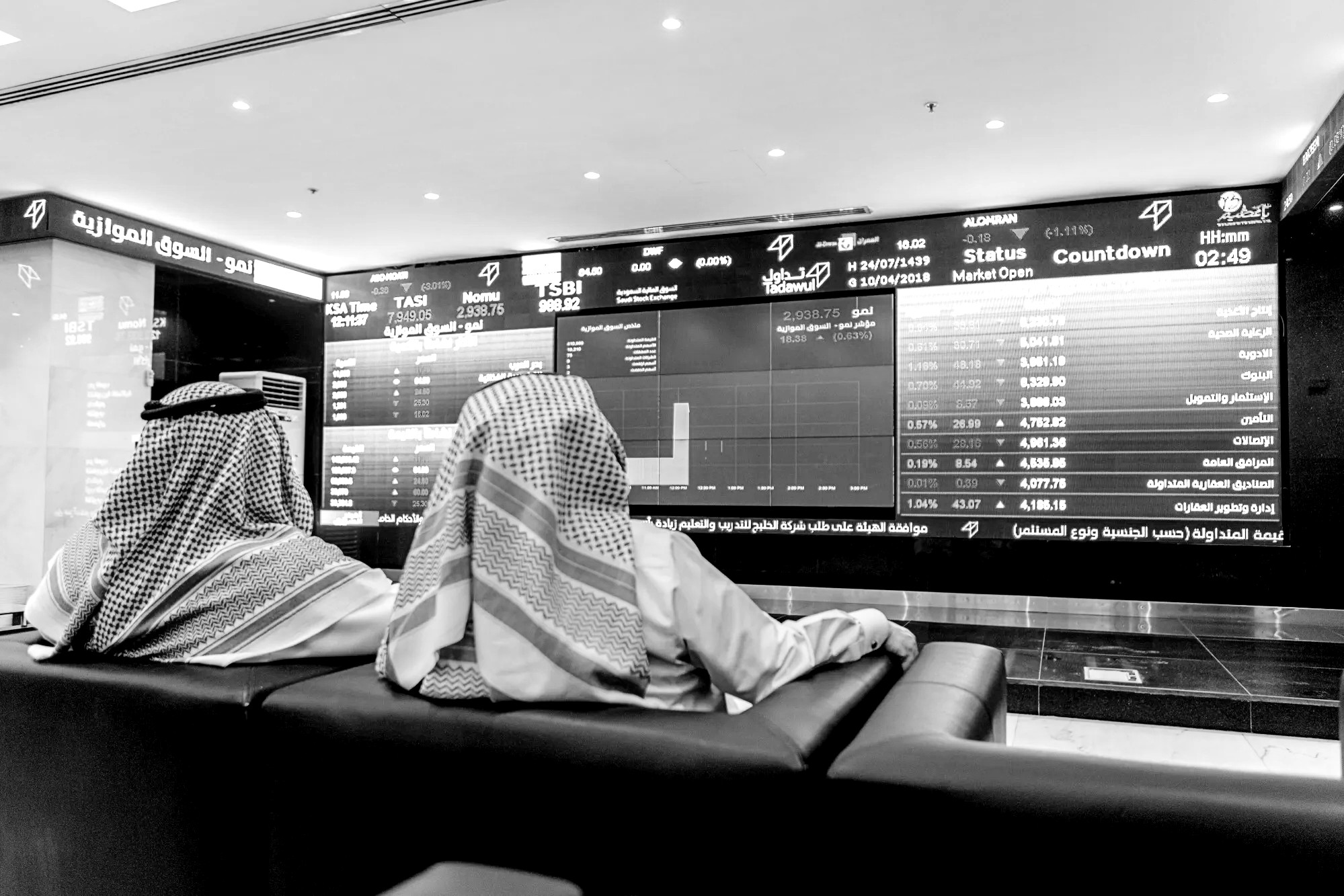
Major Arab stock markets opened Thursday with a cautious upward bias, supported by a rebound in oil prices but tempered by ongoing uncertainty surrounding Middle East ceasefire prospects.
Oil recovery lifts regional sentiment
Markets across the Gulf Cooperation Council (GCC) benefited from renewed strength in oil prices, which moved higher after earlier declines driven by optimism over a potential ceasefire. As doubts emerged around the likelihood of a near-term resolution, crude prices stabilised and began to recover, providing support for energy-linked equities.
Saudi Arabia’s Tadawul All Share Index opened modestly higher, with gains concentrated in energy and petrochemical stocks, reflecting the direct correlation between oil prices and corporate earnings in the kingdom.

Mixed performance across the Gulf
In the United Arab Emirates, both the Dubai Financial Market (DFM) and Abu Dhabi Securities Exchange (ADX) opened with slight gains, although trading remained subdued. Financial and real estate stocks showed limited movement, indicating that investors are maintaining a cautious stance despite improved commodity signals.
Qatar’s stock exchange followed a similar pattern, opening marginally higher as investors balanced stronger energy fundamentals against broader geopolitical risks.
Geopolitics continues to dominate trading
The ongoing conflict involving Iran remains the primary driver of market sentiment across the region. While earlier reports of potential negotiations had eased concerns, conflicting statements from political leaders have kept uncertainty elevated.
Investors are closely monitoring developments related to the Strait of Hormuz, a critical artery for global energy supply. Any disruption—or confirmation of stabilisation—continues to have an immediate impact on regional equity markets.
Defensive positioning remains evident
Despite the positive opening, trading volumes suggest that investors are not yet fully committing to risk-on positioning. Many market participants are maintaining defensive allocations, awaiting clearer signals regarding the trajectory of the conflict.
This cautious approach is particularly evident in non-energy sectors, where gains have been limited and selective.
Short-term outlook remains fragile
The early session indicates that Arab markets are attempting to stabilise after recent volatility, supported by oil price dynamics but constrained by geopolitical uncertainty.
Looking ahead, the direction of regional markets will remain closely tied to developments in the Middle East conflict. A confirmed diplomatic breakthrough could trigger broader gains, while renewed escalation would likely reverse current momentum.
For now, Thursday’s opening reflects a delicate balance between cautious optimism and persistent risk, with markets continuing to react primarily to geopolitical headlines rather than underlying fundamentals.
Newshub Editorial in Middle East – March 26, 2026

If you have an account with ChatGPT you get deeper explanations,
background and context related to what you are reading.
Open an account:
Open an account
Recent Comments