

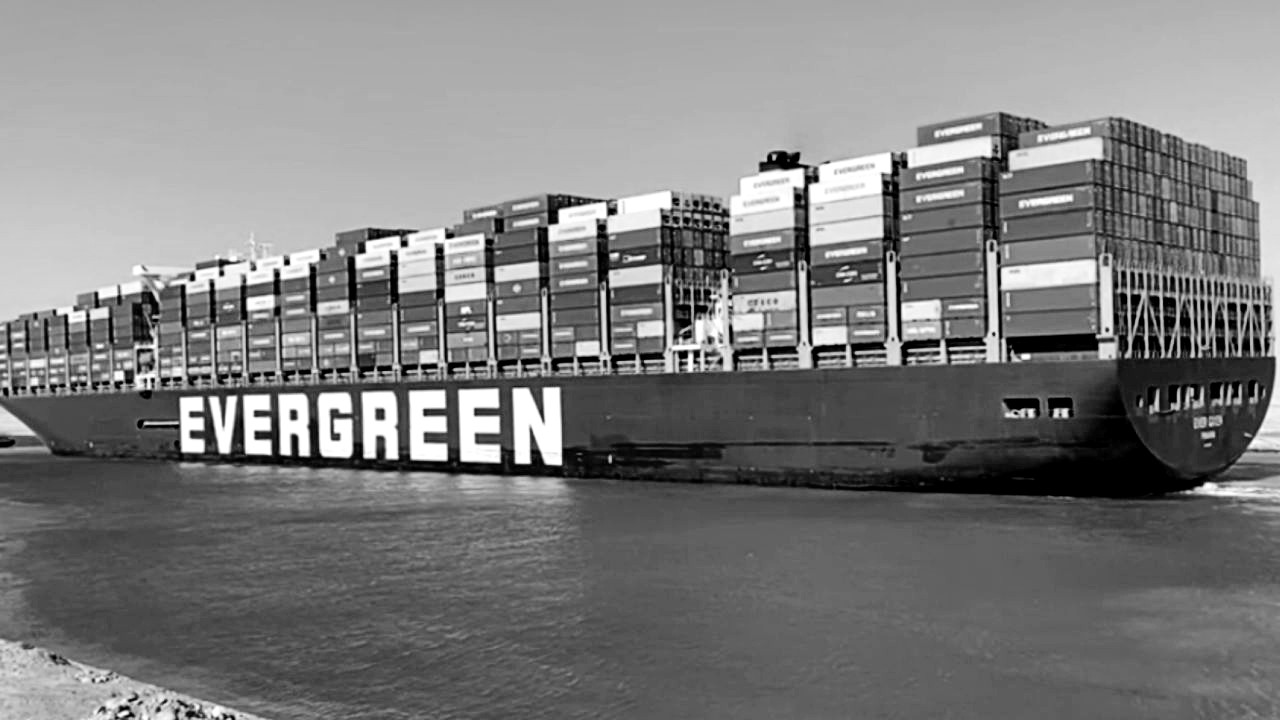
In March 2021, global trade was brought to an abrupt halt when the mega-container ship Ever Given ran aground in the Suez Canal, one of the world’s most critical shipping arteries. For six days, the blockage paralysed maritime traffic between Europe and Asia, exposing the fragility of global supply chains and the outsized impact of logistical chokepoints.
A حادثة that halted a vital global corridor
The Suez Canal, connecting the Mediterranean Sea to the Red Sea, handles roughly 12 per cent of global trade. When the Ever Given—one of the largest container vessels ever built—became wedged diagonally across the canal during high winds and low visibility, it effectively sealed off one of the busiest trade routes on earth.
More than 400 ships were left stranded at either end of the canal, while others were forced to reroute around the Cape of Good Hope, adding significant time and cost to already strained supply chains. The incident highlighted how a single نقطة failure can disrupt the movement of goods on a global scale.

Economic shockwaves ripple across markets
The financial implications were immediate and far-reaching. Each day of blockage was estimated to hold up billions of dollars’ worth of goods, including oil, liquefied natural gas, and consumer products. Energy markets reacted swiftly, with oil prices experiencing short-term volatility as traders assessed potential supply disruptions.
Insurers, logistics firms, and shipping companies were forced into rapid response mode, navigating contractual obligations, delays, and rising costs. The incident also triggered renewed scrutiny of maritime risk management and the increasing size of container vessels, which can complicate navigation in narrow waterways.
A complex and delicate recovery operation
Refloating the Ever Given proved to be a technically demanding operation. Salvage teams worked around the clock using tugboats, dredgers, and favourable tidal conditions to gradually free the vessel. الرمال and sediment had to be removed from around the ship’s bow and stern, while coordinated усилия ensured the hull remained intact during the extraction.
After six days, the ship was successfully dislodged, allowing traffic to resume. However, the backlog of vessels took several more days to clear, prolonging the disruption and compounding delays across global logistics networks.
Lessons for a globalised economy
The Ever Given incident served as a stark reminder of the vulnerabilities embedded in modern trade systems. As supply chains have become increasingly optimised for efficiency, they have also become more exposed to disruption.
Governments and corporations alike have since revisited contingency planning, diversification of shipping routes, and inventory strategies. The event also reinforced the strategic importance of maritime infrastructure such as the Suez Canal, where even a short-term disruption can have outsized global consequences.
Ultimately, the six-day blockage was more than a logistical anomaly—it was a wake-up call for an interconnected global economy that depends heavily on a handful of critical transit routes.
Newshub Editorial in Middle East – March 23, 2026

If you have an account with ChatGPT you get deeper explanations,
background and context related to what you are reading.
Open an account:
Open an account
Recent Comments