

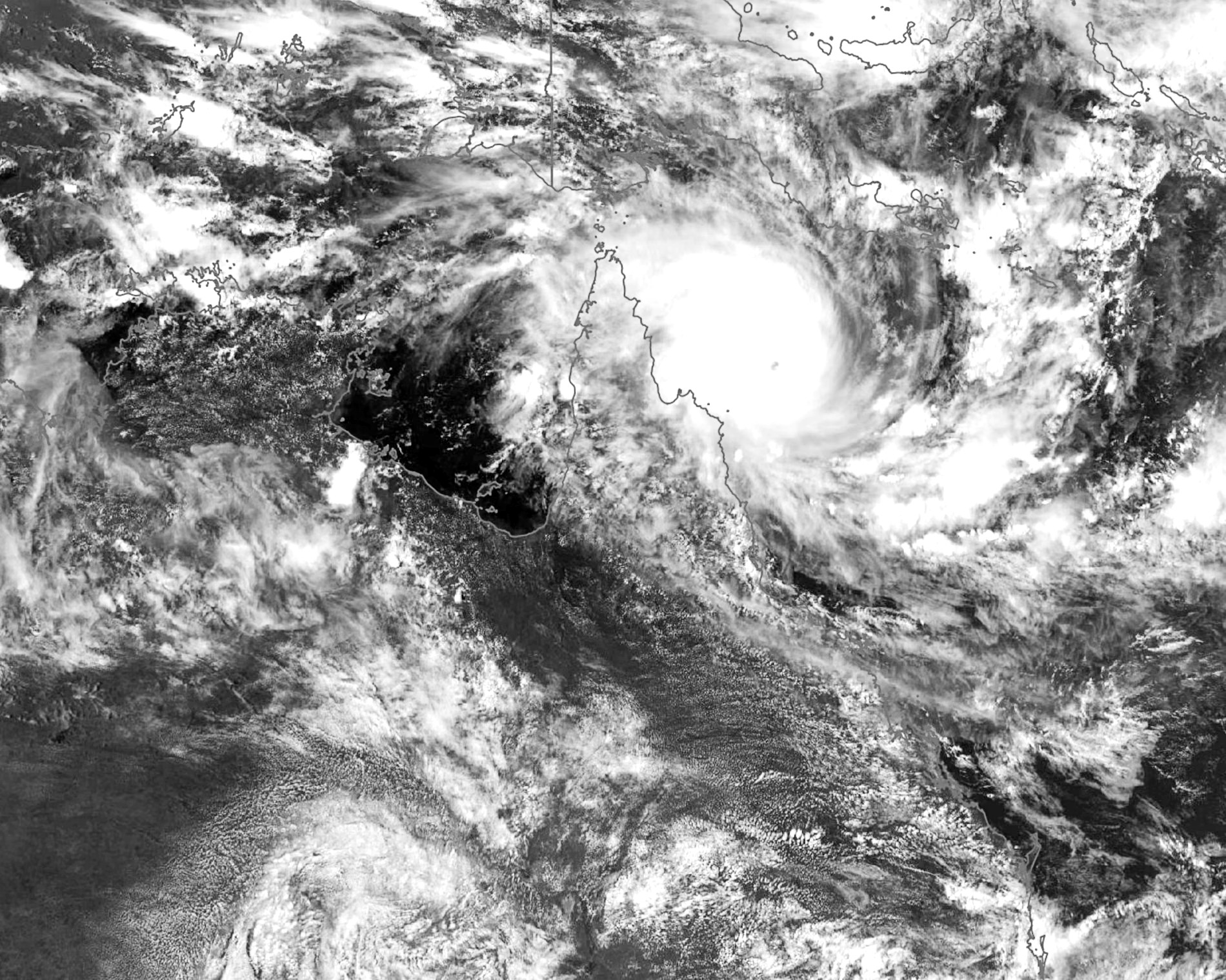
Tropical Cyclone Narelle has emerged as one of the most severe storms to hit Queensland in recent years, with scientists pointing to unusually warm ocean temperatures as a critical factor amplifying its intensity and destructive power.
Record-breaking ocean heat and cyclone dynamics
Cyclones derive their energy from warm ocean waters, and in early 2026, sea surface temperatures off far north Queensland reached record highs. These elevated temperatures increased the amount of latent heat available to the storm system, effectively acting as high-octane fuel. As Narelle tracked across the Coral Sea, it encountered waters significantly above the long-term average, enabling rapid intensification and sustained wind speeds that exceeded seasonal norms.
Meteorological data indicates that when ocean temperatures rise above approximately 26.5°C, cyclone formation and strengthening become more likely. In Narelle’s case, waters were well beyond that threshold, creating ideal conditions for the storm to evolve into a high-impact weather system. This aligns with broader climate observations showing a steady warming trend in tropical oceans.

Global heating and rapid intensification
One of the defining features of Cyclone Narelle was its rapid intensification phase. This phenomenon, where a cyclone’s wind speeds increase dramatically over a short period, has become more frequent in recent decades. Climate models suggest that global heating is increasing the probability of such events by raising baseline ocean temperatures and altering atmospheric conditions.
In addition to warmer seas, higher atmospheric moisture levels contributed to heavier rainfall and more severe flooding across affected regions. Warmer air holds more moisture, and during Narelle, this translated into intense precipitation bands that overwhelmed drainage systems and river catchments in parts of Queensland.
Wider climate signals and regional vulnerability
The storm underscores a growing concern among climate scientists: that tropical cyclones may not necessarily become more frequent, but are likely to become more intense. Northern Australia, with its exposure to the Coral Sea and existing vulnerability to extreme weather, is particularly at risk.
Infrastructure resilience is now a central issue. Coastal communities faced storm surges, wind damage, and prolonged power outages, highlighting gaps in preparedness as climate risks evolve. Insurers and policymakers are increasingly factoring in climate-adjusted risk models, which anticipate stronger and wetter cyclones over time.
Economic and environmental implications
The economic cost of Cyclone Narelle is expected to be substantial, with damage to housing, agriculture, and transport infrastructure. Queensland’s agricultural sector, already under pressure from climate variability, faces renewed uncertainty as extreme weather events disrupt supply chains and crop yields.
Environmentally, the storm may also have long-term effects on coastal ecosystems, including coral reefs already stressed by marine heatwaves. Sediment runoff and physical damage from storm surges can further degrade fragile reef systems, compounding the impacts of warming oceans.
A signal of shifting climate realities
Cyclone Narelle is not an isolated event but part of a broader pattern linking extreme weather to rising global temperatures. While individual storms cannot be attributed solely to climate change, the conditions that intensified Narelle are increasingly consistent with climate projections.
For Australia and other cyclone-prone regions, the implication is clear: adaptation strategies must accelerate alongside mitigation efforts. As ocean temperatures continue to rise, storms like Narelle may become less exceptional—and more representative of a new climatic baseline.
Newshub Editorial in Australia – March 20, 2026

If you have an account with ChatGPT you get deeper explanations,
background and context related to what you are reading.
Open an account:
Open an account
Recent Comments