

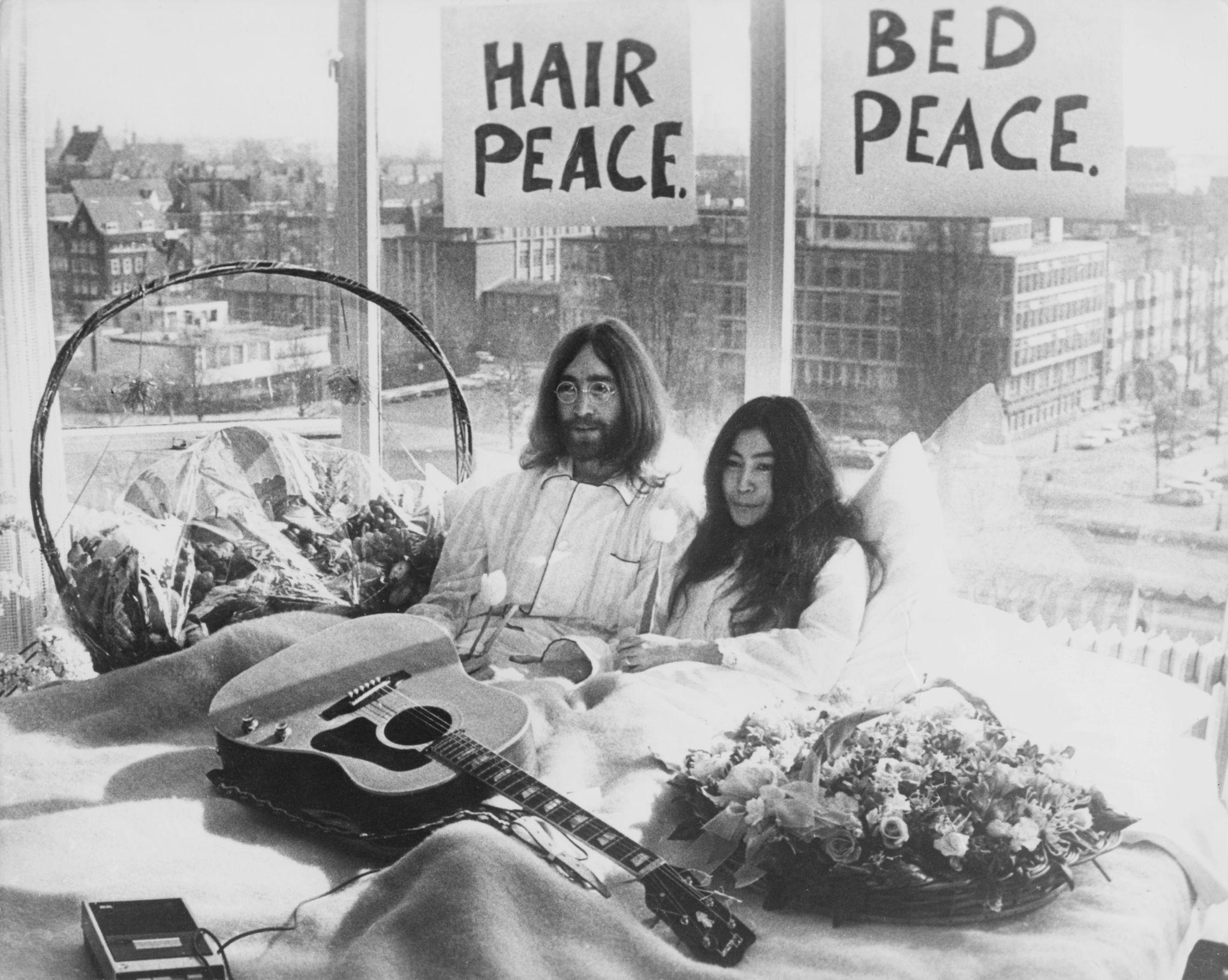
The marriage of John Lennon and Yoko Ono in 1969 marked one of the most influential cultural partnerships of the 20th century, blending music, avant-garde art and political activism into a single, highly visible force that challenged conventions and reshaped public discourse.
From Beatlemania to avant-garde influence
John Lennon first rose to global prominence as a founding member of The Beatles, a group widely regarded as the most influential act in modern music history. By the late 1960s, however, Lennon had begun to move beyond the confines of pop stardom, exploring more experimental ideas both musically and philosophically. It was during this period that he met Yoko Ono, an avant-garde artist deeply embedded in conceptual and performance art.
Their meeting in London in 1966 proved pivotal. Ono’s work, rooted in minimalism and audience participation, introduced Lennon to new creative frameworks that would later shape his solo output. Their relationship quickly evolved from artistic collaboration into a personal partnership, culminating in their marriage in Gibraltar in March 1969.

A partnership under scrutiny
From the outset, Lennon and Ono’s relationship attracted intense media attention. Many fans and commentators controversially linked Ono to the internal tensions that eventually led to the breakup of The Beatles in 1970. While such claims remain debated, there is little doubt that Lennon’s priorities shifted significantly during this period, with his focus increasingly turning towards experimental work and political engagement.
The couple’s public appearances were often unconventional. Their “Bed-Ins for Peace” in Amsterdam and Montreal became defining moments of protest art, blending performance with anti-war messaging during the height of the Vietnam War. These events demonstrated how Lennon and Ono leveraged celebrity culture to amplify political causes.
Creative collaboration and solo evolution
Following the dissolution of The Beatles, Lennon’s solo career became inseparable from his partnership with Ono. Albums such as Imagine and joint projects like Double Fantasy reflected both personal introspection and collaborative experimentation. Ono’s influence extended beyond music into visual art, film and conceptual performance, reinforcing the couple’s multidisciplinary approach.
Ono herself, often underappreciated in mainstream narratives, was a significant figure in the Fluxus movement, contributing to the evolution of contemporary art. Her work challenged traditional boundaries and played a critical role in shaping Lennon’s post-Beatles identity.
Activism, controversy and legacy
Throughout the early 1970s, Lennon and Ono became prominent voices in anti-war activism, drawing the attention of political authorities, particularly in the United States. Their outspoken positions led to surveillance and attempts to deport Lennon, highlighting the intersection of celebrity influence and political power.
Despite persistent criticism and public scrutiny, the partnership endured and ultimately redefined how artists could engage with global issues. Lennon’s death in 1980 marked a tragic end to the collaboration, but Ono has since continued to preserve and promote their shared legacy.
Today, the relationship between John Lennon and Yoko Ono is widely reassessed as a groundbreaking alliance that transcended music. It stands as a testament to the power of creative partnership in shaping both cultural and political landscapes.
Newshub Editorial in Europe – March 20, 2026

If you have an account with ChatGPT you get deeper explanations,
background and context related to what you are reading.
Open an account:
Open an account
Recent Comments