

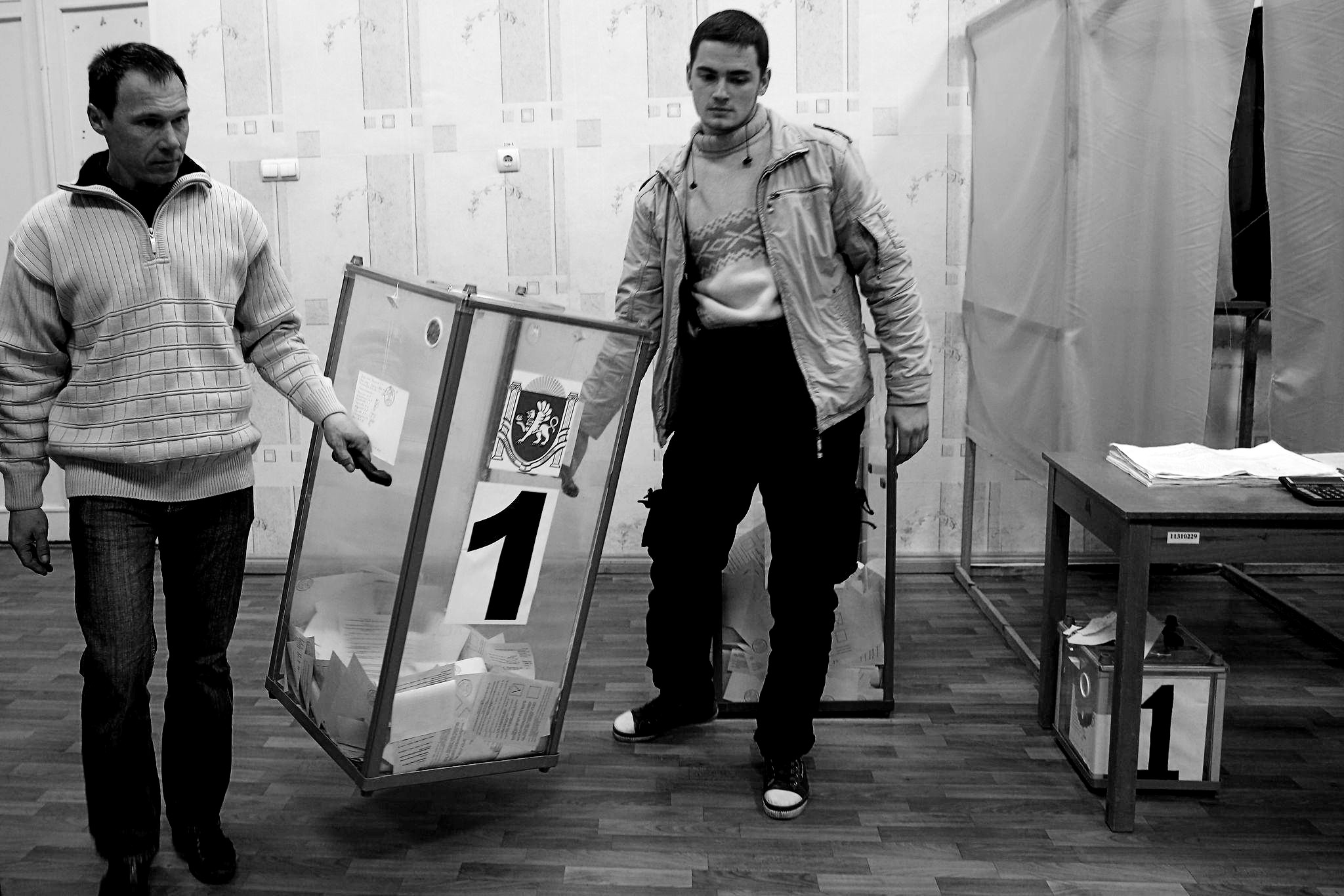
In March 2014, authorities in Crimea reported that about 97 percent of voters supported leaving Ukraine and joining the Russian Federation in a controversial referendum held amid a rapidly escalating regional crisis. The vote, which followed the collapse of Ukraine’s pro-Russian government, was rejected by Kyiv and widely condemned by Western governments, becoming one of the most consequential territorial disputes in post-Cold War Europe.
A referendum under extraordinary circumstances
The referendum took place on 16 March 2014 after Russian forces moved into Crimea following political turmoil in Ukraine. Earlier that year, mass protests in Kyiv — known as the Euromaidan movement — led to the removal of Ukrainian President Viktor Yanukovych, who had maintained close ties with Moscow.
Soon after Yanukovych fled the country, armed personnel widely believed to be Russian troops without insignia took control of key infrastructure and government buildings across Crimea. The regional parliament subsequently announced a referendum asking residents whether Crimea should join Russia or remain part of Ukraine under expanded autonomy.

According to local authorities in Crimea, voter turnout was reported at more than 80 percent, with approximately 97 percent supporting accession to Russia. Within days of the vote, Moscow formally moved to annex the peninsula.
Ukraine and the West reject the vote
Ukraine’s government in Kyiv declared the referendum illegal, arguing that it violated the country’s constitution, which requires any territorial change to be decided by a nationwide vote rather than a regional referendum.
Most Western governments, including the United States and members of the European Union, also rejected the legitimacy of the vote. They argued that the presence of Russian military forces in Crimea meant the referendum could not be considered free or fair.
The United Nations General Assembly later adopted a resolution affirming Ukraine’s territorial integrity and declaring the referendum invalid under international law. While the resolution carried symbolic weight, it was not legally binding.
Russia defends annexation
Russia has consistently defended the referendum and subsequent annexation, arguing that the vote represented the democratic will of Crimea’s population, which is majority Russian-speaking.
Russian officials also pointed to historical ties, noting that Crimea had been part of Russia until 1954, when Soviet leader Nikita Khrushchev transferred the territory to the Ukrainian Soviet Socialist Republic within the USSR.
President Vladimir Putin has framed the annexation as a correction of historical injustice and a response to what Moscow described as an unconstitutional change of power in Kyiv.
Long-term geopolitical consequences
The annexation of Crimea triggered one of the most serious confrontations between Russia and the West since the end of the Cold War. The United States, the European Union and several allied countries imposed economic sanctions on Russia, targeting banks, energy companies and individuals close to the Kremlin.
The crisis also intensified tensions across Eastern Europe and reshaped NATO’s security posture in the region. Western countries increased military deployments and defence cooperation with Eastern European allies, citing concerns about Russian expansionism.
Meanwhile, Crimea remains under Russian administration, though Ukraine continues to regard the peninsula as occupied territory.
More than a decade after the referendum, the status of Crimea remains one of the most contentious and unresolved geopolitical disputes in Europe, with implications for international law, territorial sovereignty and the broader balance of power between Russia and the West.
Newshub Editorial in Europe — March 16, 2026

If you have an account with ChatGPT you get deeper explanations,
background and context related to what you are reading.
Open an account:
Open an account
Recent Comments