
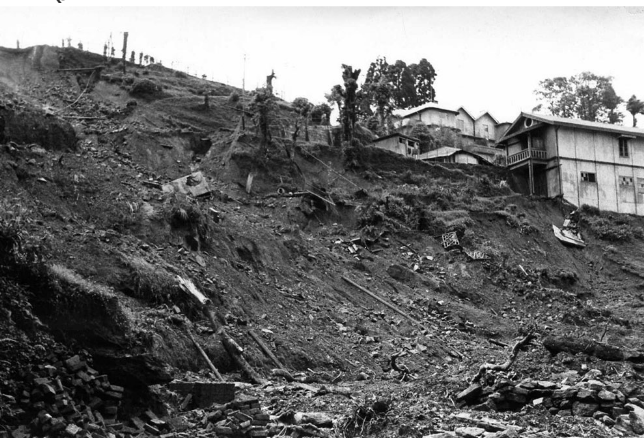
Scientists are warning that continued reliance on fossil fuels is intensifying extreme rainfall in Brazil’s coffee-growing regions, contributing to deadly floods and landslides that threaten both local communities and the global coffee supply.
Extreme rainfall devastates coffee-producing regions
Heavy rains in Brazil’s mountainous coffee belt have triggered a series of destructive floods and landslides in recent years, damaging homes, infrastructure and agricultural land. Regions such as Minas Gerais and Espírito Santo — two of the country’s most important coffee-producing states — have experienced particularly severe weather events.
According to climate researchers, the increase in intense rainfall events is closely linked to global heating driven by greenhouse gas emissions. Warmer atmospheric temperatures allow the air to hold more moisture, which can lead to heavier and more concentrated rainfall when storms develop.

The steep terrain found in many of Brazil’s coffee-growing regions makes communities especially vulnerable to landslides during periods of extreme precipitation. In several recent incidents, entire hillsides have collapsed after days of continuous rainfall, causing significant loss of life and widespread destruction.
Climate risks grow for global coffee markets
Brazil is the world’s largest coffee producer, responsible for roughly one-third of global supply. Disruptions to the country’s coffee harvest can therefore have a significant impact on international commodity markets and consumer prices.
Flooding and landslides not only damage crops but can also destroy roads, warehouses and processing facilities that are essential to the coffee supply chain. When transport networks are disrupted, coffee exports can slow dramatically, tightening global supply.
Commodity analysts say that climate volatility has already begun to influence coffee prices. Periods of drought, frost and extreme rainfall have all affected Brazil’s coffee harvests in recent years, creating uncertainty for traders and producers alike.
Scientists warn that without major reductions in fossil-fuel emissions, extreme weather events in agricultural regions could become more frequent and more severe in the coming decades.
Calls for faster climate action
Climate researchers argue that reducing global emissions remains the most effective way to limit future climate instability. While local measures such as improved land management and early-warning systems can reduce the risk of disasters, they cannot fully offset the broader effects of global warming.
Brazil’s coffee industry is also exploring adaptation strategies, including improved drainage systems, reforestation of hillsides and the development of coffee plant varieties that are more resilient to changing weather patterns.
However, experts caution that adaptation alone will not be enough if global temperatures continue to rise. Limiting the long-term risks to agriculture, infrastructure and human safety will require coordinated international action to reduce fossil-fuel consumption.
As climate pressures grow, the situation in Brazil’s coffee heartland illustrates how environmental changes can ripple through both local communities and global commodity markets.
Newshub Editorial in South America – March 13, 2026

If you have an account with ChatGPT you get deeper explanations,
background and context related to what you are reading.
Open an account:
Open an account
Recent Comments