
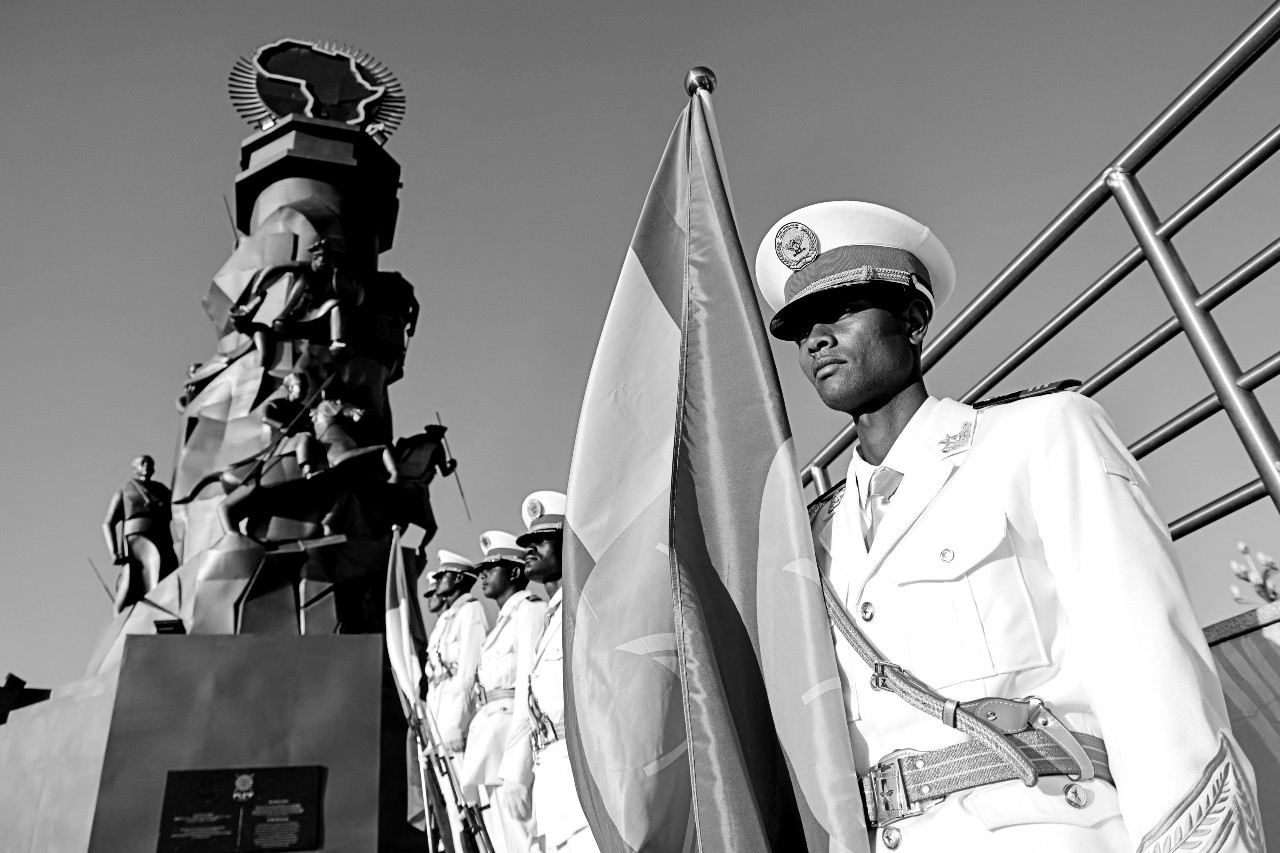
Tensions between Ethiopia and Eritrea are rising sharply as both countries reportedly mass troops along their shared border, prompting growing concern among analysts that one of Africa’s most fragile peace agreements could unravel and lead to renewed conflict.
Troop movements raise alarm across the Horn of Africa
Reports from regional observers and diplomatic sources indicate that military forces from both Ethiopia and Eritrea have been increasing their presence along sections of the frontier separating the two countries. The troop movements have raised fears that the fragile stability that followed the 2018 peace agreement may be deteriorating.
The Ethiopia–Eritrea border has long been a flashpoint. The two countries fought a devastating war between 1998 and 2000 that left tens of thousands of people dead and created a heavily militarised frontier that remained tense for nearly two decades.

Although a formal peace agreement was signed in 2018, relations between the governments have fluctuated since then. The latest military deployments have revived concerns that unresolved disputes and shifting regional alliances could once again destabilise the Horn of Africa.
Political fractures after the Tigray war
One major factor behind the renewed tensions appears to be the changing political dynamics following Ethiopia’s war in the Tigray region. During that conflict, Eritrea supported Ethiopian federal forces against the Tigray People’s Liberation Front (TPLF).
However, the peace process that ended the Tigray war has altered the regional balance. Some analysts believe that the shifting alliances and internal political pressures within Ethiopia have complicated relations with Eritrea.
There are also lingering disputes about security arrangements, border management and the presence of armed groups in areas near the frontier. Eritrea has previously accused Ethiopian authorities of failing to address security concerns linked to opposition groups operating in the region.
At the same time, political tensions inside Ethiopia remain high as the government attempts to stabilise the country after several years of internal conflict.
Border disputes and unresolved grievances
Despite the historic 2018 rapprochement, several key issues between the two countries remain unresolved. The demarcation of parts of the border has been politically sensitive for both governments, and local communities living along the frontier continue to face uncertainty about jurisdiction and governance.
The border region has also experienced occasional clashes between local forces and armed groups, which has further contributed to instability.
Analysts warn that the presence of large military formations on both sides increases the risk of accidental escalation. Even a limited incident or misunderstanding along the border could quickly spiral into a broader confrontation if diplomatic channels fail to defuse tensions.
Regional implications of a new conflict
Any renewed war between Ethiopia and Eritrea would have significant consequences for the Horn of Africa, a region already facing political instability, humanitarian challenges and economic pressures.
Ethiopia is Africa’s second most populous country and a key political and economic actor in the region. Eritrea, although smaller, maintains a highly militarised state structure and has historically played a strategic role in regional security dynamics.
A conflict between the two could disrupt trade routes, intensify refugee flows and complicate international efforts aimed at stabilising the wider region.
For now, diplomatic efforts are continuing behind the scenes to prevent further escalation. However, the growing military build-up along the border underscores how fragile the peace between Ethiopia and Eritrea remains.
Newshub Editorial in Africa – March 13, 2026

If you have an account with ChatGPT you get deeper explanations,
background and context related to what you are reading.
Open an account:
Open an account
Recent Comments