
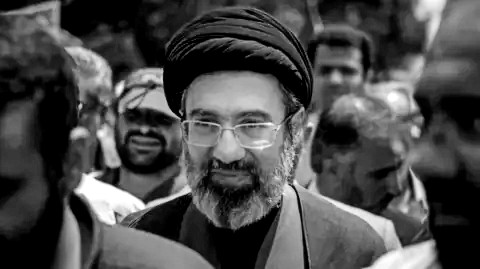
Iran has entered one of the most consequential political transitions since the 1979 Islamic Revolution. Following the death of long-time Supreme Leader Ali Khamenei, the country’s clerical establishment has appointed his son, Mojtaba Khamenei, as the new supreme leader — a decision that could reshape the country’s ideology, internal politics and the trajectory of the ongoing war with Israel and the United States.
The succession: a historic and controversial transition
The appointment of Mojtaba Khamenei by Iran’s Assembly of Experts marks a historic moment in the Islamic Republic. It is the first time since the revolution that the supreme leadership has effectively passed within a family, raising questions about whether the system is drifting toward a dynastic model reminiscent of the monarchy it replaced.
Mojtaba Khamenei, a mid-ranking cleric in his mid-50s, has long operated behind the scenes in Iranian politics. Despite never holding elected office, he built extensive influence within the inner circle of power, particularly among conservative clerics and the powerful Islamic Revolutionary Guard Corps (IRGC).


His rise follows the death of his father, Ayatollah Ali Khamenei, who had ruled Iran since 1989 and held ultimate authority over the country’s military, judiciary and strategic direction.
Before the final decision, Iran briefly operated under a transitional leadership council tasked with ensuring continuity while the clerical establishment organised the succession.
Ideology: continuity of the revolutionary system
Ideologically, Mojtaba Khamenei is widely seen as representing continuity rather than reform. His political orientation aligns closely with the doctrine that has defined the Islamic Republic since 1979: clerical rule under the concept of velayat-e faqih, or guardianship of the Islamic jurist.
Analysts view him as strongly aligned with the hard-line revolutionary camp and deeply connected to the IRGC, the military and economic powerhouse that underpins Iran’s regional strategy.
During previous political crises — including mass protests and contested elections — Mojtaba was widely believed to have supported the regime’s most uncompromising responses. This reputation has reinforced the perception that his leadership will prioritise regime survival, ideological rigidity and resistance to Western pressure.
Impact on the war and regional tensions
The leadership transition comes in the middle of a rapidly escalating regional war involving Iran, Israel and the United States. The conflict has already triggered missile strikes, proxy warfare across the Middle East and disruptions to global energy markets.
In this context, Mojtaba Khamenei’s close ties to the Revolutionary Guards are particularly significant. The IRGC has pledged loyalty to him, suggesting that the military establishment will remain the dominant force in shaping Iran’s wartime strategy.
The new leader faces a dual challenge: maintaining internal cohesion while projecting strength externally. Historically, Iranian leadership transitions risk creating power struggles among clerics, military figures and political factions. However, wartime conditions may instead consolidate power around hard-line institutions.
For Israel and the United States, the succession signals little prospect of moderation in Tehran’s policies. Instead, analysts expect a continuation of Iran’s regional strategy built on proxy networks, missile development and confrontation with Western influence.
What comes next for Iran
The emergence of Mojtaba Khamenei as supreme leader may mark the beginning of a new phase for the Islamic Republic. Some observers argue that Iran is evolving from a purely clerical system toward a hybrid regime dominated by both religious authority and military power.
At the same time, the dynastic nature of the succession could fuel internal debate among clerics and the public about the legitimacy of the system. Yet with the country now at war and facing external pressure, political change in the short term appears unlikely.
Iran’s leadership transition therefore reinforces continuity rather than transformation. The ideological foundations of the Islamic Republic remain intact, but the balance of power — particularly the growing role of the Revolutionary Guards — may define the country’s direction in the years ahead.
Newshub Editorial in Asia — March 9, 2026

If you have an account with ChatGPT you get deeper explanations,
background and context related to what you are reading.
Open an account:
Open an account
Recent Comments