
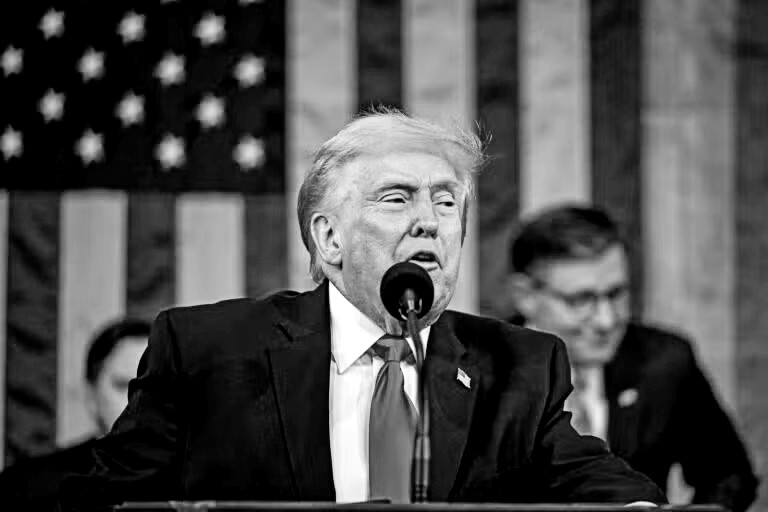
Donald Trump entered the White House promising to be a “peace president” who would avoid foreign wars and prioritise American interests at home. Yet the launch of the military campaign known as Operation Epic Fury against Iran has marked a dramatic shift, placing the United States at the centre of a major Middle Eastern conflict and reshaping the geopolitical landscape.
A campaign built on avoiding wars
During both his election campaigns and presidency, Trump frequently criticised past US military interventions in Iraq and Afghanistan. He argued that costly overseas wars had drained American resources while delivering little strategic benefit.
His “America First” doctrine emphasised diplomacy, economic leverage and selective military pressure rather than large-scale conflict. Trump repeatedly presented himself as a leader willing to negotiate directly with adversaries while maintaining a strong deterrent posture.


Supporters viewed this approach as a pragmatic effort to avoid prolonged military engagements. Critics, however, argued that Trump’s confrontational rhetoric and unpredictable diplomacy risked increasing tensions with rivals.
Escalating tensions with Iran
Relations between Washington and Tehran deteriorated steadily over several years. Disputes over Iran’s nuclear programme, regional influence and missile development contributed to growing friction.
The United States imposed extensive sanctions on Iran and accused Tehran of supporting armed groups across the Middle East. Iranian leaders responded with warnings that American pressure could provoke regional instability.
Tensions intensified further after a series of attacks on energy infrastructure and shipping routes in the Gulf region. Washington blamed Iran or Iranian-backed forces, while Tehran denied direct involvement.
The path to Operation Epic Fury
The turning point came after a series of escalating military exchanges involving US forces, Israel and Iranian-aligned groups in the region. Intelligence reports suggesting expanded Iranian military activity and threats to strategic shipping lanes heightened concerns in Washington.
In response, the US administration authorised a coordinated military campaign targeting Iranian military facilities and strategic infrastructure. The operation, dubbed Operation Epic Fury, involved air and missile strikes designed to weaken Iran’s military capabilities and deter further attacks on American interests.
Officials described the campaign as a limited operation aimed at restoring deterrence rather than a full-scale invasion. Nevertheless, the strikes triggered immediate retaliation from Iran through missile and drone attacks across the region.
Domestic and global reactions
The decision to launch Operation Epic Fury has sparked intense debate within the United States. Supporters argue that decisive military action was necessary to counter Iranian aggression and protect global energy routes.
Critics, including many political opponents and foreign policy analysts, warn that the operation risks drawing the United States into another prolonged Middle Eastern conflict. They point to the historical difficulty of containing regional wars once hostilities escalate.
International reactions have been mixed. Some US allies have expressed support for efforts to deter Iranian military expansion, while others have called for immediate de-escalation and renewed diplomatic negotiations.
A defining moment for US foreign policy
Trump’s transition from a leader promising restraint to the architect of a major military campaign highlights the complexity of global security challenges. The outbreak of open conflict with Iran has already reshaped energy markets, security alliances and diplomatic dynamics across the Middle East.
As the war continues, the ultimate consequences of Operation Epic Fury remain uncertain. What began as an effort to deter a regional rival has become one of the most significant geopolitical crises of Trump’s presidency.
Newshub Editorial in North America – March 8, 2026

If you have an account with ChatGPT you get deeper explanations,
background and context related to what you are reading.
Open an account:
Open an account
Recent Comments