
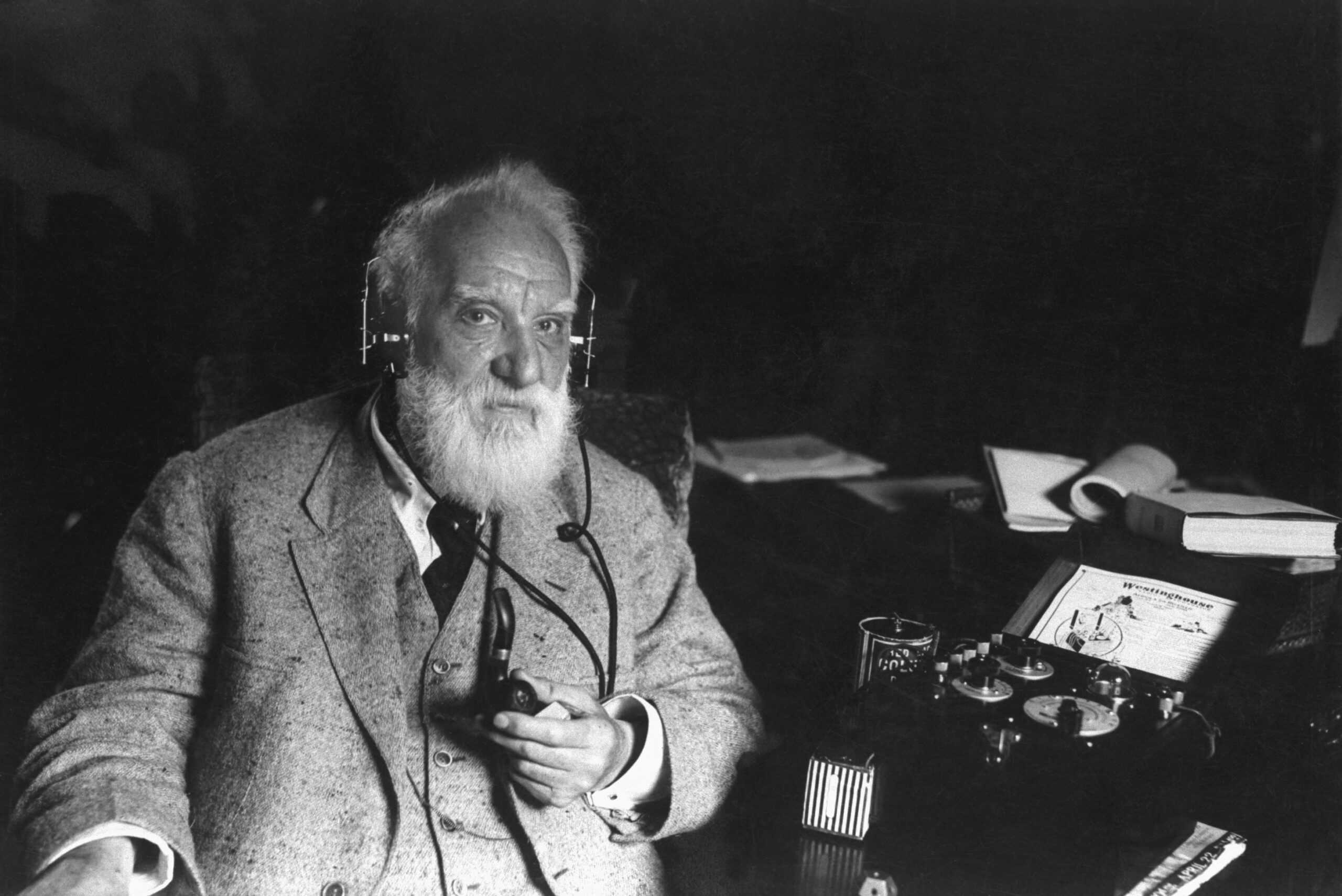
On 7 March 1876, inventor Alexander Graham Bell was granted United States Patent No. 174,465 for the telephone, marking one of the most transformative technological milestones in modern history and laying the foundation for global voice communication.
A race to revolutionise communication
The patent, filed with the United States Patent Office, described a method for transmitting vocal or other sounds telegraphically by causing electrical undulations similar to the vibrations of sound in air. In simple terms, Bell had discovered how to convert human speech into electrical signals and then back again into audible sound.
The timing of the patent proved critical. Bell filed his application on the very same day that another inventor, Elisha Gray, submitted a caveat describing a similar idea. After examination, the patent office granted Bell priority, a decision that sparked decades of legal battles over who truly invented the telephone.


Despite the controversy, Bell’s patent would become one of the most valuable ever issued.
From laboratory experiment to global network
Just three days after receiving the patent, Bell conducted the first successful telephone call with his assistant Thomas Watson. His famous words — “Mr Watson, come here, I want to see you” — marked the first intelligible speech transmitted electrically.
The early telephone devices were rudimentary, but the implications were enormous. Within a few years, telephone exchanges began appearing in major cities, allowing subscribers to connect with one another through switchboards operated by human attendants.
By the late nineteenth century, telephone networks had begun spreading across North America and Europe, fundamentally altering how businesses operated and how people communicated over distance.
Bell himself later helped establish the Bell Telephone Company, which would eventually evolve into one of the largest telecommunications enterprises in the world.
A patent that changed the global economy
The impact of Bell’s patent extended far beyond technology. The telephone reshaped commerce, politics and society by shrinking distances and enabling real-time conversation across cities, countries and eventually continents.
Industries such as finance, journalism and transportation rapidly adopted telephone communication, dramatically accelerating decision-making and information flow.
Over the twentieth century the technology evolved through multiple generations — from manual switchboards to automated exchanges, from copper lines to fibre optics and mobile networks.
Today, the basic principle Bell patented underpins modern communication systems including smartphones, internet voice calls and global telecommunications infrastructure.
The legacy of Alexander Graham Bell
Although Bell would later work on a variety of inventions — including early aviation experiments and innovations for the deaf community — the telephone remains his most enduring achievement.
Few patents have had such a sweeping effect on civilisation. From the first fragile electrical signals transmitted in a laboratory to billions of daily voice and video calls around the world, Bell’s breakthrough helped create the interconnected world we now take for granted.
The patent issued on that March day in 1876 therefore represents far more than a legal document. It marks the moment when human speech first entered the electrical age.
Newshub Editorial in Europe – March 7, 2026

If you have an account with ChatGPT you get deeper explanations,
background and context related to what you are reading.
Open an account:
Open an account
Recent Comments