

• Global
    • Africa
      • Burundi
      • Ghana
      • Gambia
      • Senegal
    • Asia
      • Indonesia
      • Laos
      • Malaysia
      • South Korea
    • Caribbean
      • Central America
    • Climate & energy
      • Climate
      • Carbon
      • Coal
      • Disruptive
      • Gas
      • Nuclear
      • Oil
      • Solar
      • Water
      • Waves
      • Wind
      • Renewable
      • South America
    • Lifestyle
      • Best chefs
      • Cocktail of the week
      • History
      • Influential women
      • Newshub long-read
    • US politics
      • Epstein
    • War
  • Finance
    • Africa finance
    • Australia
    • Asia finance
    • Banking
    • Business of the week
    • Central Banks
    • China
    • Commodities
    • Corporate
    • Europe
    • Investment
    • Japan
    • MSTRpay
    • Neobanking
    • South East Asia
    • UK
    • US
  • Fintech
    • Tech
    • AI
    • Blockchain
  • Press releases
  • NF GPT
Thursday, March 5, 2026
  • Login
No Result
View All Result
Newshub Finance
  • Global
    • Africa
      • Burundi
      • Ghana
      • Gambia
      • Senegal
    • Asia
      • Indonesia
      • Laos
      • Malaysia
      • South Korea
    • Caribbean
      • Central America
    • Climate & energy
      • Climate
      • Carbon
      • Coal
      • Disruptive
      • Gas
      • Nuclear
      • Oil
      • Solar
      • Water
      • Waves
      • Wind
      • Renewable
      • South America
    • Lifestyle
      • Best chefs
      • Cocktail of the week
      • History
      • Influential women
      • Newshub long-read
    • US politics
      • Epstein
    • War
  • Finance
    • Africa finance
    • Australia
    • Asia finance
    • Banking
    • Business of the week
    • Central Banks
    • China
    • Commodities
    • Corporate
    • Europe
    • Investment
    • Japan
    • MSTRpay
    • Neobanking
    • South East Asia
    • UK
    • US
  • Fintech
    • Tech
    • AI
    • Blockchain
  • Press releases
  • NF GPT
  • Global
    • Africa
      • Burundi
      • Ghana
      • Gambia
      • Senegal
    • Asia
      • Indonesia
      • Laos
      • Malaysia
      • South Korea
    • Caribbean
      • Central America
    • Climate & energy
      • Climate
      • Carbon
      • Coal
      • Disruptive
      • Gas
      • Nuclear
      • Oil
      • Solar
      • Water
      • Waves
      • Wind
      • Renewable
      • South America
    • Lifestyle
      • Best chefs
      • Cocktail of the week
      • History
      • Influential women
      • Newshub long-read
    • US politics
      • Epstein
    • War
  • Finance
    • Africa finance
    • Australia
    • Asia finance
    • Banking
    • Business of the week
    • Central Banks
    • China
    • Commodities
    • Corporate
    • Europe
    • Investment
    • Japan
    • MSTRpay
    • Neobanking
    • South East Asia
    • UK
    • US
  • Fintech
    • Tech
    • AI
    • Blockchain
  • Press releases
  • NF GPT
No Result
View All Result
Newshub Finance
No Result
View All Result
Download MSTRpay app Download MSTRpay app Download MSTRpay app
ADVERTISEMENT

Iran and the world: a long history of empire, faith, and geopolitical power

Iran and the world: a long history of empire, faith, and geopolitical power

Iran, historically known as Persia, is one of the world’s oldest continuous civilisations, with political and cultural traditions stretching back thousands of years. Across this long history, Iran has been deeply intertwined with the wider world — as an imperial power, a crossroads of trade, a centre of religion and culture, and in modern times a central actor in global geopolitics. Understanding Iran’s relations with the outside world requires tracing its development from ancient empires to the Islamic Republic that dominates regional politics today.

Ancient Persia and the first global empire
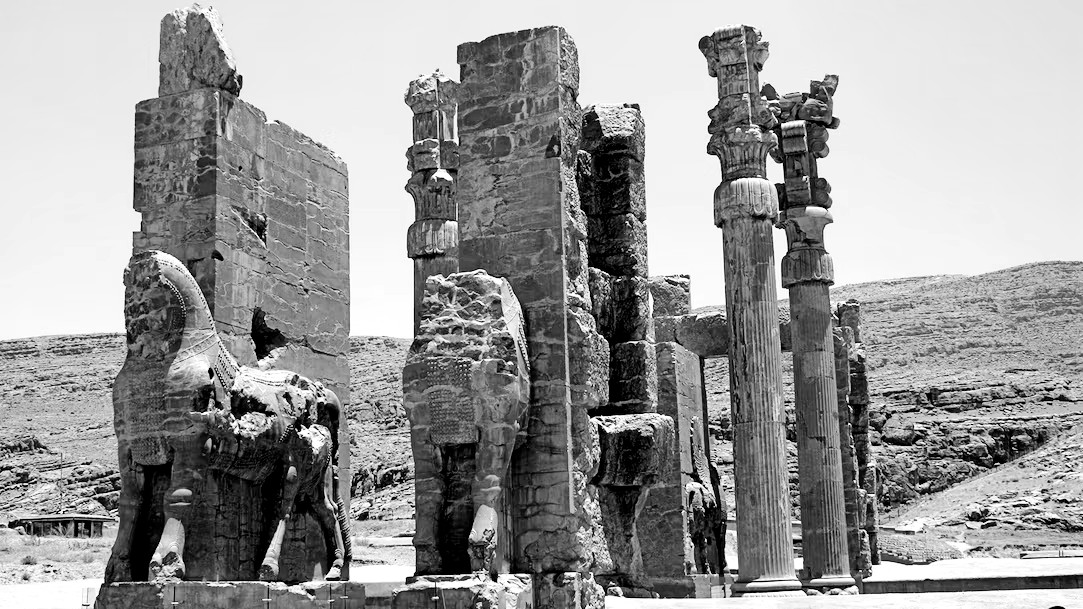
The roots of Iranian civilisation reach back to the ancient peoples of the Iranian plateau, where early states and cities emerged several millennia ago. The region was unified politically in the 7th century BC under the Medes and later transformed into a vast empire by Cyrus the Great, who founded the Achaemenid Empire around 550 BC.

Under the Achaemenid rulers, Persia became one of the largest empires in world history, stretching from the Balkans and Egypt in the west to the Indus Valley in the east. The empire governed a vast multicultural territory through a relatively tolerant administrative system that allowed local traditions and religions to coexist.

Download the MSTRpay app Download the MSTRpay app Download the MSTRpay app

Persia’s interaction with the wider world during this period was extensive. Trade routes linked the empire to India, Central Asia, and the Mediterranean. Persian diplomacy, taxation systems, and road networks helped connect different parts of Eurasia, making the empire one of the earliest examples of a global political system.

Persian relations with the Greek world were particularly significant. Conflicts such as the Greco-Persian Wars in the 5th century BC shaped the political landscape of the Mediterranean and influenced Western historical narratives about empire and resistance.

The empire eventually fell to Alexander the Great in 330 BC, bringing Persia into the Hellenistic world and opening a new phase of cultural exchange between Greek and Persian civilisations.

Parthians, Romans and the Silk Road world
After Alexander’s empire fragmented, Persia was eventually restored under the Parthian dynasty in the 3rd century BC. The Parthians positioned themselves between two major civilisations: the Roman Empire to the west and the expanding trade networks of Central Asia and China to the east.

This era saw the development of the Silk Road, the complex trade system that connected East Asia to Europe. Persian territories served as a central corridor for merchants transporting silk, spices, metals and luxury goods across Eurasia.

Persia’s rivalry with Rome dominated regional politics for centuries. Parthian and later Sasanian rulers fought numerous wars with Roman and Byzantine emperors for control of the Middle East and Caucasus.

The Sasanian Empire, founded in the 3rd century AD, became one of Rome’s most powerful adversaries. At its height it was a major political, economic and cultural power, with strong diplomatic ties to Central Asia, India and even China.

Yet these long wars also weakened both Persia and Byzantium. By the 7th century, the region was exhausted, making it vulnerable to a new force emerging from the Arabian Peninsula.

Islam and the transformation of Persian civilisation
The Arab-Islamic conquests of the 7th century fundamentally reshaped Iran. Muslim armies defeated the Sasanian Empire, bringing Persia into the rapidly expanding Islamic world.

Although the Arab conquest initially placed Iran under foreign rule, Persian culture soon reasserted itself within the Islamic civilisation. Persian language, literature and administrative traditions became central to the political life of the Islamic world.

Many of the greatest cultural achievements of medieval Islamic civilisation — poetry, philosophy, science and architecture — were produced by Persian scholars and artists. Cities such as Isfahan, Shiraz and Samarkand became intellectual centres linking the Middle East, Central Asia and South Asia.

Iran’s adoption of Shi’a Islam in the 16th century under the Safavid dynasty created a distinct religious identity that set it apart from its largely Sunni neighbours. This religious divide would later shape regional politics across the Middle East.

The Safavid era and the early modern world
The Safavid dynasty (1501–1736) restored Iran as an independent and unified state after centuries of fragmentation. Under rulers such as Shah Abbas I, Persia became an important player in early modern geopolitics.

Safavid Iran maintained diplomatic and commercial relations with European powers including England, Portugal and the Netherlands, largely in the context of competition with the Ottoman Empire.

European merchants established trading posts in Persian ports along the Persian Gulf, integrating Iran more deeply into global commerce. Persian silk became a highly valued commodity in European markets.

At the same time, Iran remained part of a broader Asian political system, interacting with Mughal India, Central Asian khanates and Chinese trading networks.

Imperial rivalry and the “Great Game”
By the 19th century, Iran found itself caught between expanding European empires. The weakening Qajar dynasty faced intense pressure from both the Russian Empire and the British Empire.

Iran’s strategic location — linking Central Asia, the Persian Gulf and the Indian Ocean — made it a key arena in the geopolitical rivalry known as the “Great Game”. Britain sought to protect its colonial interests in India, while Russia aimed to expand southward toward warm-water ports.

During this period, Iran lost territory in the Caucasus to Russia and was forced to grant economic concessions to European powers. These humiliations fuelled growing nationalist movements within Iranian society.

The Constitutional Revolution of 1905–1911 marked a major turning point. Reformers demanded limits on royal power and the creation of a parliamentary system, reflecting the global spread of constitutional ideas.

Oil, modernisation and foreign intervention
The discovery of oil in Iran in the early twentieth century transformed the country’s strategic importance. Western companies quickly moved to secure control over Iranian oil production, particularly the Anglo-Iranian Oil Company.
This relationship generated deep resentment among Iranians, who believed their natural resources were being exploited by foreign powers.

In 1951, Prime Minister Mohammad Mossadegh nationalised Iran’s oil industry. The move triggered a major international crisis and led to a 1953 coup supported by British and American intelligence agencies that removed Mossadegh from power.

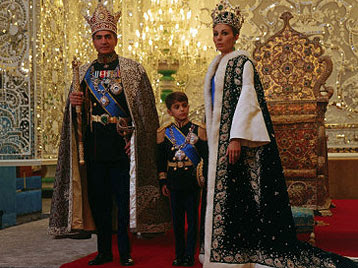
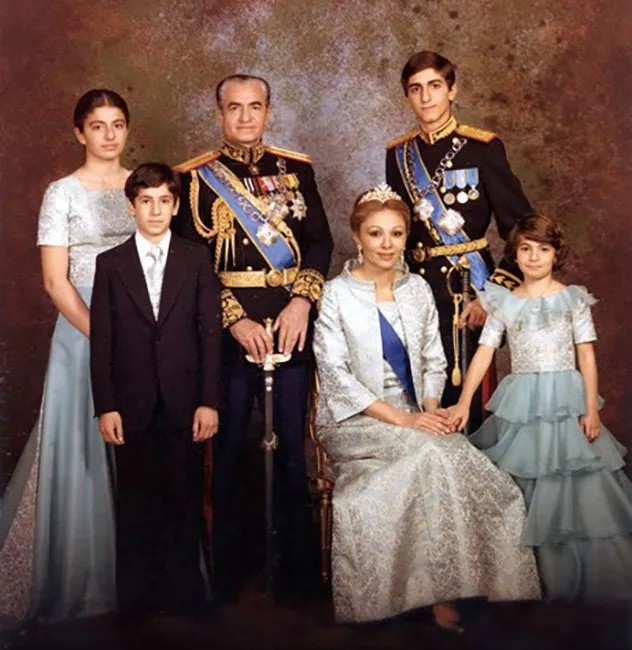
The coup restored the authority of Shah Mohammad Reza Pahlavi, whose regime pursued rapid modernisation and close alignment with the United States and Western Europe.

The Islamic Revolution and a new global posture
The Shah’s rule eventually collapsed in the Iranian Revolution of 1979. The revolution replaced the monarchy with an Islamic Republic led by Ayatollah Ruhollah Khomeini.

The new government adopted a strongly anti-Western ideology, particularly toward the United States. The seizure of the US embassy in Tehran and the ensuing hostage crisis became a defining moment in modern Iranian-American relations.

Shortly after the revolution, Iran was drawn into the devastating Iran-Iraq War (1980–1988), which killed hundreds of thousands and reshaped regional alliances.

From this point forward, Iran positioned itself as a revolutionary state seeking to challenge Western influence in the Middle East while supporting allied movements across the region.

Iran in the modern geopolitical order
In the decades since the revolution, Iran has remained one of the most important geopolitical actors in the Middle East. Its influence extends through networks of allied groups and governments in countries such as Lebanon, Syria, Iraq and Yemen.

Relations with Western powers have been shaped largely by disputes over Iran’s nuclear programme. Diplomatic negotiations produced the 2015 nuclear agreement, which limited Iran’s nuclear activities in exchange for sanctions relief, though tensions later returned after the United States withdrew from the deal.

At the same time, Iran has strengthened ties with countries such as Russia and China, reflecting a broader shift toward multipolar geopolitics.

A civilisation between continuity and conflict
Iran’s history demonstrates the extraordinary continuity of a civilisation that has endured through empire, conquest, religious transformation and revolution. Few countries have played such a consistent role in shaping the political and cultural landscape of Eurasia.

Today, Iran remains a country whose domestic politics and foreign relations continue to influence global energy markets, regional security and international diplomacy.

From the ancient Persian Empire to the Islamic Republic, Iran’s story is one of enduring identity combined with constant interaction with the wider world — a civilisation that has never existed in isolation but has always been deeply connected to the global currents of history.

Newshub Editorial in Asia — March 5, 2026

Ask NF GPT

If you have an account with ChatGPT you get deeper explanations,
background and context related to what you are reading.

Open article chat

Open an account:

Open an account
No Result
View All Result

Recent Posts

  • Iran and the world: a long history of empire, faith, and geopolitical power
  • HDFC Bank: India’s hidden financial giant powering a banking revolution
  • Dangote Group: from small trading firm to Africa’s industrial powerhouse
  • Australia records wettest summer in nearly a decade amid rising temperatures
  • Kraken receives Fed master account in historic breakthrough for crypto industry

Recent Comments

    Archives

    • March 2026
    • February 2026
    • January 2026
    • December 2025
    • November 2025
    • October 2025
    • September 2025
    • August 2025
    • July 2025
    • June 2025
    • May 2025
    • April 2025
    • March 2025
    • February 2025
    • January 2025
    • December 2024
    • November 2024
    • October 2024
    • September 2024
    • August 2024
    • July 2024
    • June 2024
    • May 2024
    • April 2024
    • March 2024
    • February 2024
    • January 2024
    • December 2023
    • November 2023
    • October 2023
    • September 2023
    • August 2023
    • July 2023
    • June 2023
    • May 2023
    • April 2023
    • March 2023
    • February 2023
    • January 2023
    • December 2022
    • November 2022
    • October 2022
    • September 2022
    • August 2022

    Categories

    • Africa
    • Africa finance
    • AI
    • An diesem Tag
    • Asia
    • Asia finance
    • Australia
    • Banking
    • Best chefs
    • Biden
    • Blockchain
    • Burundi
    • Business of the week
    • Carbon
    • Caribbean
    • Central America
    • Central Banks
    • China
    • Climate
    • Climate & Energy
    • Coal
    • Cocktail of the week
    • Commodities
    • Corporate
    • Deutsch
    • Deutsch PR
    • Digital Banking
    • English PR
    • Epstein
    • Europe
    • Financial insights
    • Focus on neobanking
    • Gambia
    • Gas
    • Ghana
    • Global news
    • Harris
    • History
    • India
    • Indonesia
    • Influential women
    • Invest and Rest
    • Italiano PR
    • Jamaica
    • Japan
    • Kenya
    • Kenya
    • Laos
    • Laos
    • LATAM
    • Lifestyle
    • Malaysia
    • Metaverse
    • MSTRpay
    • Neobanking
    • News
    • Newshub long-read
    • newshub special
    • newshub-special
    • NFT
    • Nobel Prizes 2024
    • Nuclear
    • Oil
    • Philippines
    • Press
    • Press releases
    • Pressroom
    • Renewable
    • Russia
    • Senegal
    • Senegal
    • Solar
    • South America
    • South East Asia
    • South Korea
    • South Korea
    • Stocks
    • Svensk PR
    • Tech
    • Trump
    • Trump trials
    • UFO
    • Uganda
    • UK
    • UK News
    • Ukraine
    • US
    • US politics
    • Vietnam
    • Vietnam
    • War
    • Waves
    • WEX
    • Wind
    • World safety

    Meta

    • Log in
    • Entries feed
    • Comments feed
    • WordPress.org

    Recent Posts

    • Iran and the world: a long history of empire, faith, and geopolitical power
    • HDFC Bank: India’s hidden financial giant powering a banking revolution
    • Dangote Group: from small trading firm to Africa’s industrial powerhouse
    • Australia records wettest summer in nearly a decade amid rising temperatures
    • Kraken receives Fed master account in historic breakthrough for crypto industry

    Categories

    • Africa
    • Africa finance
    • AI
    • An diesem Tag
    • Asia
    • Asia finance
    • Australia
    • Banking
    • Best chefs
    • Biden
    • Blockchain
    • Burundi
    • Business of the week
    • Carbon
    • Caribbean
    • Central America
    • Central Banks
    • China
    • Climate
    • Climate & Energy
    • Coal
    • Cocktail of the week
    • Commodities
    • Corporate
    • Deutsch
    • Deutsch PR
    • Digital Banking
    • English PR
    • Epstein
    • Europe
    • Financial insights
    • Focus on neobanking
    • Gambia
    • Gas
    • Ghana
    • Global news
    • Harris
    • History
    • India
    • Indonesia
    • Influential women
    • Invest and Rest
    • Italiano PR
    • Jamaica
    • Japan
    • Kenya
    • Kenya
    • Laos
    • Laos
    • LATAM
    • Lifestyle
    • Malaysia
    • Metaverse
    • MSTRpay
    • Neobanking
    • News
    • Newshub long-read
    • newshub special
    • newshub-special
    • NFT
    • Nobel Prizes 2024
    • Nuclear
    • Oil
    • Philippines
    • Press
    • Press releases
    • Pressroom
    • Renewable
    • Russia
    • Senegal
    • Senegal
    • Solar
    • South America
    • South East Asia
    • South Korea
    • South Korea
    • Stocks
    • Svensk PR
    • Tech
    • Trump
    • Trump trials
    • UFO
    • Uganda
    • UK
    • UK News
    • Ukraine
    • US
    • US politics
    • Vietnam
    • Vietnam
    • War
    • Waves
    • WEX
    • Wind
    • World safety

    Archives

    • March 2026
    • February 2026
    • January 2026
    • December 2025
    • November 2025
    • October 2025
    • September 2025
    • August 2025
    • July 2025
    • June 2025
    • May 2025
    • April 2025
    • March 2025
    • February 2025
    • January 2025
    • December 2024
    • November 2024
    • October 2024
    • September 2024
    • August 2024
    • July 2024
    • June 2024
    • May 2024
    • April 2024
    • March 2024
    • February 2024
    • January 2024
    • December 2023
    • November 2023
    • October 2023
    • September 2023
    • August 2023
    • July 2023
    • June 2023
    • May 2023
    • April 2023
    • March 2023
    • February 2023
    • January 2023
    • December 2022
    • November 2022
    • October 2022
    • September 2022
    • August 2022
    • Global
    • Finance
    • Fintech
    • Press releases
    • NF GPT
    Legal - Disclosure - Cookies

    © 2022-2026
    MSTRpay/Newshub Finance

    Welcome Back!

    Login to your account below

    Forgotten Password?

    Retrieve your password

    Please enter your username or email address to reset your password.

    Log In

    Add New Playlist

    No Result
    View All Result
    • Global
      • Africa
        • Burundi
        • Ghana
        • Gambia
        • Senegal
      • Asia
        • Indonesia
        • Laos
        • Malaysia
        • South Korea
      • Caribbean
        • Central America
      • Climate & energy
        • Climate
        • Carbon
        • Coal
        • Disruptive
        • Gas
        • Nuclear
        • Oil
        • Solar
        • Water
        • Waves
        • Wind
        • Renewable
        • South America
      • Lifestyle
        • Best chefs
        • Cocktail of the week
        • History
        • Influential women
        • Newshub long-read
      • US politics
        • Epstein
      • War
    • Finance
      • Africa finance
      • Australia
      • Asia finance
      • Banking
      • Business of the week
      • Central Banks
      • China
      • Commodities
      • Corporate
      • Europe
      • Investment
      • Japan
      • MSTRpay
      • Neobanking
      • South East Asia
      • UK
      • US
    • Fintech
      • Tech
      • AI
      • Blockchain
    • Press releases
    • NF GPT

    © 2022-2026
    MSTRpay/Newshub Finance