

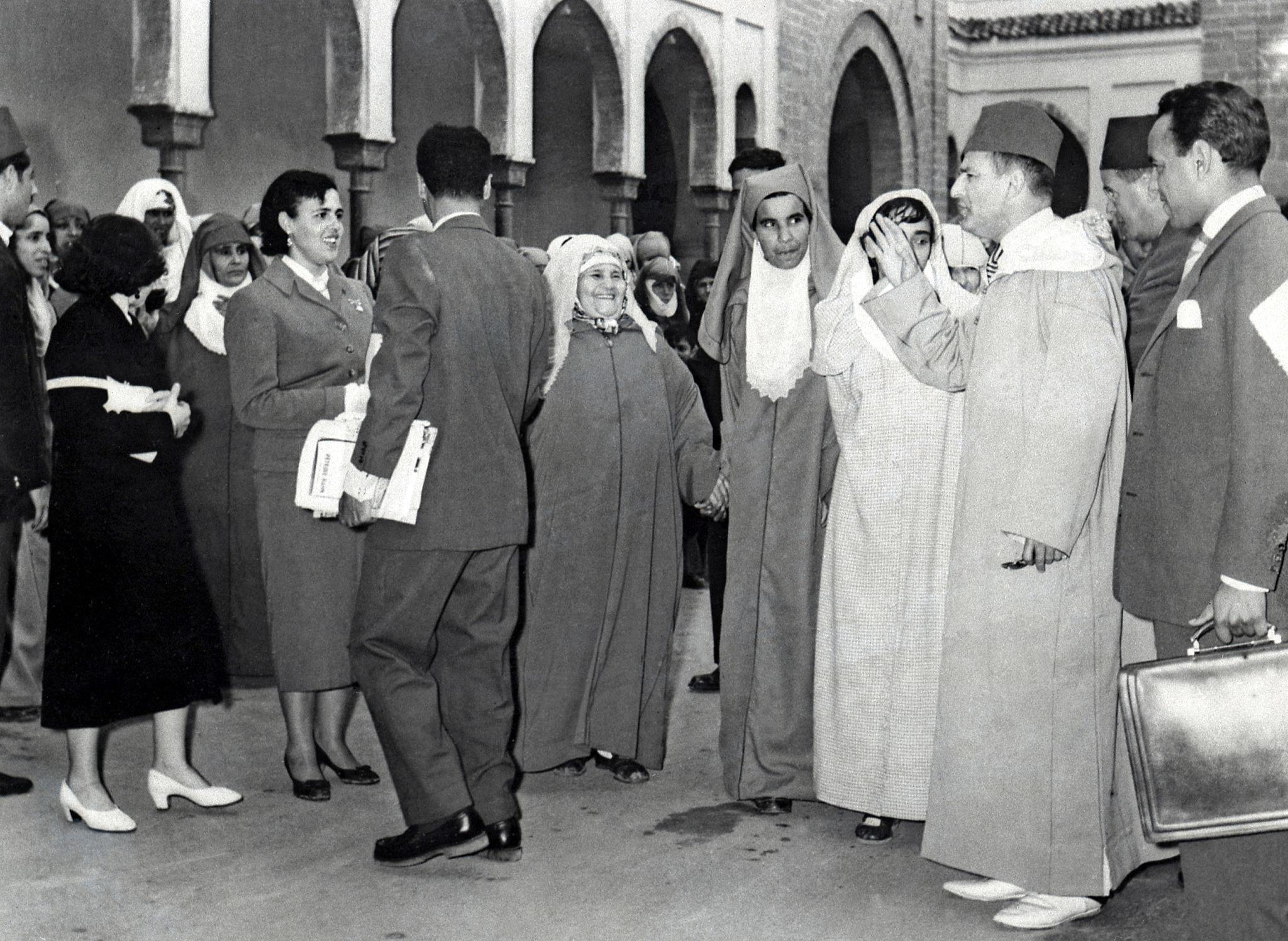
On 2 March 1956, the North African kingdom of Morocco formally proclaimed its independence from France, bringing an end to more than four decades of French colonial administration and marking a pivotal moment in the broader wave of decolonisation that reshaped Africa and the Middle East after the Second World War.
The protectorate system established in 1912
French control over Morocco began with the signing of the Treaty of Fez, which created a French protectorate over the country while formally preserving the Moroccan monarchy. Under this system, the sultan remained the symbolic head of state, but real political and administrative authority was exercised by French officials.
France justified the arrangement as a means of modernising the country and stabilising the region. Infrastructure projects expanded ports, railways and administrative institutions. However, the protectorate also entrenched colonial economic structures and limited Moroccan political autonomy, fuelling growing nationalist opposition.

By the 1930s and 1940s, a political movement advocating independence had begun to consolidate around Moroccan intellectuals, religious leaders and emerging political parties. The call for sovereignty intensified after the Second World War, as anti-colonial sentiment spread across Africa and Asia.
Mohammed V and the rise of the nationalist movement
A central figure in Morocco’s independence struggle was Mohammed V, who became a powerful symbol of national unity. Although initially working within the framework of the protectorate, the sultan increasingly aligned himself with Moroccan nationalists demanding full sovereignty.
Tensions escalated in 1953 when French authorities deposed Mohammed V and exiled him to Madagascar, hoping to weaken the independence movement. Instead, the move provoked widespread unrest and strengthened resistance across Morocco.
Demonstrations, strikes and political pressure continued to build over the following two years. Faced with mounting instability and international pressure, France eventually reversed course.
In November 1955, Mohammed V returned triumphantly to Morocco, signalling that negotiations over the country’s future had effectively shifted in favour of independence.
A turning point in North African decolonisation
The formal declaration of Moroccan independence in March 1956 marked the end of the French protectorate and restored full sovereignty to the Moroccan state. Later that year, Spain also relinquished control over most of the territories it administered in northern Morocco.
Independence allowed Morocco to begin building its modern political institutions under the leadership of Mohammed V, who soon assumed the title of king. The event also contributed to a wider momentum of decolonisation across North Africa.
Within a few years, neighbouring territories would follow similar paths, including Tunisia, which also gained independence from France in 1956, and Algeria, whose struggle for independence culminated in 1962 after a prolonged and violent war.
Today, Morocco’s independence day remains an important milestone in the country’s modern history, symbolising both the resilience of its nationalist movement and the broader transformation of the global political order during the mid-twentieth century.
Newshub Editorial in Africa – March 2, 2026

If you have an account with ChatGPT you get deeper explanations,
background and context related to what you are reading.
Open an account:
Open an account
Recent Comments