

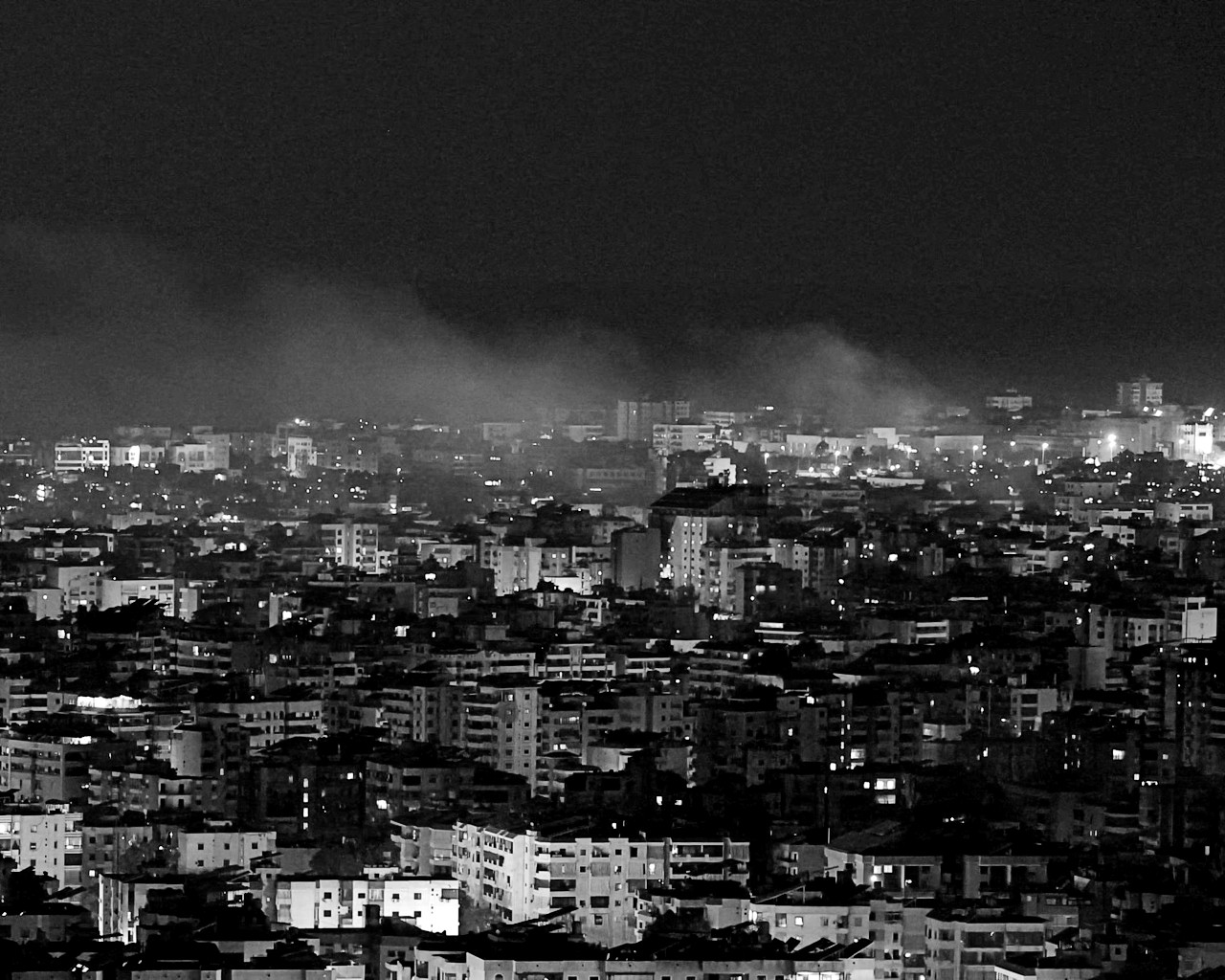
Explosions have been reported across the Middle East as the rapidly escalating conflict between Israel, the United States and Iran spreads beyond its initial front lines, with rocket attacks, retaliatory airstrikes and mass evacuations signalling the emergence of a wider regional war.
Explosions heard across Israel and Gulf states
Explosions were reported in several cities across the region as Iranian missiles and drones struck multiple targets following a large-scale joint military campaign by Israel and the United States against Iran. Sirens sounded in Jerusalem as air-defence systems attempted to intercept incoming projectiles, while residents across parts of the Gulf reported blasts and aerial interceptions.
The escalation follows a series of coordinated airstrikes targeting Iranian military infrastructure, ballistic-missile facilities and command centres. The campaign also resulted in the killing of Iran’s Supreme Leader, Ali Khamenei, during an attack on Tehran. Iranian authorities confirmed his death, triggering widespread mourning and immediate calls for retaliation from Iran’s leadership and allied groups.

In response, Iran launched missile and drone strikes aimed at Israeli territory as well as locations across the Gulf region hosting US military assets. Regional governments have raised security alerts as the attacks have expanded beyond the original combat zones.
Hezbollah rockets open a new front in Lebanon
The conflict widened further when the Iranian-backed militant group Hezbollah announced it had launched rockets and drones into northern Israel, describing the strikes as retaliation for Khamenei’s killing.
Israeli officials confirmed that projectiles were fired from Lebanese territory, prompting immediate retaliatory airstrikes against Hezbollah targets across southern Lebanon and the suburbs of Beirut. Several explosions were reported in the Lebanese capital during the early hours of Monday as Israeli jets struck militant infrastructure.
Authorities in Lebanon warned that the country risked being drawn into a broader regional war. Evacuation warnings were issued for dozens of villages and towns near Hezbollah positions as civilians fled the expected strike zones.
The exchanges mark the first major cross-border attacks between Israel and Hezbollah since a fragile ceasefire ended the intense fighting that had gripped the border region in 2024.
Fears of a wider regional war
Military analysts warn that the conflict could escalate into a prolonged multi-front confrontation across the Middle East. Iranian-aligned militias in Iraq have already claimed responsibility for drone strikes targeting US forces, while regional governments remain on high alert for further attacks.
The conflict has also begun to affect global markets and energy routes. Shipping activity through the strategically vital Strait of Hormuz — a key corridor for global oil trade — has been disrupted as tensions rise and military activity intensifies across the Gulf.
Diplomatic efforts to contain the crisis have so far failed, with Iranian leaders rejecting negotiations while Washington and Tel Aviv signal that further military operations remain possible.
As the conflict expands from Iran and Israel to Lebanon and beyond, international observers warn that the Middle East may be entering one of its most volatile periods in decades.
Newshub Editorial in Asia – March 2, 2026

If you have an account with ChatGPT you get deeper explanations,
background and context related to what you are reading.
Open an account:
Open an account
Recent Comments