

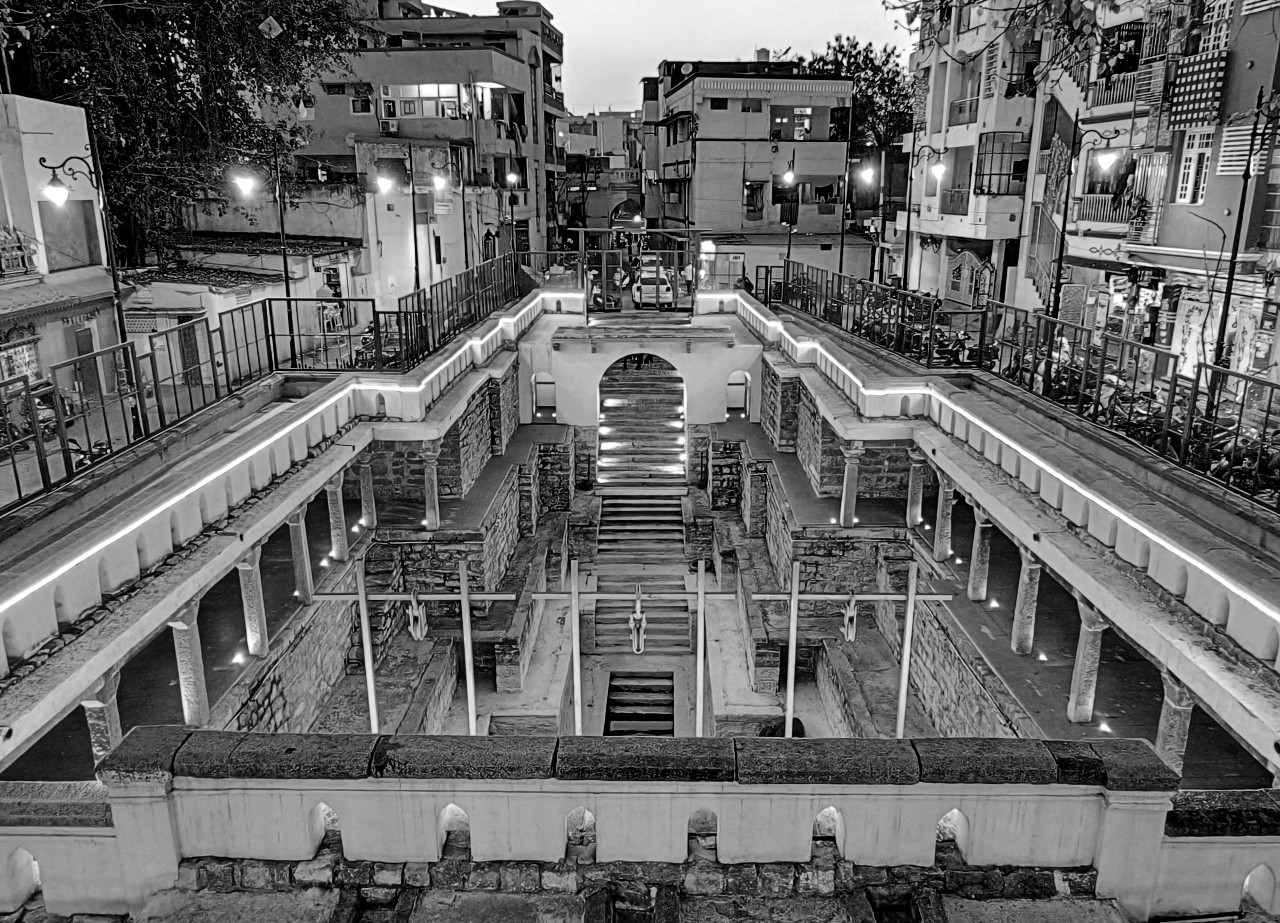
Centuries-old stepwells across India are being restored and brought back into use as communities face worsening water shortages, with some regions warning they may soon reach “day zero” — the point at which municipal water supplies are effectively exhausted.
Historic water systems return to relevance
Across several Indian states, restoration projects are breathing new life into ancient stepwells that once formed a crucial part of the subcontinent’s water infrastructure. Built between the 7th and 19th centuries, these elaborate wells were designed to capture and store rainwater during the monsoon season, ensuring communities had access to water throughout the dry months.
Stepwells — often constructed with descending stone staircases leading down to the water — were not only practical reservoirs but also architectural landmarks. Many served as gathering places where travellers and local residents could rest and access water.

Today, engineers, conservationists and local governments are rediscovering their practical value. By clearing debris, restoring drainage channels and repairing stone structures, communities are transforming neglected stepwells into functioning water reserves once again.
Water scarcity intensifies across the country
India is experiencing increasing pressure on its water resources as population growth, climate change and urban expansion strain already limited supplies. Several major cities have faced severe shortages in recent years, forcing authorities to impose restrictions and rely on emergency water deliveries.
Experts warn that some regions are approaching “day zero”, a scenario in which municipal water systems run dry and residents must depend entirely on emergency distribution or alternative sources.
Groundwater depletion has become a particularly serious challenge. In many areas, decades of heavy pumping for agriculture and urban development have caused water tables to fall dramatically, leaving wells and boreholes dry.
Against this backdrop, restoring traditional water-harvesting systems such as stepwells is increasingly seen as a practical way to improve local water resilience.
Combining heritage conservation with climate adaptation
The restoration movement is gaining support from environmental groups, heritage organisations and municipal authorities. Advocates argue that stepwells offer a sustainable solution that blends cultural preservation with modern climate adaptation strategies.
Unlike many modern reservoirs, stepwells are designed to allow rainwater to slowly seep into surrounding groundwater systems. This process helps recharge aquifers while also providing direct access to stored water.
Some projects have already demonstrated tangible benefits. Restored stepwells in drought-prone areas have begun supplying drinking water to nearby villages, reducing dependence on tanker deliveries and expensive groundwater pumping.
The initiative also has tourism and cultural benefits. Many restored stepwells have become popular heritage sites, attracting visitors interested in the architectural ingenuity of historic Indian water management systems.
Ancient knowledge meets modern challenges
As climate pressures intensify, experts increasingly argue that traditional water systems may hold valuable lessons for modern infrastructure planning.
India’s historic stepwells were designed for a climate characterised by extreme seasonal variation — heavy monsoon rains followed by long dry periods. That same pattern continues to define much of the country’s climate today.
By combining ancient engineering with modern restoration techniques, communities are finding new ways to address one of the most pressing environmental challenges facing the country.
For many regions struggling with declining water supplies, these centuries-old structures may once again become essential sources of life-sustaining water.
Newshub Editorial in Asia – March 2, 2026

If you have an account with ChatGPT you get deeper explanations,
background and context related to what you are reading.
Open an account:
Open an account
Recent Comments