

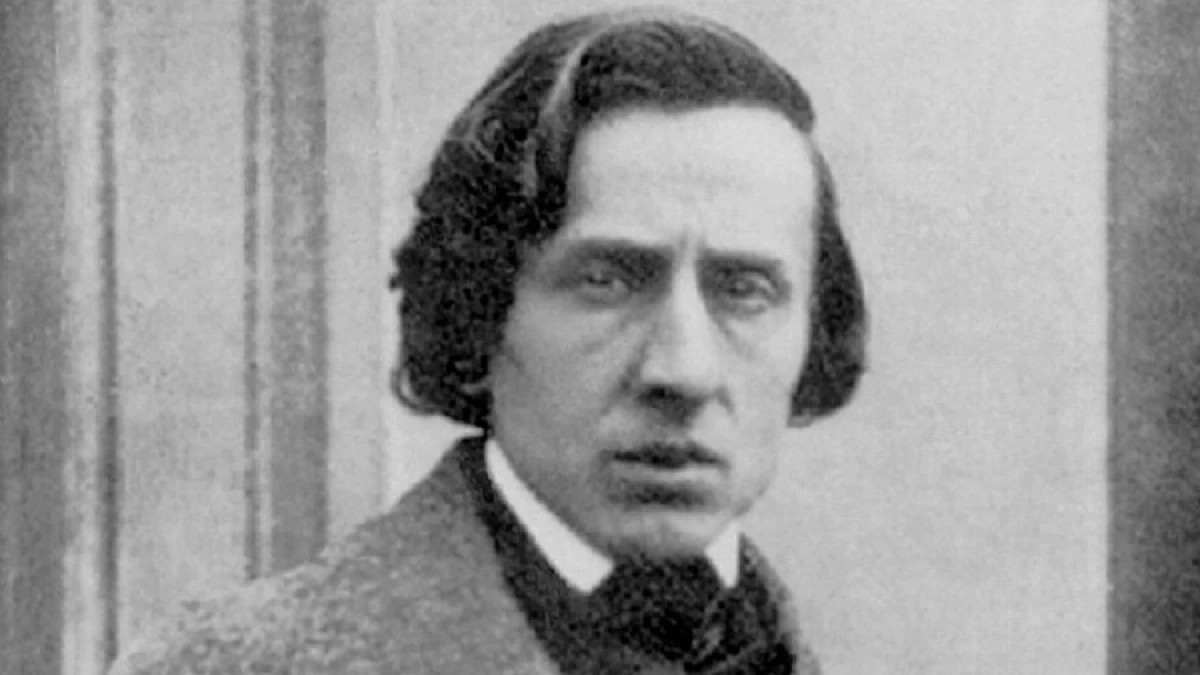
Frédéric Chopin, one of the most influential composers and pianists of the Romantic era, was born on 1 March 1810 in Żelazowa Wola near Warsaw, in what was then the Duchy of Warsaw. His works transformed the expressive possibilities of the piano and remain central to the instrument’s repertoire more than two centuries later.
A prodigy who redefined the piano
From an early age, Chopin demonstrated extraordinary musical ability. By the age of seven he had already composed his first pieces and was performing publicly in Warsaw salons. His father, Nicolas Chopin, was a French expatriate teacher, while his mother, Justyna Krzyżanowska, came from a Polish noble family with strong cultural traditions.
Chopin’s early training took place at the Warsaw Conservatory under composer Józef Elsner, who quickly recognised the young musician’s exceptional talent. Unlike many virtuoso performers of the era, Chopin devoted himself almost entirely to the piano, focusing on the instrument not only as a vehicle for performance but as a medium for deeply personal musical expression.

His early compositions already displayed hallmarks that would later define Romantic piano music: lyrical melodies, rich harmonic language and an intimate emotional character.
Paris and the heart of Romantic music
In 1830 Chopin left Poland and eventually settled in Paris, which had become Europe’s cultural capital for music, literature and the arts. There he moved among the leading artistic figures of the time, including Franz Liszt, Hector Berlioz and the novelist George Sand.
Unlike Liszt, whose dazzling performances filled large concert halls, Chopin preferred the intimacy of salon performances. His delicate touch and subtle phrasing became legendary among audiences and fellow musicians.
During his Paris years he composed most of the works that define his legacy: nocturnes, études, mazurkas, ballades, polonaises and preludes. These pieces not only pushed the technical limits of the piano but also elevated short musical forms into vehicles for profound emotional storytelling.
His études, in particular, revolutionised piano technique by combining virtuosic challenges with genuine musical depth.
Music rooted in Polish identity
Although Chopin spent most of his adult life in France, his music remained deeply connected to his Polish heritage. His mazurkas and polonaises drew on traditional Polish dances, transforming folk rhythms into sophisticated concert works.
These compositions carried strong emotional resonance for Polish audiences, particularly during a time when Poland had lost its political independence. Many listeners interpreted Chopin’s music as an artistic expression of national identity and longing for the homeland he never returned to.
This blend of national inspiration and Romantic expression helped shape the emerging idea of musical nationalism across Europe.
A legacy that shaped piano music forever
Chopin died in Paris in 1849 at the age of 39, likely from complications related to tuberculosis. Despite his relatively short life, his impact on music was immense.
His works fundamentally reshaped piano technique, pedagogy and repertoire. Today they remain essential for both professional pianists and students, forming a cornerstone of classical piano education worldwide.
More broadly, Chopin demonstrated how the piano could convey deeply personal emotion, helping define the expressive spirit of the Romantic period.
Newshub Editorial in Europe — March 1, 2026

If you have an account with ChatGPT you get deeper explanations,
background and context related to what you are reading.
Open an account:
Open an account
Recent Comments