

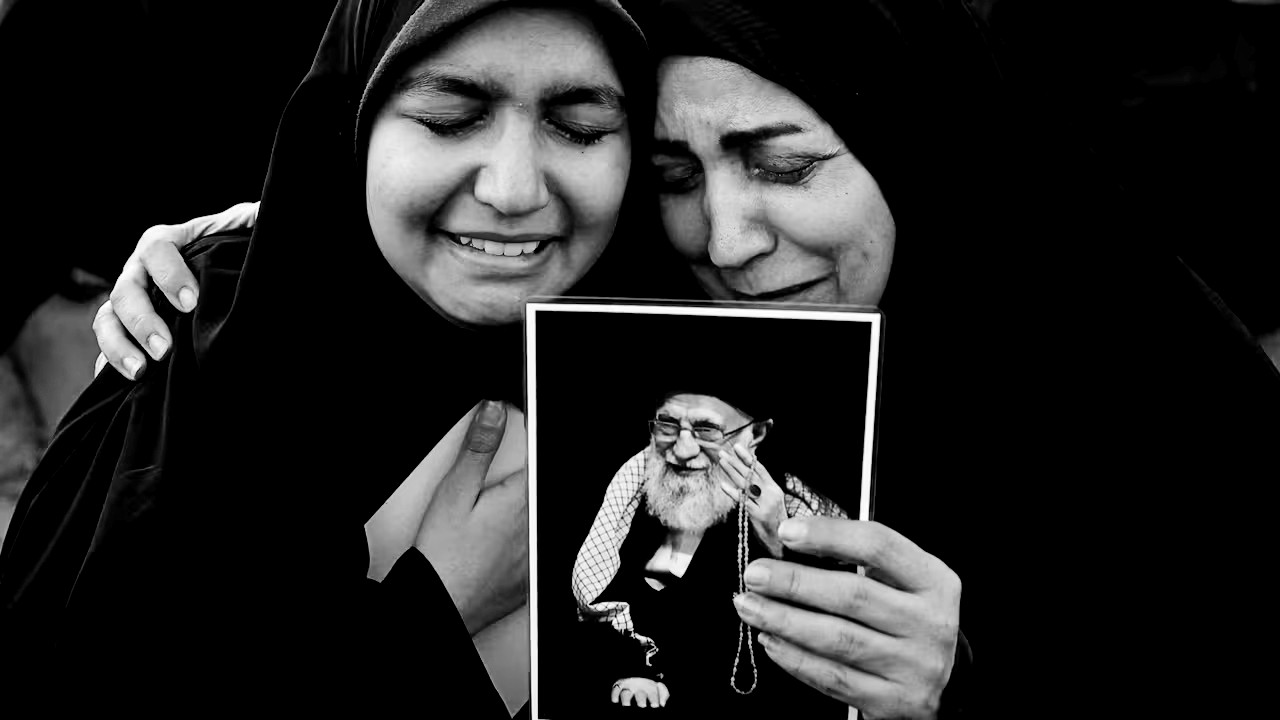
Iran has confirmed the death of Supreme Leader Ayatollah Ali Khamenei following a major wave of joint United States–Israeli airstrikes, triggering immediate retaliation by Tehran and raising fears of a wider regional conflict across the Middle East.
A decapitation strike reshapes Iran’s leadership
Iranian state media confirmed that Khamenei, who ruled the Islamic Republic since 1989, was killed after missiles struck his compound in Tehran during a coordinated military campaign targeting senior leadership and strategic facilities. The 86-year-old cleric had been the country’s most powerful political and religious authority for more than three decades.
The operation, reportedly planned for months, targeted key elements of Iran’s military command structure and nuclear infrastructure. Multiple senior officials were killed in the same strikes, deepening what analysts now describe as a sudden leadership crisis within the Islamic Republic.

Iran immediately declared a 40-day national mourning period, while crowds gathered in Tehran amid both grief and political uncertainty. The death of Khamenei marks the end of one of the longest and most influential leadership tenures in modern Middle Eastern politics.
Iran retaliates with missile and drone attacks
Within hours of confirming the Supreme Leader’s death, Iran launched retaliatory missile and drone strikes targeting Israeli territory and American military bases across the Gulf region. Several strikes reportedly hit sites in Israel and areas hosting US forces in Bahrain, Kuwait and Qatar.
The attacks caused casualties and damage in multiple locations and forced temporary disruptions to regional aviation and energy infrastructure. Iranian officials vowed continued retaliation, framing the strike that killed Khamenei as an act of war and an attempt to destabilise the Islamic Republic.
US President Donald Trump warned that further escalation by Tehran would trigger additional military responses, while Israel signalled that further strikes inside Iran remain possible.
Power vacuum inside the Islamic Republic
Under Iran’s constitution, a temporary leadership council now assumes the Supreme Leader’s responsibilities until a successor is chosen. The interim arrangement includes President Masoud Pezeshkian, the head of the judiciary, and a clerical representative from the Guardian Council.
However, the simultaneous loss of multiple senior commanders has created a complex succession challenge. Hardline factions linked to the Islamic Revolutionary Guard Corps are widely expected to play a decisive role in determining the next Supreme Leader.
The leadership vacuum also comes at a time when Iran faces severe economic strain, internal dissent and weakened regional alliances, factors that could shape the country’s next political phase.
Global alarm as conflict risks widening
International leaders have called for urgent de-escalation as the confrontation threatens to expand beyond Iran and Israel. Emergency diplomatic consultations have begun at the United Nations amid concerns about global oil supply disruptions and broader instability across the Middle East.
For now, the killing of Khamenei — one of the most consequential political figures in the region since the 1979 Islamic Revolution — has ushered in a new and unpredictable chapter for Iran and its neighbours.
Newshub Editorial in Asia — March 1, 2026
Recent Comments