

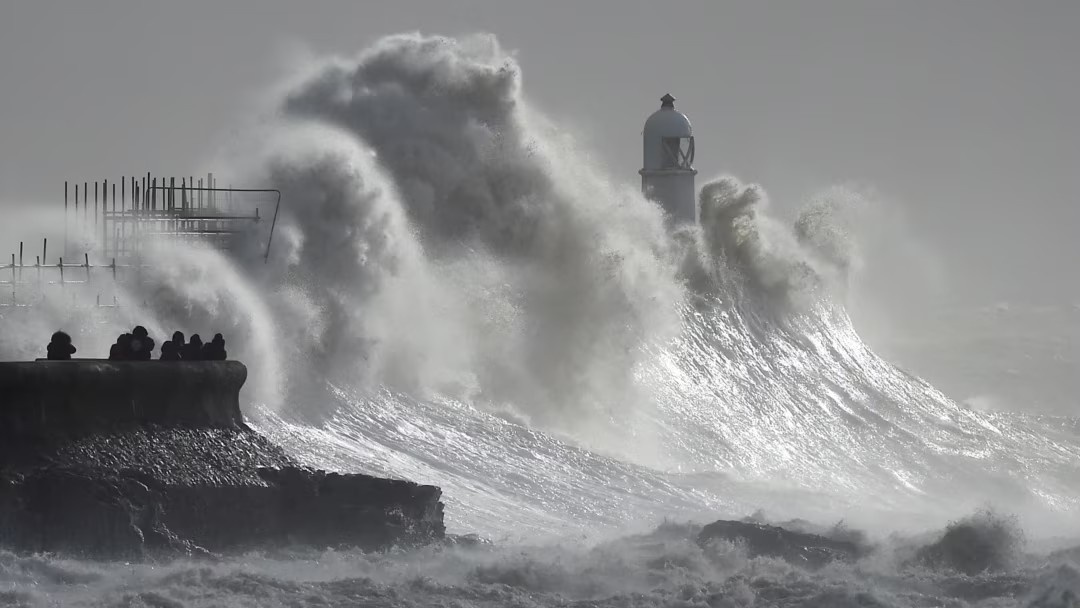
A succession of violent storms has battered the Mediterranean basin this year, prompting scientists to describe an ‘atmospheric machine-gun’ pattern that has unleashed deadly system after deadly system across southern Europe and North Africa.
An escalating pattern of destruction
From flash floods in coastal Spain and Italy to destructive winds in Greece and the Balkans, recent months have seen an unusually persistent train of low-pressure systems sweeping across the region. Communities accustomed to seasonal storms have instead faced repeated, high-intensity events with little time to recover between them.
Meteorologists point to a stalled jet stream and abnormally warm sea surface temperatures as key drivers. The Mediterranean, often described as a climate change hotspot, has recorded sustained temperature anomalies that increase evaporation and atmospheric moisture. When these saturated air masses collide with cooler systems, extreme rainfall can follow.

The result has been catastrophic flooding, landslides and storm surges that overwhelmed drainage systems and damaged critical infrastructure. In several areas, emergency services have struggled to respond as rainfall totals exceeded historical averages within hours.
Climate signals and compound risk
Climate researchers caution against attributing any single storm solely to global warming. However, they note that rising sea temperatures and altered atmospheric circulation patterns increase the probability of intense precipitation events.
The Mediterranean’s semi-enclosed geography amplifies the impact. Warmer waters feed storms with additional energy, while mountainous terrain along much of the coastline accelerates runoff, heightening flood risk. Urban expansion into flood-prone zones further compounds vulnerability.
Scientists describe the recent pattern as a “serial clustering” phenomenon: rather than isolated events, storms have arrived in rapid succession. This clustering limits recovery time, strains disaster response systems and raises economic costs exponentially.
Human toll and infrastructure strain
The storms have left fatalities, displaced residents and inflicted billions of euros in damage across affected countries. Transport networks, agricultural land and energy infrastructure have suffered repeated disruption. Tourism-dependent economies, still rebuilding from previous shocks, face further uncertainty.
Emergency agencies report that early warning systems have improved in recent years, yet the intensity of rainfall in some cases exceeded forecast models. Questions are emerging about whether infrastructure built for 20th-century climate norms remains adequate for 21st-century extremes.
Insurance markets are also reassessing risk exposure. Repeated high-impact events can drive premium increases and challenge the insurability of certain coastal zones.
A region at a crossroads
Policy discussions are now shifting from disaster response to long-term adaptation. Investment in flood defences, resilient urban planning and updated building standards is gaining urgency. Cross-border coordination is also essential, given the transnational nature of Mediterranean weather systems.
Climate adaptation strategies may include restoring wetlands to absorb excess water, redesigning drainage systems and restricting development in high-risk areas. Experts emphasise that mitigation and adaptation must proceed in tandem to limit future escalation.
The recent storms have underscored the Mediterranean’s vulnerability to intensifying weather extremes. What was once considered episodic disruption now appears part of a broader structural shift. As the atmospheric “machine-gun” continues to fire, the region faces a stark challenge: adapt swiftly or confront increasingly devastating consequences.
Newshub Editorial in Europe – 26 February 2026

If you have an account with ChatGPT you get deeper explanations,
background and context related to what you are reading.
Open an account:
Open an account
Recent Comments