
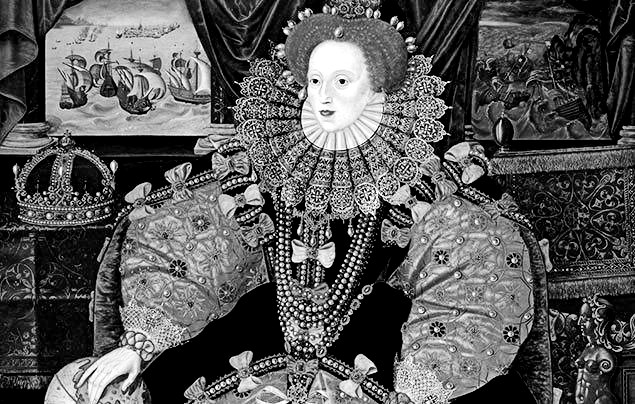
On 25 February 1570, Pope Pope Pius V formally excommunicated Elizabeth I, declaring her a heretic and releasing her subjects from allegiance to the English crown. Issued from Rome, the decree marked a decisive rupture between Tudor England and the Roman Catholic Church, deepening Europe’s religious fault lines and accelerating decades of political and sectarian conflict.
A papal thunderbolt
The excommunication came a little more than a decade into Elizabeth’s reign, at a moment when the Protestant settlement in England appeared increasingly secure. Since ascending the throne in 1558, Elizabeth had restored royal supremacy over the church and re-established Protestant worship after the brief Catholic revival under her half-sister Mary I.


Pius V’s decree was sweeping in scope. It condemned Elizabeth as a usurper of ecclesiastical authority and urged Catholics not to obey her laws. In practical terms, it transformed what had been a domestic religious settlement into an international crisis, effectively inviting Catholic powers to challenge Elizabeth’s legitimacy.
Politics wrapped in theology
While framed in spiritual language, the move was deeply political. Pius V belonged to a generation of popes determined to push back against the Reformation and reassert Rome’s authority across Europe. England, once a loyal Catholic kingdom, had become a symbolic prize in that struggle.
For Elizabeth, the timing was perilous. Catholic plots already simmered at home, and rival claimants to the English throne—most notably Mary, Queen of Scots—provided focal points for opposition. The papal decree gave these factions a moral and theological justification, even if many English Catholics remained reluctant to embrace open rebellion.
From decree to confrontation
The consequences were swift and severe. Elizabeth’s government hardened its stance toward Catholics, introducing harsher penalties for recusancy and tightening surveillance of suspected conspirators. Loyalty to the crown increasingly became inseparable from adherence to Protestantism.
Abroad, the excommunication helped pave the way for escalating hostilities with Catholic Europe, culminating in Spain’s failed Armada campaign in 1588. What began as a theological censure evolved into a broader geopolitical struggle, with England positioning itself as a leading Protestant power.
A turning point in English history
In hindsight, the 1570 excommunication stands as a pivotal moment in the long English Reformation. Rather than weakening Elizabeth, it consolidated her authority at home and clarified England’s religious direction. The papal intervention, intended to reclaim the realm for Catholicism, instead entrenched Protestant rule and reinforced a distinct English identity separate from Rome.
More than four centuries later, the episode remains a stark reminder of how closely intertwined faith and power once were—and how a single decree from the Vatican could reverberate across kingdoms, reshaping nations and destinies.
Newshub Editorial in Europe – 25 February 2026

If you have an account with ChatGPT you get deeper explanations,
background and context related to what you are reading.
Open an account:
Open an account
Recent Comments