
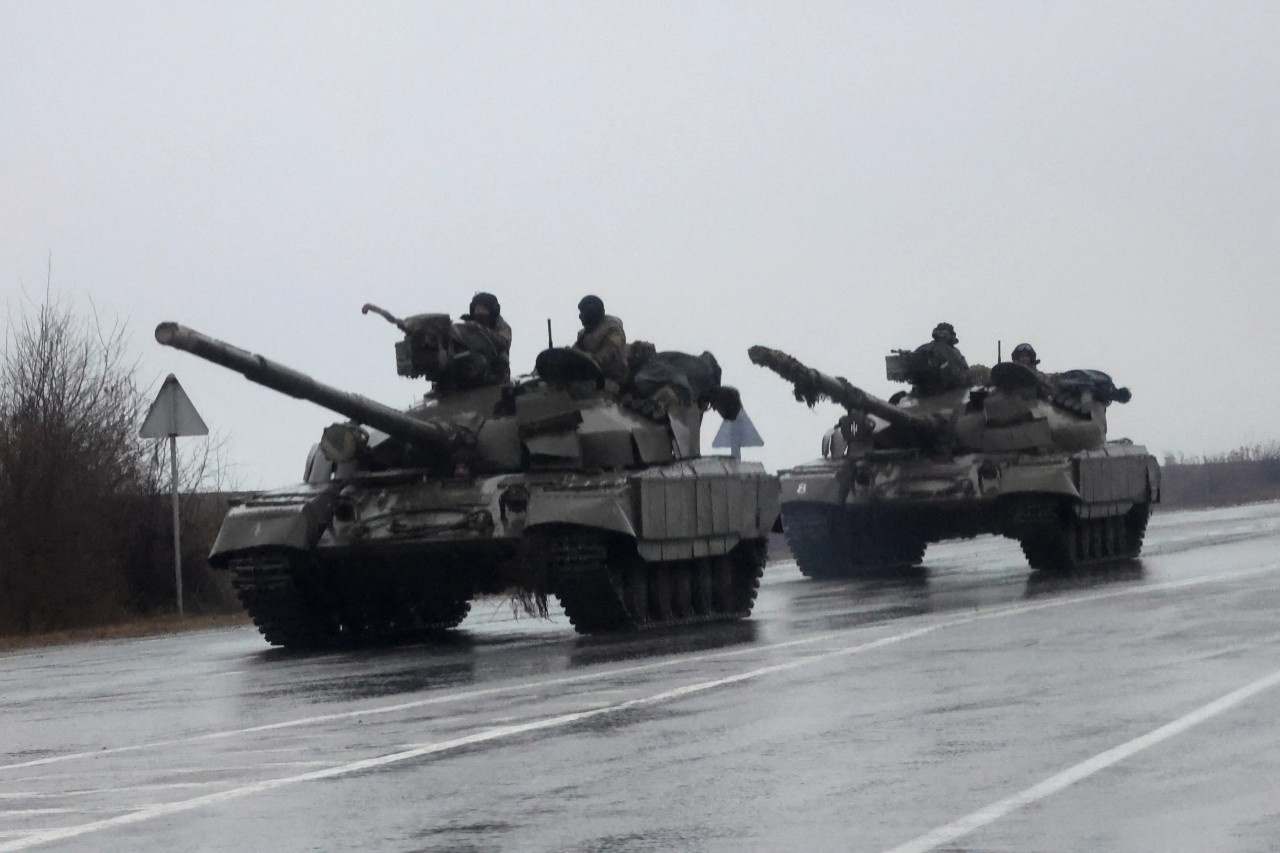
Russia’s full-scale invasion of Ukraine marked one of the most consequential turning points in modern European history, triggering the largest armed conflict on the continent since World War II and setting off profound political, humanitarian, and economic shockwaves that continue to reverberate worldwide.
A war that began before dawn
In the early hours of 24 February 2022, Russian forces crossed Ukraine’s borders from multiple directions while missiles struck major cities including Kyiv, Kharkiv, and Odesa. What Moscow framed as a “special military operation” rapidly unfolded into a broad assault on a sovereign state, aimed at subduing Ukraine’s government and reasserting Russian dominance over its neighbour.


Russian president Vladimir Putin justified the invasion with claims of security threats and historical entitlement. Those arguments were rejected by Ukraine and much of the international community, which condemned the attack as an unprovoked breach of international law.
Ukrainian resistance and civilian toll
Ukraine’s armed forces, backed by widespread civilian mobilisation, mounted a fierce defence that defied early expectations of a swift Russian victory. Urban battles, prolonged sieges, and relentless aerial bombardments followed, forcing millions of Ukrainians to flee their homes and creating Europe’s largest refugee crisis in decades.
Entire towns were reduced to rubble, critical infrastructure was repeatedly targeted, and civilian casualties mounted. Hospitals, schools, and energy networks became front-line assets in a war that increasingly blurred the line between military and civilian spheres.
Global reaction and sanctions
Western governments moved quickly to impose sweeping sanctions on Moscow, freezing assets, restricting access to financial markets, and curbing exports of advanced technology. The European Union coordinated unprecedented economic measures, while the North Atlantic Treaty Organization reinforced its eastern flank and expanded military assistance to Ukraine.
Energy markets were thrown into turmoil as Europe scrambled to reduce dependence on Russian gas, accelerating investment in renewables and alternative suppliers. Food prices surged globally, driven by disrupted grain exports from one of the world’s most important agricultural regions.
A conflict with lasting consequences
Beyond the battlefield, the invasion reshaped geopolitics. Long-standing assumptions about European security were overturned, defence spending rose sharply across the continent, and previously neutral states reconsidered their strategic positions. The war also intensified divisions between democratic nations and authoritarian powers, deepening a broader global realignment.
For Ukraine, the invasion became a defining national struggle for sovereignty and survival. For Russia, it ushered in deeper isolation and long-term economic strain. For the rest of the world, it underscored how fragile peace can be in an era of renewed great-power confrontation.
Nearly four years on, the conflict remains unresolved. What began as a lightning assault has hardened into a grinding war of attrition — one that continues to shape diplomacy, markets, and security policy far beyond Eastern Europe.
Newshub Editorial in Europe – 24 February 2026

If you have an account with ChatGPT you get deeper explanations,
background and context related to what you are reading.
Open an account:
Open an account
Recent Comments