

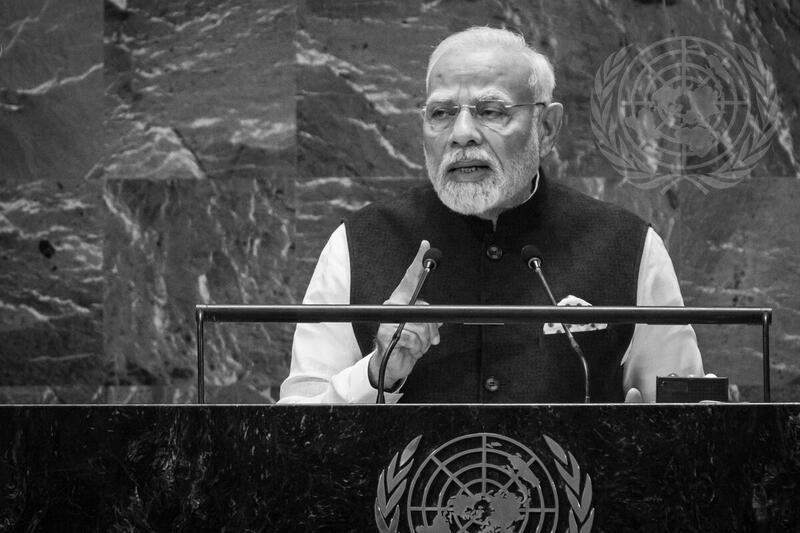
India is positioning itself as both a builder and fast adopter of artificial intelligence, Prime Minister Narendra Modi said on Day 4 of the India AI Summit 2026, underscoring the country’s push to embed advanced technology across government, industry, and society.
From innovation to implementation
Speaking to policymakers, technologists, and business leaders, Modi stressed that India is no longer content to merely consume emerging technologies. Instead, the country is actively developing its own digital infrastructure while rapidly integrating AI into healthcare, education, agriculture, manufacturing, and public services.

He highlighted India’s expanding startup ecosystem and growing pool of engineers as key drivers behind this momentum, pointing to home-grown platforms and public digital systems that already operate at population scale. According to Modi, the combination of affordable computing, digital identity, and instant payments has created a foundation uniquely suited for AI deployment.
A population-scale technology laboratory
India’s approach stands out for its scale. With more than a billion citizens connected through national digital frameworks, new technologies can be tested and rolled out faster than in most economies. Summit sessions showcased AI tools designed to improve crop yields, automate diagnostics in rural clinics, optimise logistics, and support multilingual education across diverse regions.
Government representatives emphasised that AI development must remain inclusive, focusing on practical outcomes rather than abstract innovation. Officials reiterated commitments to open digital architecture, skills training, and responsible AI governance, aiming to ensure that productivity gains translate into broad-based economic growth.
Balancing speed with responsibility
While celebrating progress, Modi also acknowledged the risks associated with rapid technological change. He called for international cooperation on ethical standards, data protection, and cybersecurity, warning that AI’s benefits must be matched by safeguards against misuse.
India’s stance positions it as a bridge between advanced economies and emerging markets — advocating open collaboration while protecting national digital sovereignty. Delegates discussed frameworks for trusted AI, with particular attention on transparency, explainability, and workforce reskilling.
Global implications
For investors and multinational firms, India’s message is clear: the country intends to be a core node in the global AI value chain. Manufacturing incentives, cloud infrastructure investments, and public-private partnerships are already attracting capital, while domestic demand offers a massive proving ground for new applications.
Analysts note that India’s dual strategy — building proprietary technology while rapidly adopting global innovations — could reshape competitive dynamics in software, semiconductors, and digital services over the coming decade.
A long-term digital vision
Day 4 of the summit reinforced New Delhi’s ambition to make AI a central pillar of national development. Rather than treating artificial intelligence as a standalone sector, policymakers framed it as horizontal infrastructure — comparable to roads or electricity — powering everything from small enterprises to smart cities.
As Modi concluded, India’s goal is not just to participate in the AI era, but to help define it — combining scale, speed, and social impact in a model other nations may increasingly look to emulate.
Newshub Editorial in Asia – 19 February 2026

If you have an account with ChatGPT you get deeper explanations,
background and context related to what you are reading.
Open an account:
Open an account
Recent Comments