

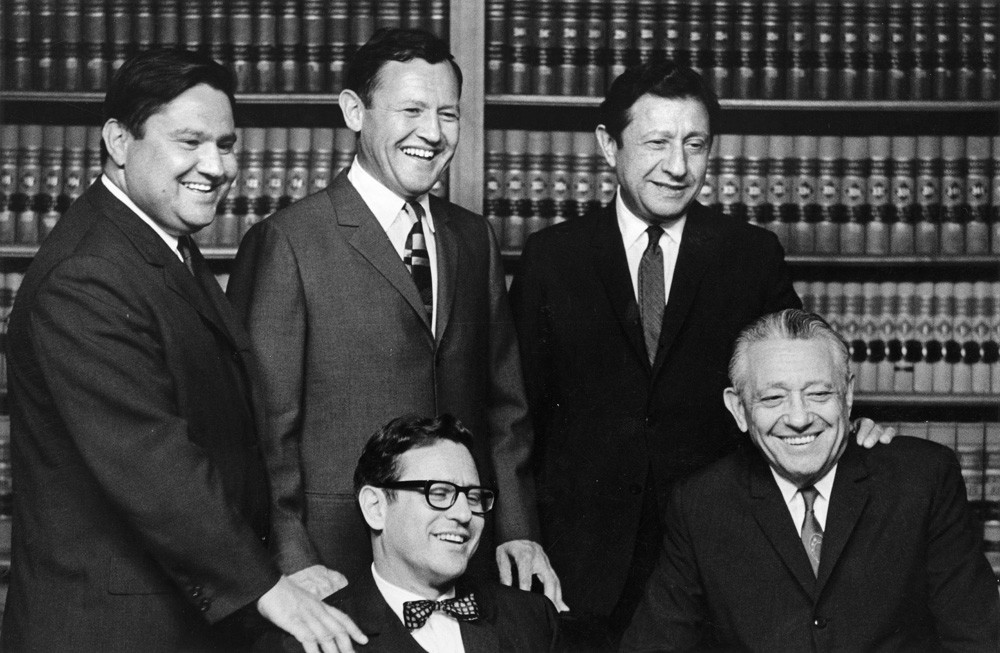
Few families shape global capital as discreetly as the Pritzkers. Best known publicly for building the hotel empire behind Hyatt Hotels Corporation, the Chicago-based dynasty has also assembled one of the most sophisticated private investment networks in the United States — spanning real estate, private equity, venture capital, and infrastructure — while largely avoiding the spotlight.
From hospitality to high finance
The Pritzker story began with hotels, but today that business represents only a fraction of the family’s economic footprint. Over multiple generations, the clan fragmented its holdings into specialised investment vehicles, allowing different branches to pursue technology, healthcare, industrials, and property independently.
This decentralised structure is precisely what makes the family a hidden giant. Unlike more visible dynasties, the Pritzkers do not operate through a single branded family office. Instead, capital is deployed through a web of private firms and partnerships, quietly backing everything from biotech startups to logistics platforms and urban regeneration projects.

Estimates of total family wealth vary widely, but analysts place combined assets comfortably in the tens of billions of dollars.
A model built on privacy and discipline
At the core of the Pritzker approach is long-duration capital. Investments are typically made with decade-long horizons, prioritising operational improvement over financial engineering. The family is known for avoiding excessive leverage and favouring control positions where governance standards can be enforced directly.
This philosophy has produced consistent compounding rather than headline-grabbing exits. It also explains why the Pritzkers are rarely associated with speculative cycles: their portfolios lean toward cash-generative businesses and hard assets that perform across economic regimes.
One of the most recognisable public figures from the dynasty is Penny Pritzker, who served as US Commerce Secretary and helped steer federal efforts on infrastructure finance and domestic manufacturing. Her role highlighted how deeply the family’s expertise intersects with policy, even as most investment activity remains private.
Real estate, technology, and quiet scale
Property remains a cornerstone. The family has long treated commercial real estate as both a yield vehicle and a strategic platform for urban development, particularly in major US cities. Alongside this, newer generations have pushed aggressively into venture capital, backing fintech, climate tech, and enterprise software — sectors aligned with structural growth rather than short-term momentum.
What distinguishes the Pritzkers is not just size, but system design: multiple autonomous investment arms, shared values around stewardship, and a preference for behind-the-scenes influence.
For institutional investors, the family is often encountered as a co-investor rather than a competitor — providing patient capital in complex transactions where speed and discretion matter.
Why the Pritzkers matter to markets
In an era dominated by mega-funds and algorithmic trading, the Pritzkers represent an older, quieter form of financial power: private, relationship-driven, and strategically patient. Their capital frequently enters deals others overlook, particularly in mid-market acquisitions and operational turnarounds.
This makes them an important signal in certain corners of US finance. When Pritzker-backed entities move, bankers and entrepreneurs tend to take notice — even if headlines do not.
The anatomy of a hidden giant
The Pritzker dynasty illustrates how modern financial influence no longer requires public visibility. Through disciplined diversification, generational planning, and a culture of discretion, the family has built a shadow network of assets that rivals many institutional portfolios.
They are not activists, nor publicity seekers. They simply allocate capital — methodically, quietly, and at scale.
In the architecture of American finance, the Pritzkers are not loud pillars. They are load-bearing walls.
Newshub Editorial in North America – 16 February 2026

If you have an account with ChatGPT you get deeper explanations,
background and context related to what you are reading.
Open an account:
Open an account
Recent Comments