
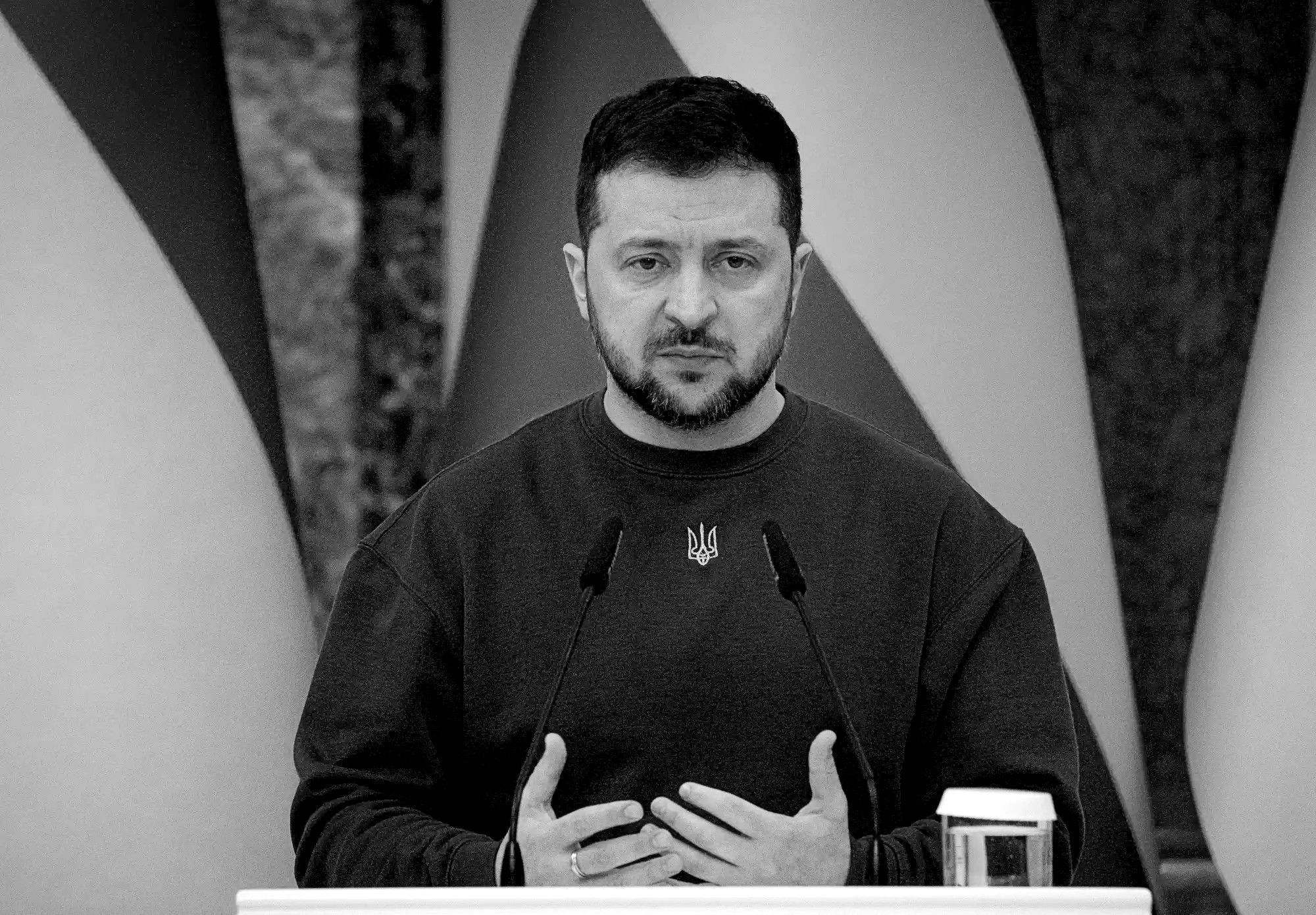
Ukraine will not hold national elections while the country remains at war, President Volodymyr Zelenskyy said in a fresh briefing, stressing that democratic processes can resume only once a ceasefire is in place and security conditions allow. The statement comes amid renewed international discussion over governance, legitimacy, and the long-term political trajectory of Ukraine as fighting with Russia continues.
Security first, ballots later
Zelenskyy reiterated that Ukraine’s constitution and wartime legislation prohibit elections under martial law, arguing that organising a nationwide vote while millions are displaced and large parts of the country remain under threat would be neither fair nor credible. He emphasised that restoring peace and territorial security must come before any electoral timetable is considered.
The president underlined that a ceasefire would be the minimum prerequisite for moving forward, allowing refugees to return, voter registers to be rebuilt, and campaigning to take place without coercion or military pressure.


International pressure and domestic realities
The comments follow growing calls from some foreign observers for clarity on Ukraine’s democratic roadmap. Zelenskyy pushed back against suggestions that elections could be staged during active conflict, pointing to the practical impossibility of guaranteeing access to polling stations in frontline regions or ensuring equal participation for citizens abroad.
Domestically, the government continues to operate under emergency powers, with parliament extending martial law at regular intervals since the full-scale invasion began. Officials maintain that these measures are temporary and directly linked to national defence requirements.
Military situation remains fluid
On the battlefield, Ukrainian forces report continued pressure along several eastern and southern fronts, with artillery exchanges and drone strikes persisting despite winter conditions. Kyiv says its priority remains stabilising defensive lines while securing additional air defence systems and ammunition from partners.
Zelenskyy also reaffirmed Ukraine’s commitment to ongoing diplomatic engagement, but warned that any negotiations must respect Ukrainian sovereignty and internationally recognised borders. “Peace cannot be built on concessions imposed by force,” he said.
Economic strain and civilian impact
Beyond the front lines, the war continues to weigh heavily on Ukraine’s economy. Infrastructure damage, disrupted exports, and energy insecurity have slowed growth, while millions of civilians rely on humanitarian assistance. The government is working with international lenders to sustain basic services and fund reconstruction planning, even as hostilities continue.
Analysts note that prolonged uncertainty complicates both investment and long-term recovery strategies. Clear signals on governance — including the timing of future elections — are therefore closely watched by financial institutions and donor governments alike.
What this means going forward
Zelenskyy’s stance sets a clear boundary: elections will not be used as a political gesture while rockets are still falling. Instead, Kyiv is tying its democratic calendar directly to the achievement of at least a temporary ceasefire.
For Ukraine, this reinforces the message that sovereignty, security, and institutional legitimacy are inseparable. For international partners, it highlights the importance of sustained military and economic support if a credible peace process — and eventual return to normal democratic life — is to become possible.
Newshub Editorial in Europe – 12 February 2026

If you have an account with ChatGPT you get deeper explanations,
background and context related to what you are reading.
Open an account:
Open an account
Recent Comments