
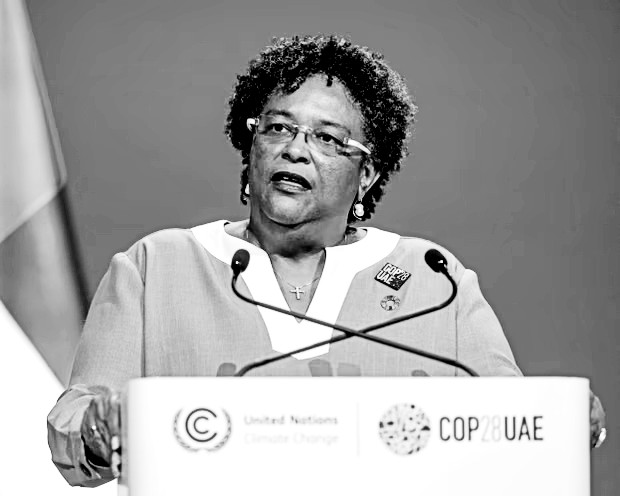
Barbados goes to the polls today with Prime Minister Mia Amor Mottley widely expected to secure a historic third consecutive term, as voters assess her government’s economic stewardship, climate leadership, and social reform agenda amid a challenging global backdrop.
Strong mandate expected after years of reform
Since taking office in 2018, Mottley has overseen a period of significant fiscal restructuring, stabilising public finances after years of high debt and weak growth. Her administration implemented a sweeping economic recovery programme that restored international confidence, unlocked multilateral funding, and helped rebuild foreign exchange reserves.

These measures, while initially demanding for households, laid the groundwork for Barbados’ post-pandemic recovery. Tourism has rebounded strongly, unemployment has eased, and public investment has resumed in housing, renewable energy, and health infrastructure. For many voters, the election is less about change and more about continuity.
Political analysts note that the governing Barbados Labour Party enters polling day with a commanding organisational advantage and limited opposition momentum, reinforcing expectations of another decisive victory.
Economic stability meets social priorities
Beyond macroeconomic repair, Mottley has positioned her government around social inclusion and climate resilience. Her administration expanded access to education and healthcare while accelerating Barbados’ transition towards renewable energy, aiming to reduce reliance on imported fossil fuels.
Internationally, she has emerged as a leading voice for small island states, advocating debt relief and climate financing reform. Her push for a new global funding architecture — designed to help vulnerable nations cope with climate shocks — has elevated Barbados’ profile well beyond its size.
Domestically, voters are weighing these achievements against ongoing cost-of-living pressures. Rising food and energy prices, driven largely by external factors, remain a key concern, even as wage growth and targeted subsidies have offered partial relief.
Opposition struggles to gain traction
The opposition campaign has focused on affordability, crime, and public sector efficiency, arguing that stronger competition is needed to improve accountability. However, it has struggled to translate these themes into broad-based momentum.
Turnout is expected to be moderate, reflecting both voter confidence in the likely outcome and general fatigue following years of economic adjustment. Still, the result will carry symbolic weight: a third term would further entrench Mottley’s mandate to pursue long-term reforms and deepen Barbados’ role in shaping climate and development policy across the Caribbean.
Regional implications and investor perspective
For regional observers and investors, the election outcome matters less for immediate market reaction and more for policy continuity. A renewed mandate would signal stability in economic management, ongoing engagement with international lenders, and sustained focus on green investment.
Barbados has become a reference point for fiscal recovery in small economies, demonstrating how disciplined reform combined with strategic diplomacy can restore credibility. A third term would give Mottley additional runway to advance infrastructure projects, expand renewable capacity, and strengthen resilience against climate-related risks.
As ballots are cast today across Barbados, the prevailing expectation is clear: voters appear ready to extend their confidence in a leader who has guided the island through crisis and repositioned it on the global stage.
Newshub Editorial in North America – 11 February 2026

If you have an account with ChatGPT you get deeper explanations,
background and context related to what you are reading.
Open an account:
Open an account
Recent Comments